
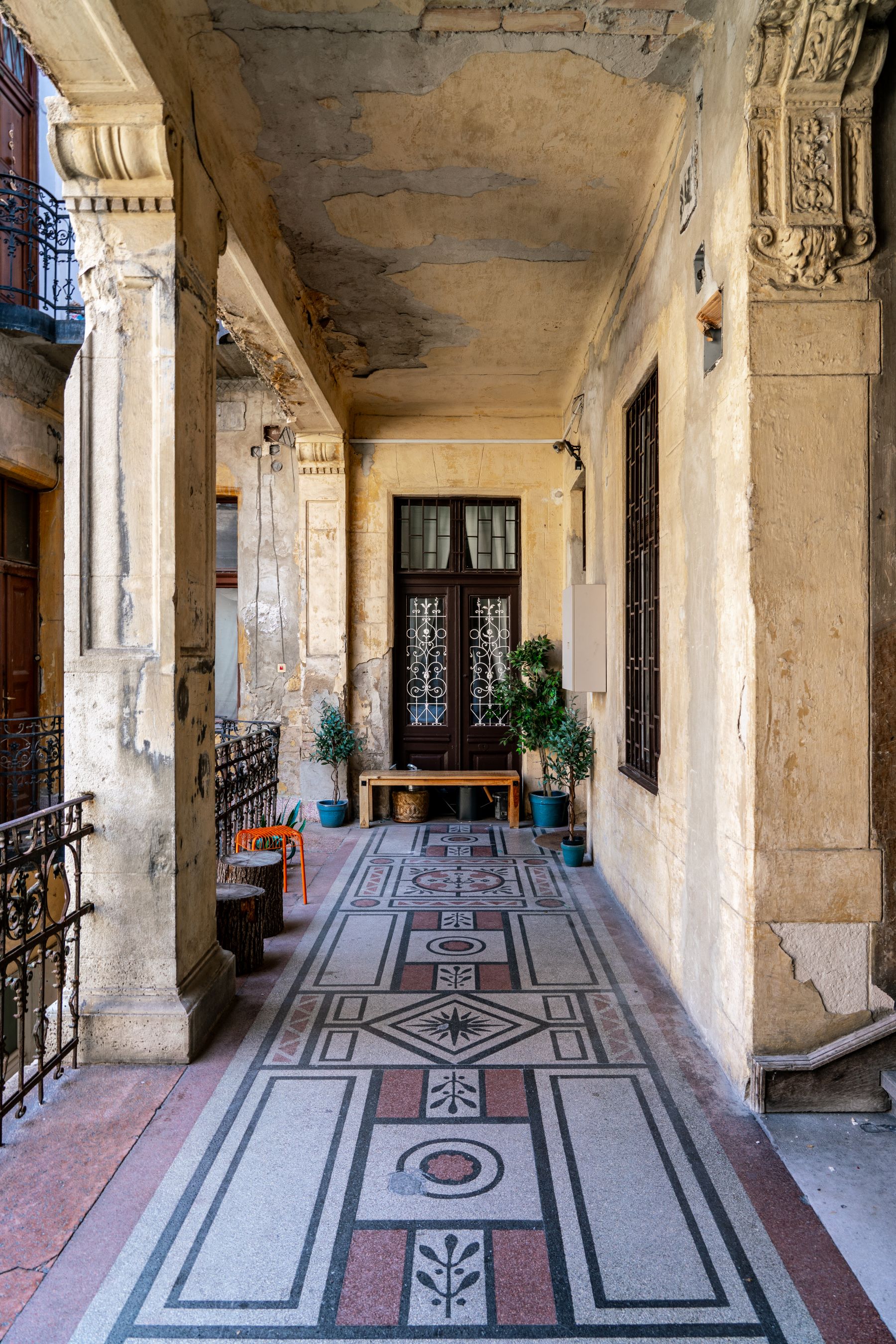
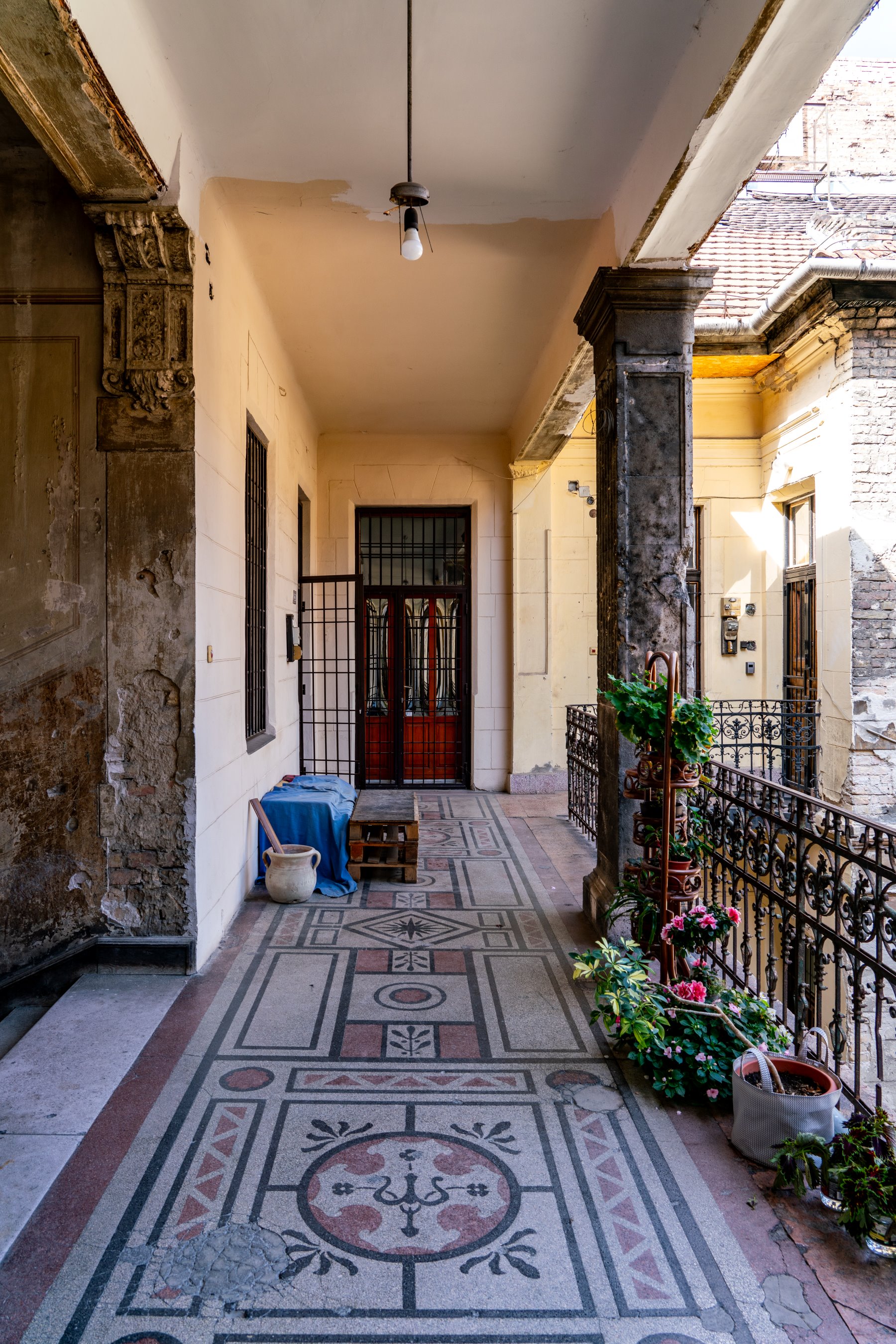
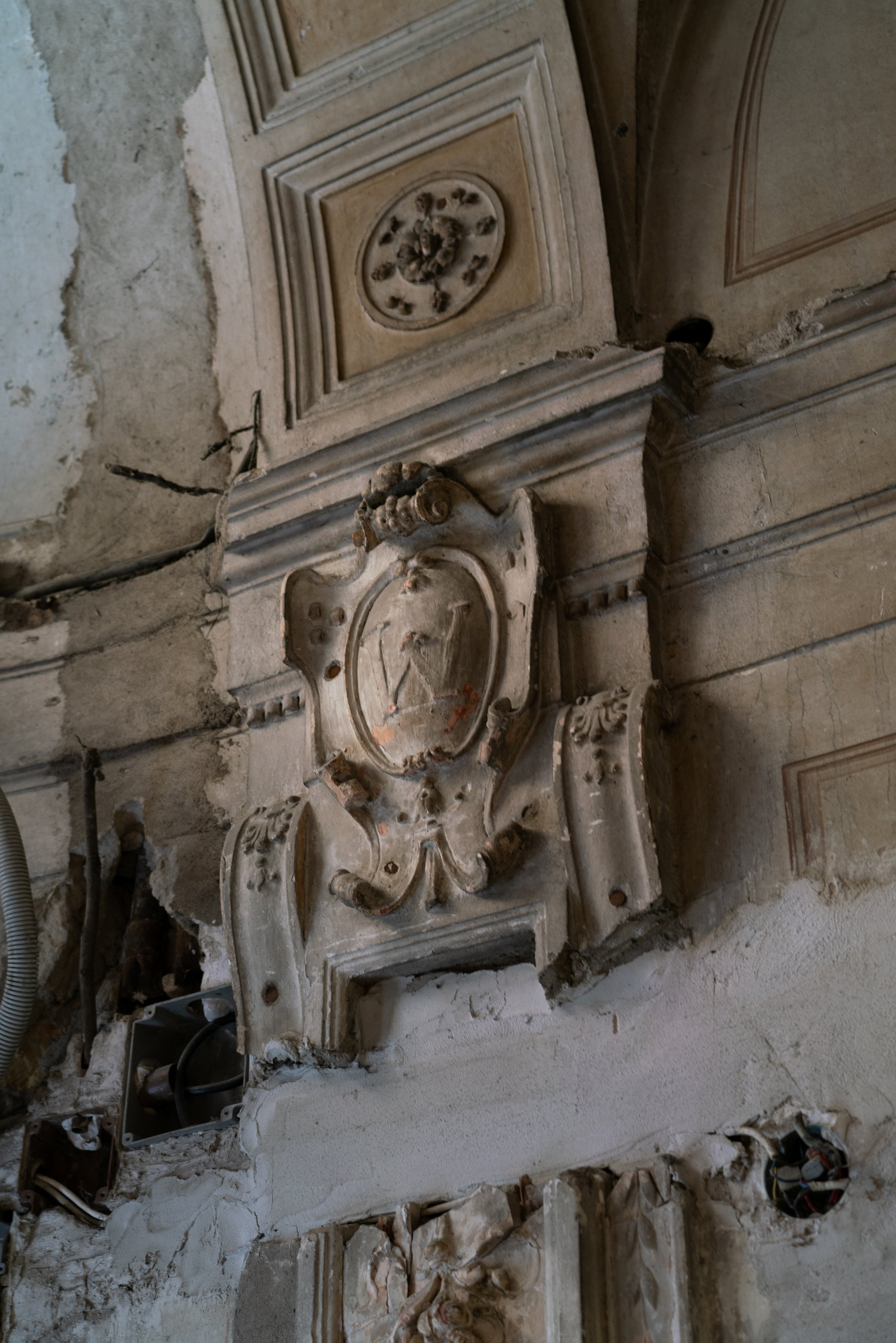
This apartment building, located at Kazinczy utca 5 in the 7th district of Budapest, was designed by Antal Klenovits and completed in 1895. It was originally constructed for Anna Mária, Ferenc, Jakab Antal, and Klára Walser. Ferenc Walser owned a bell foundry located on the opposite side of the street, at Kazinczy utca 6/a. Ferenc was a renowned bell-maker in Hungary, and some of his surviving works can be seen in the St. Stephen Basilica and the Matthias Church.
According to Anna Perczel’s book “Unprotected Heritage”: “before 1945, the house was inhabited by people of various backgrounds, Jewish and non-Jewish, the well-to-do – ministry officials, stock exchange dealers, army officers, grocers, entrepreneurs – living in the four- and three-room apartments situated around the first courtyard. By contrast, the basement rooms served as workshops for traders.“
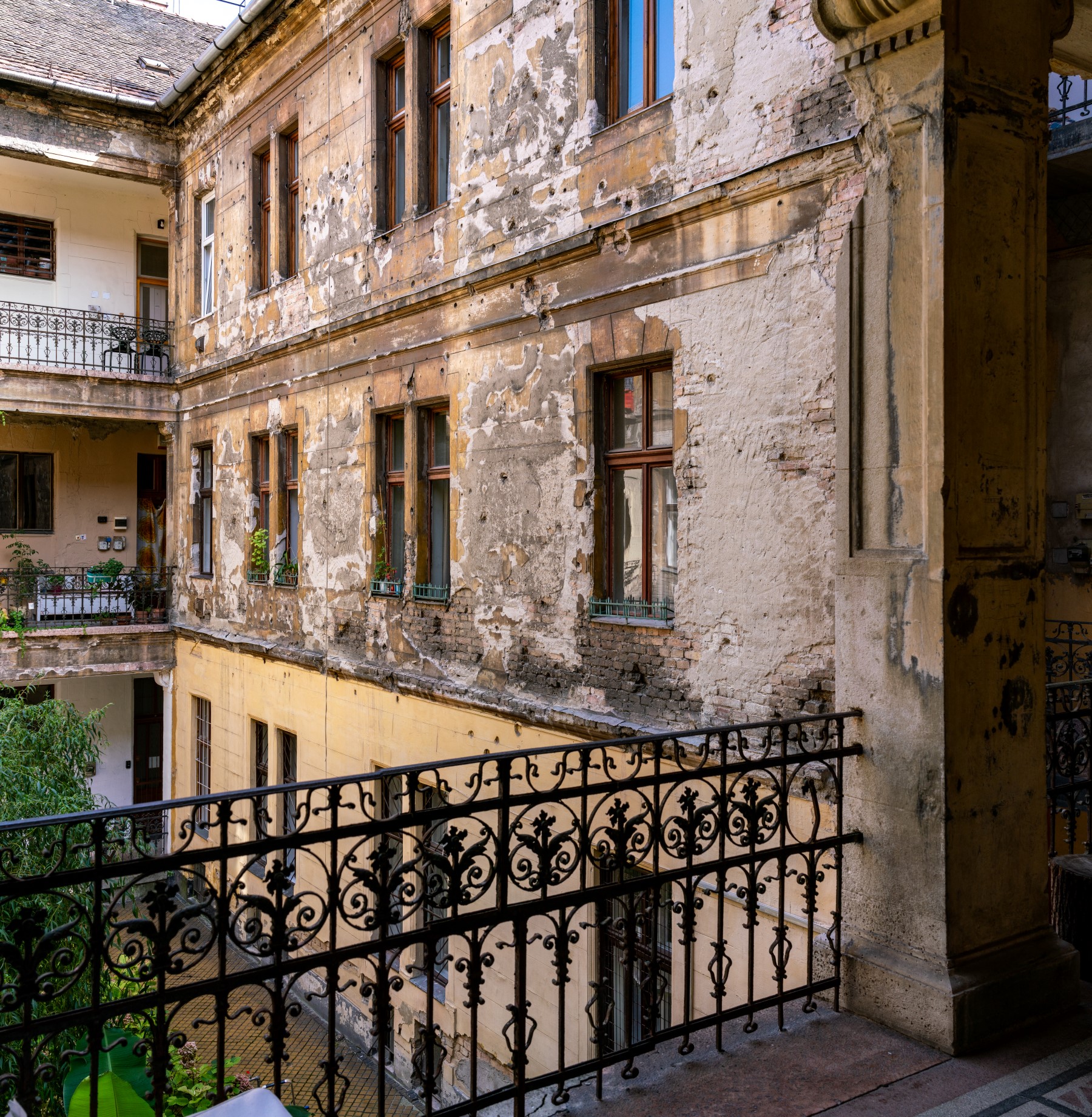
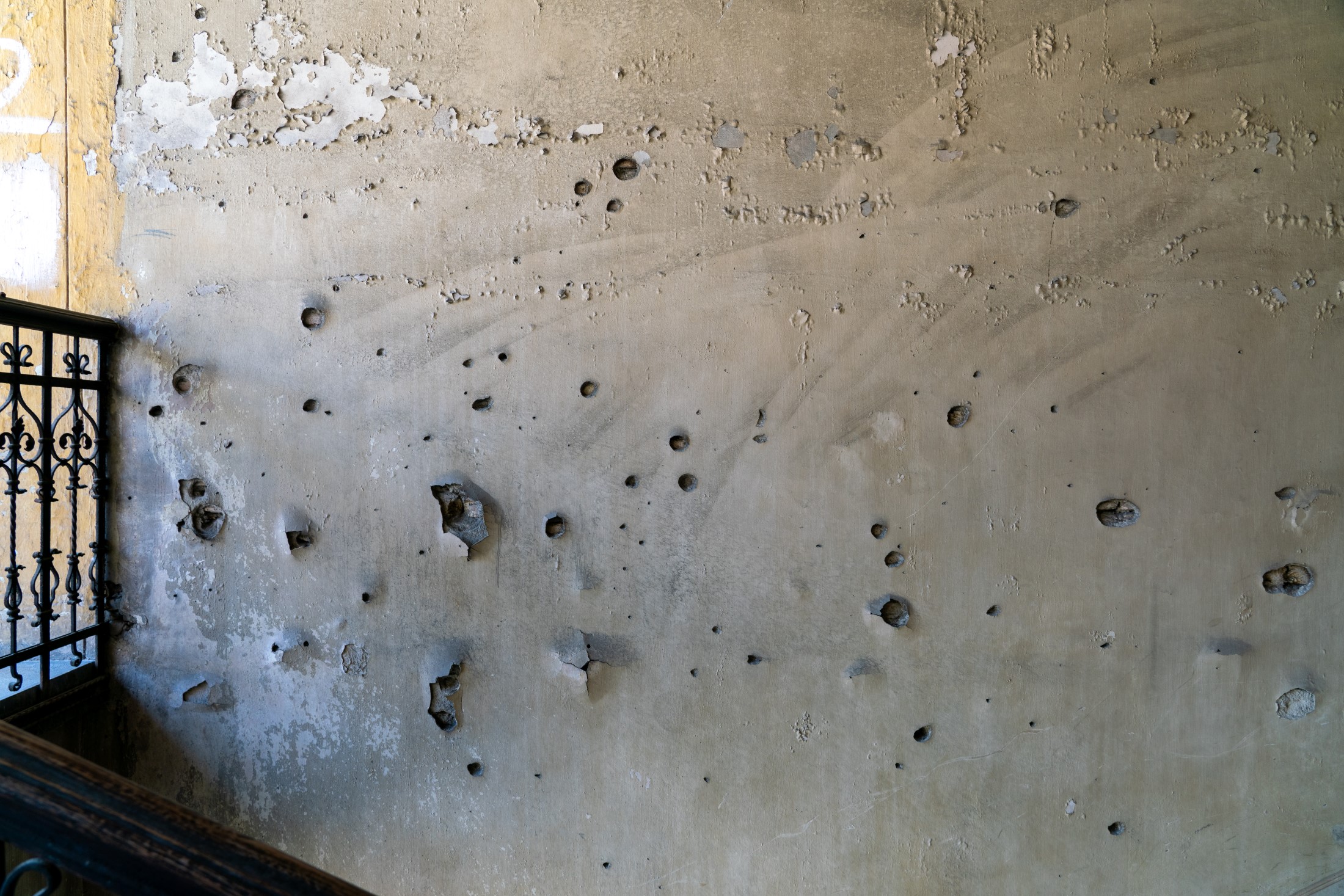
From November 29, 1944, to January 17, 1945, this house was situated in the main ghetto, and its residents had to endure the horrors of that dark period in Budapest’s history. Bullet holes can still be seen in the courtyard and staircase, dating back to either 1944/45 or 1956.



 Buildings Tell Tales
Leave a reply to Buildings Tell Tales Cancel reply