
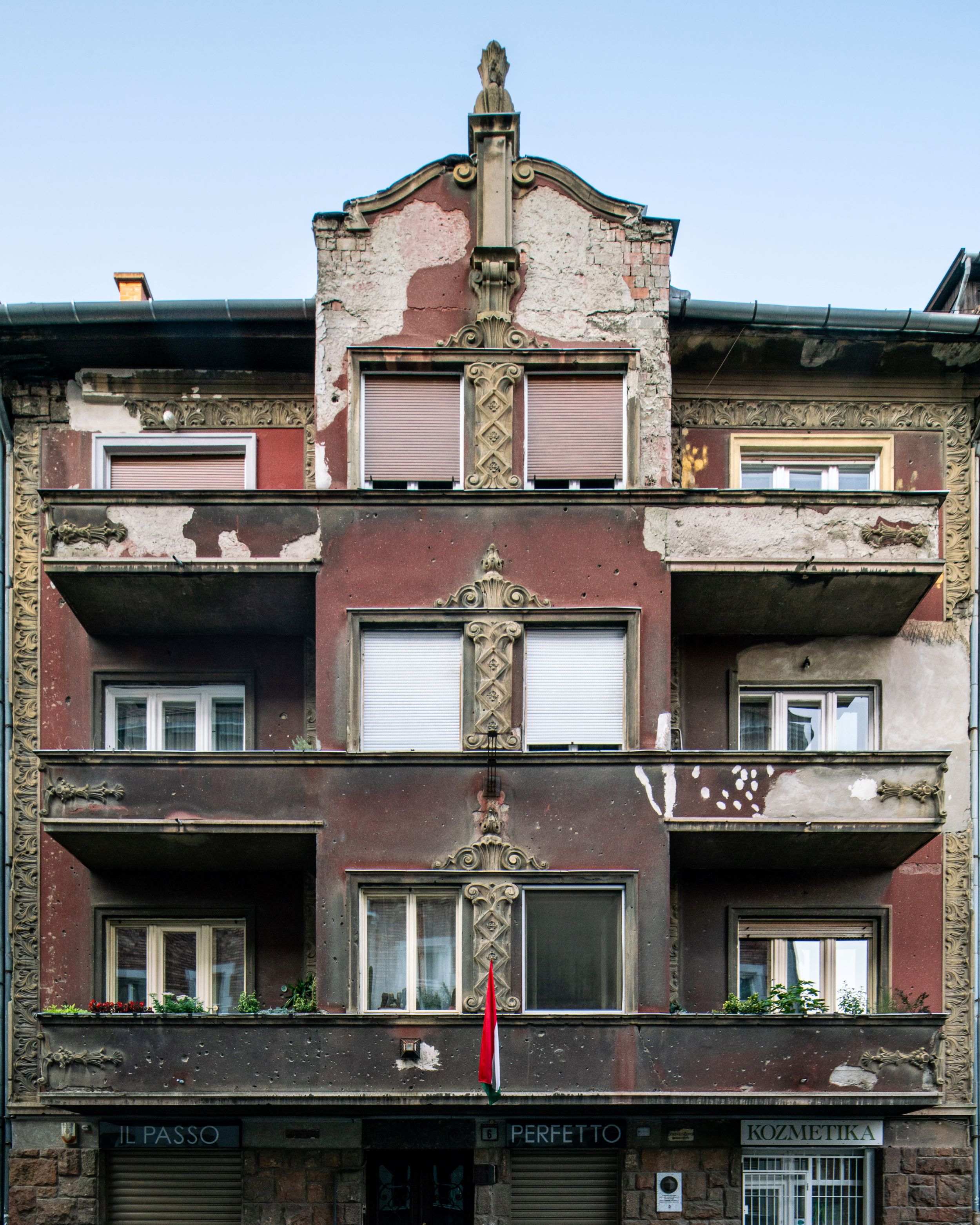
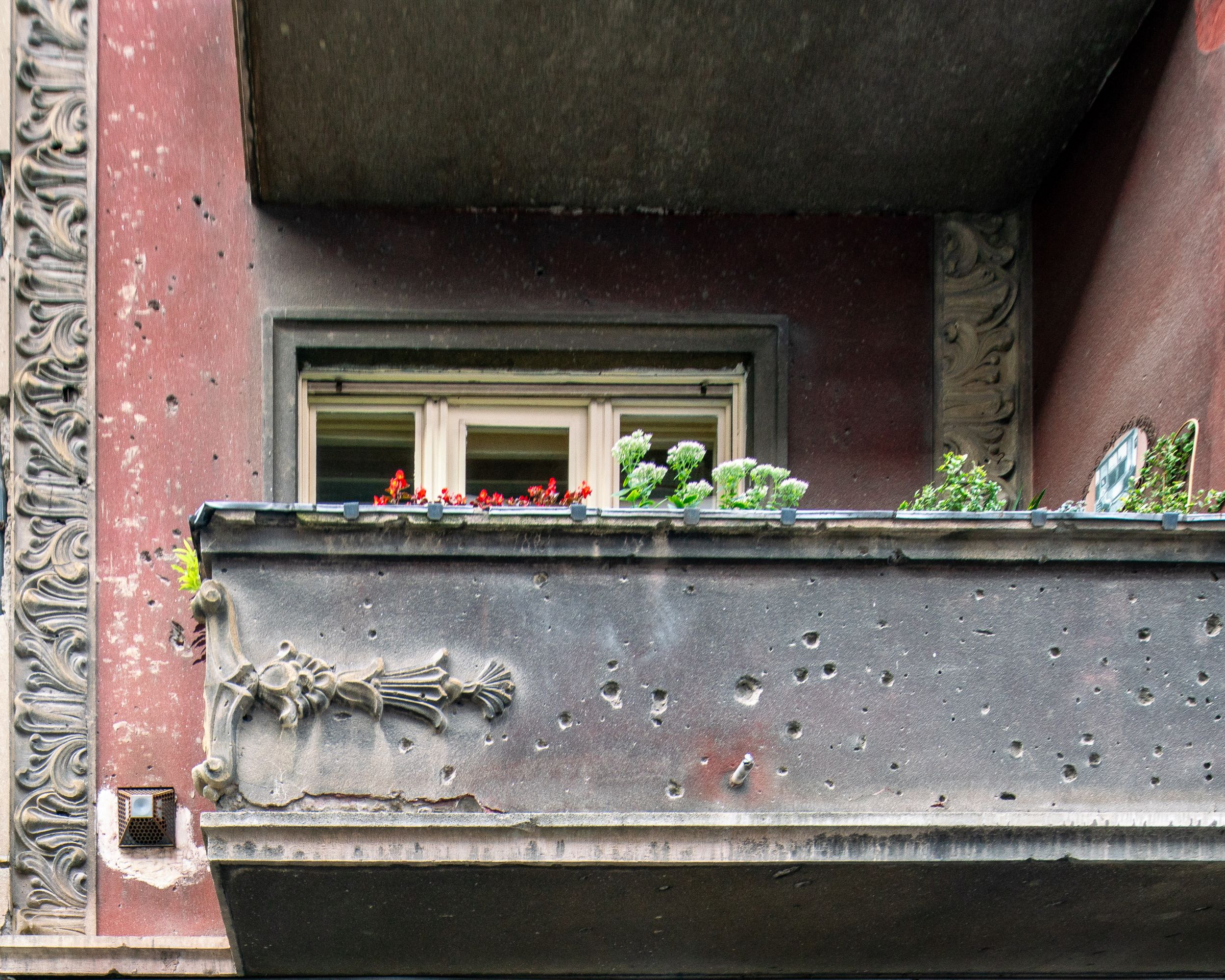
When I was a student, I spent a year and a half living in a flat in Budapest’s 1st district. During that time, I often strolled down Kosciuszko Tádé utca, a street honoring the famous Polish military leader Tadeusz Kościuszko. Each time, I couldn’t resist pausing to admire the striking Art Deco facade, marked by bullet holes. Curiosity led me to dig into the house’s history, and one name stood out: Avram Camhi. This name set in motion a fascinating tale that spanned from Istanbul to Florida. Read on for this captivating story:
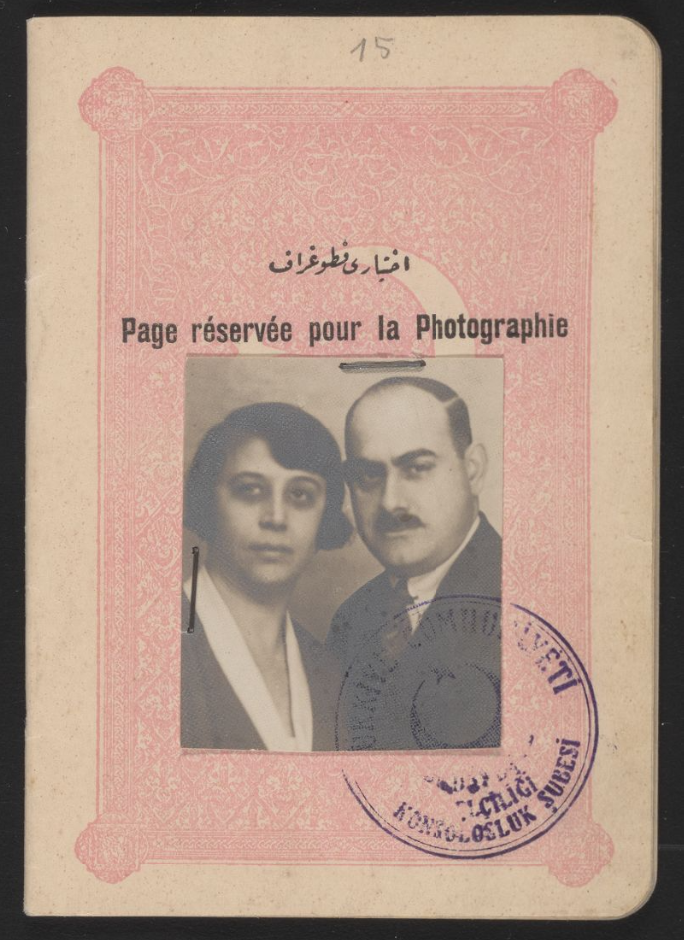
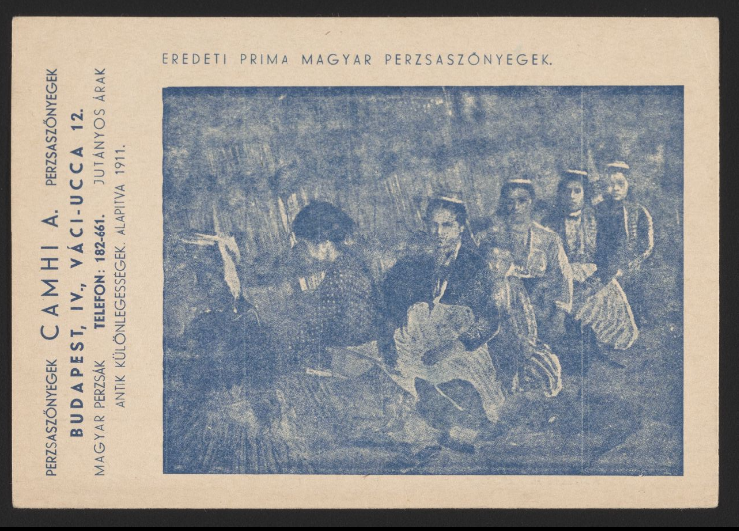
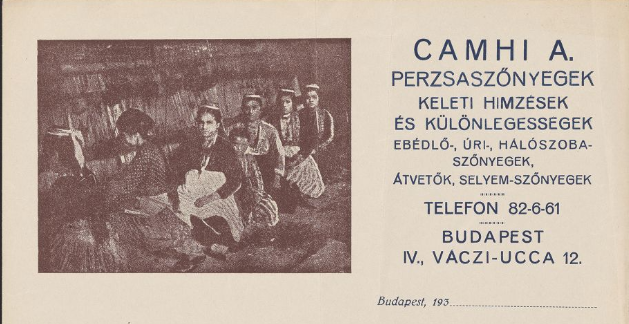
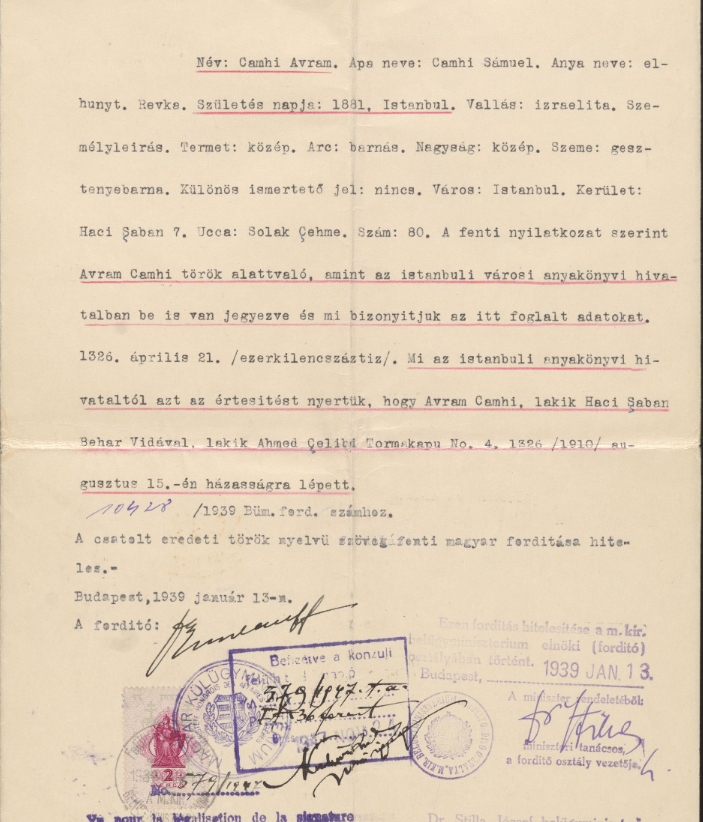
“Avram Camhi” might not sound Hungarian at all, and for good reason. He was a Sephardic Jew from Istanbul who traveled to Budapest in 1900 at just 19 years old. His trade involved dealing in carpets, and I stumbled upon various articles highlighting his talent for fixing up valuable Persian and Turkish carpets. He launched a carpet store on Váci utca, and it turned out to be a thriving venture. Avram married Vida Behar, who shared his Istanbul roots. Their family expanded with the arrival of Samuel in 1911 and József in 1916. Religion was important to Avram, who, according to an article in Egyenlőség from 1934, became the leader of Budapest’s Sephardic community—a group of 35 families. They secured a space on the upper floor of the Dohány Street Synagogue to practice their customs. Interestingly, Avram’s primary language was Ladino (Judaeo-Spanish), which he spoke with his wife.
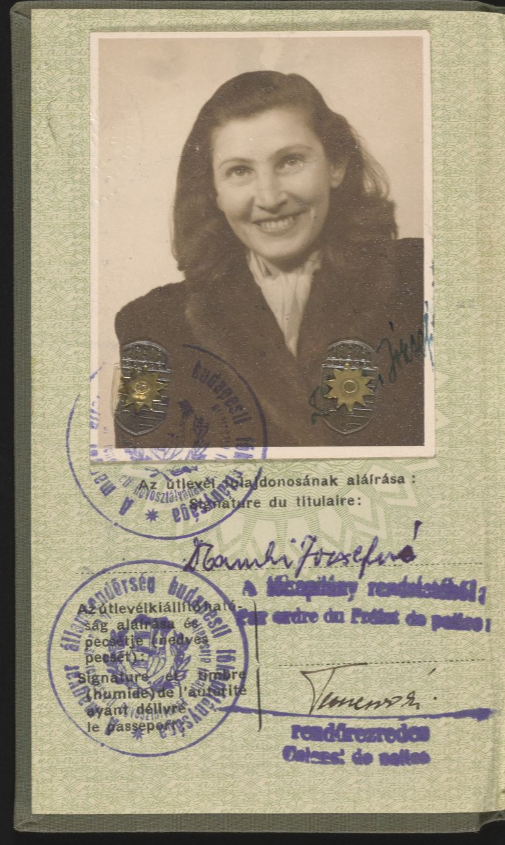
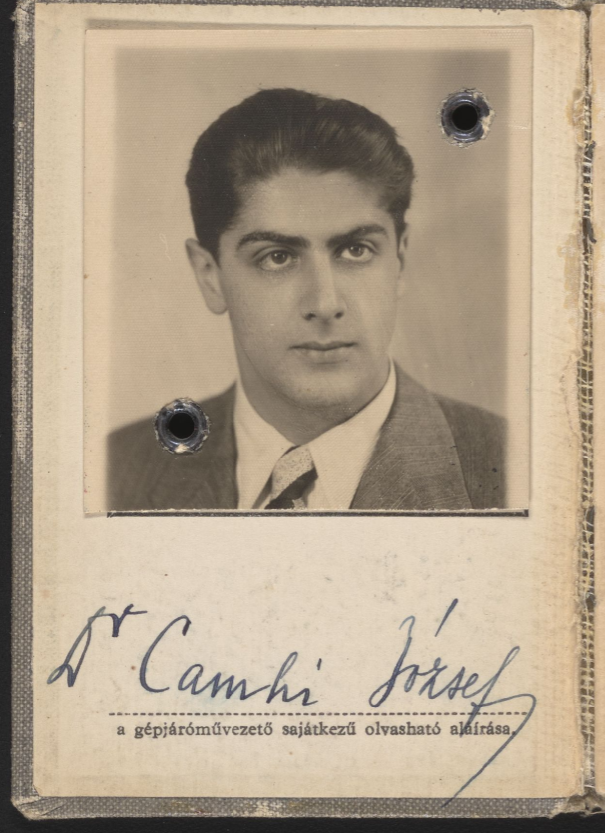
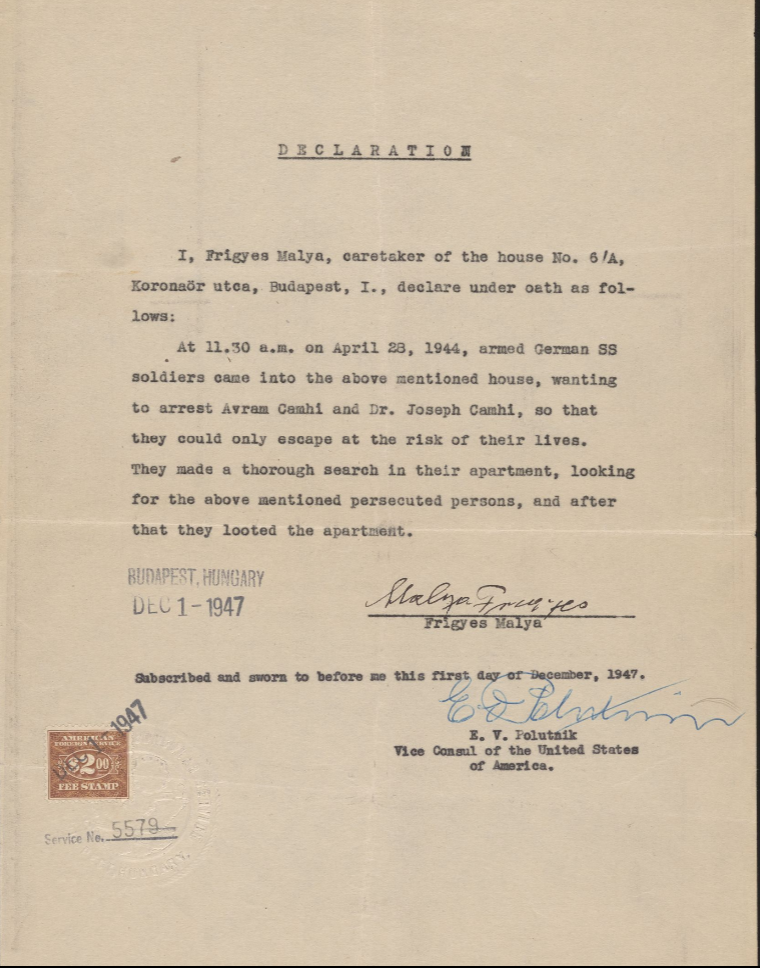
In 1933, the house on Kosciuszko Tádé utca 6 (at that time Koronaőr utca) changed hands to Vida, leading the Camhi family to make it their home. The following year, tragedy struck with the passing of Samuel, who had been battling a long illness. József, in the midst of his law studies, teamed up with his father in the carpet business. The family suffered from the growing antisemitism in Hungary. The year 1944 saw a significant blow when German SS soldiers stormed their home, pillaged their place, and tried to detain the entire family. Fortunately, they managed to slip away and took refuge in a yellow-star house on Almássy tér 17. On June 11, 1944, József married Veronika Hirtenstein, who joined the household. A month later, the family secured forged baptism certificates, hoping these would provide some protection. Avram and Vida were forced to leave for the ghetto, while József hid in a hospital and Veronika sought shelter in a Swiss safe house. Thankfully, they all emerged from these tragic times alive.
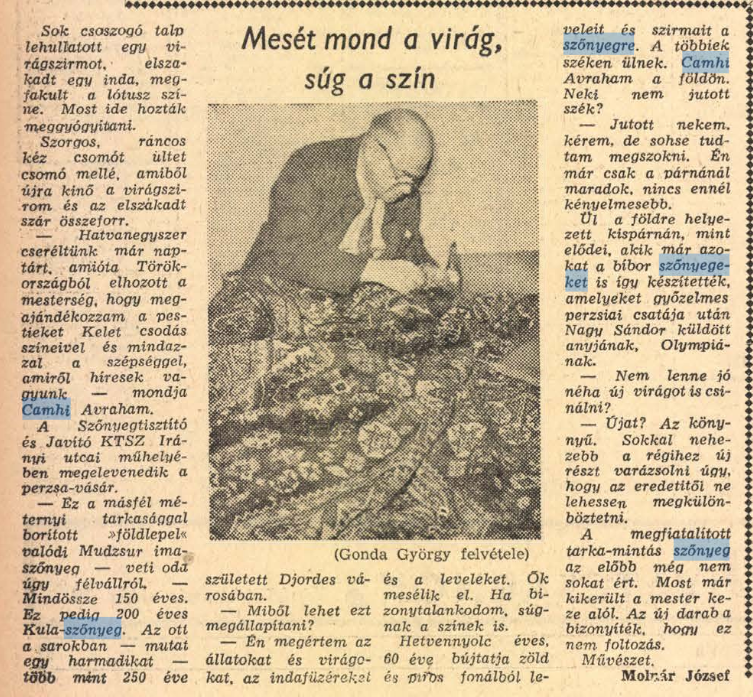
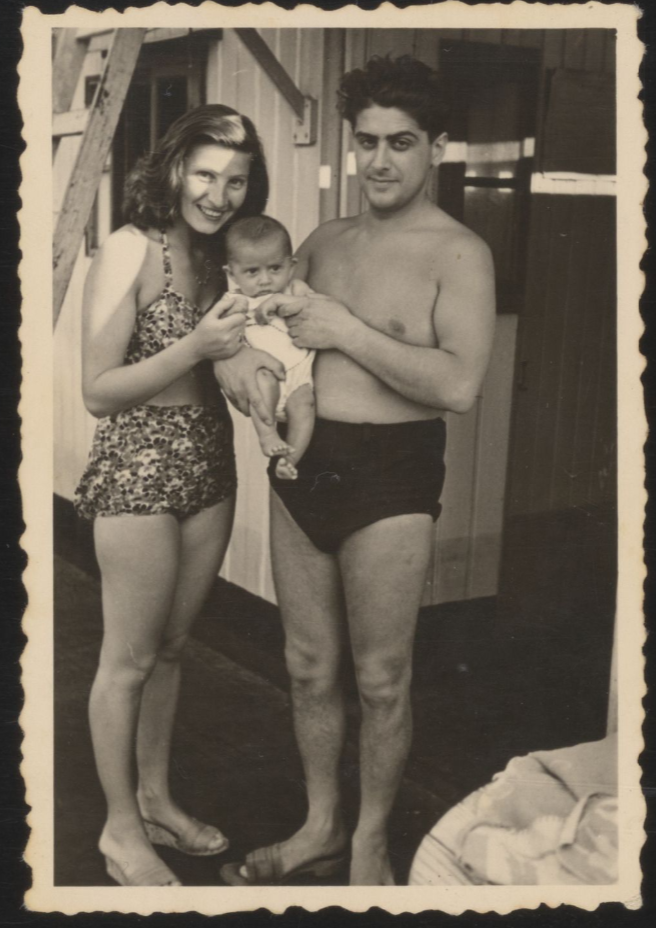
By 1946, Veronika and József were parents to János. The following year, they moved to the United States, seeking a fresh beginning. Avram and Vida, however, chose to remain in Budapest. Avram managed to resurrect his business, although the 1949 wave of nationalization led him to work in a small-scale industrial cooperative where he cleaned and repaired carpets. An article highlighting his skills was published by Népszava in 1959. In 1975, Vida passed away, and Avram followed a year later, at the age of 95. Their final resting place can be found at Kozma Street Jewish Cemetery.
As per the 1950 census, József (Joseph), Veronika (Veronica), and János (John) Camhi were making a life in New York. József was working as a “floor covering salesman.” Eventually, they moved to Lauderdale Lakes in Florida. József’s passing came in 1992, and Veronika’s in 2004. In 2016, János (John) Camhi left this world. To unveil the story of the Camhi family, I used a wide range of documents from various online databases. Captivating records about the Camhi and Hirtenstein families are accessible on the United States Holocaust Memorial Museum database: https://collections.ushmm.org/search/catalog/irn693336?rsc=114340&cv=0&x=2767&y=1731&z=1.4e-4




 Buildings Tell Tales
Leave a reply to Ted Jennings – TPJ Photography Cancel reply