
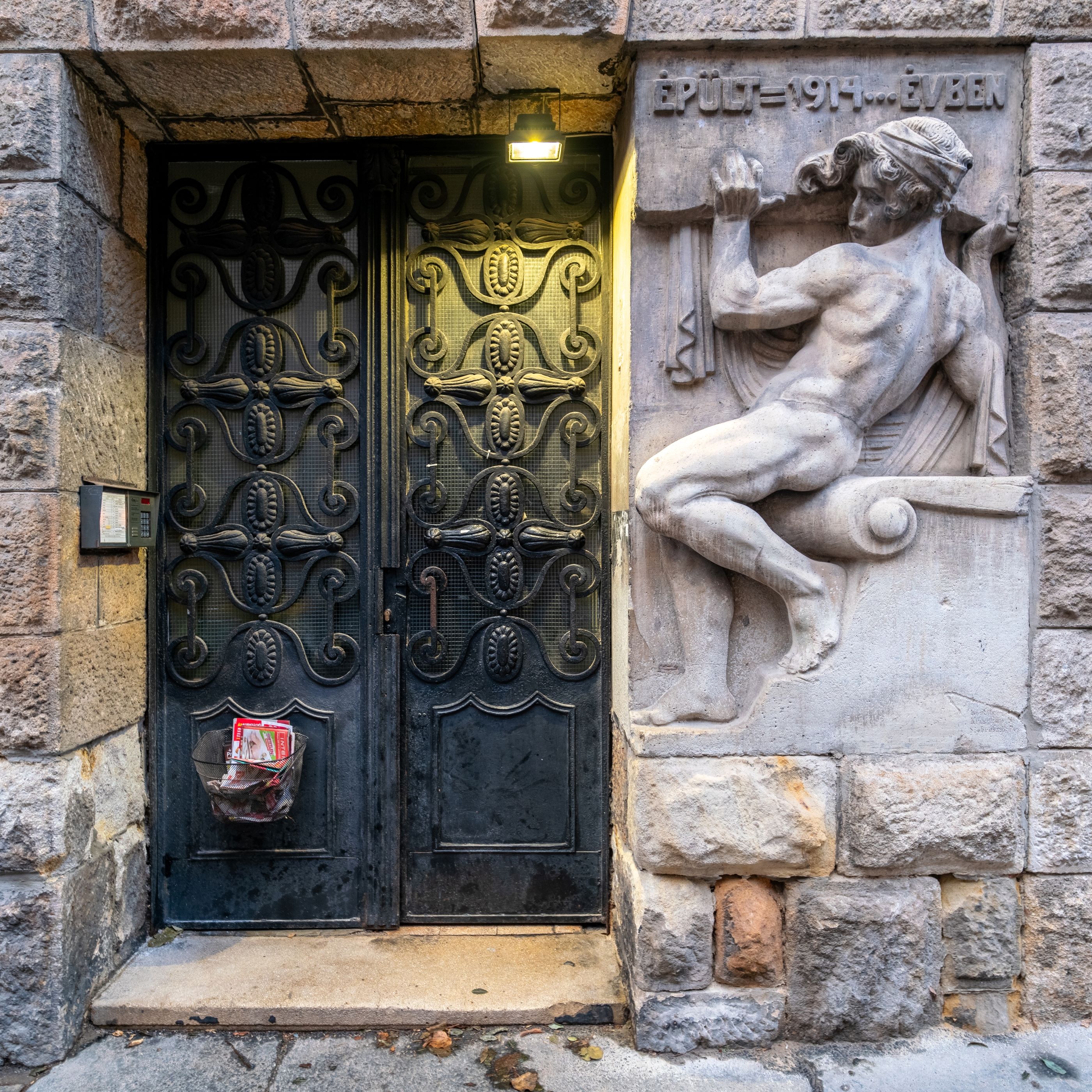
“Built in 1914” – another one of my favorite entrances in Budapest is located at Naphegy utca 21 in the 1st district. This house, designed by László Lipót Németh, stands as a testament to the resilience of the city’s architecture. Constructed just before the tumultuous times of World War I, it faced the challenges of a slowed-down construction industry in Hungary. However, its true test came decades later.
Thirty years after its completion, during the brutal Siege of Budapest in December 1944 and January 1945, the flames of war reached the Naphegy area. This period witnessed some of the fiercest fighting in the city’s history. German forces occupied the Buda Hills, including Gellért Hill (Gellérthegy) which overlooks Naphegy utca. Soviet troops relentlessly attacked from the Pest side of the Danube, leading to a brutal urban warfare.
The level of destruction in Budapest during the siege was unimaginable. It’s a true miracle that any historical buildings survived in areas like Naphegy, which was directly in the line of fire between the opposing forces.
To illustrate the devastation, I’ve included a photo found on Fortepan (a wonderful community-based archive to whom I have also donated many old photos). It shows the intersection of Naphegy utca and Gellérthegy utca in 1945, offering a glimpse into the aftermath of the siege. The image serves as a stark reminder of the city’s dark past and the enduring strength of its architectural heritage.


Leave a Reply