
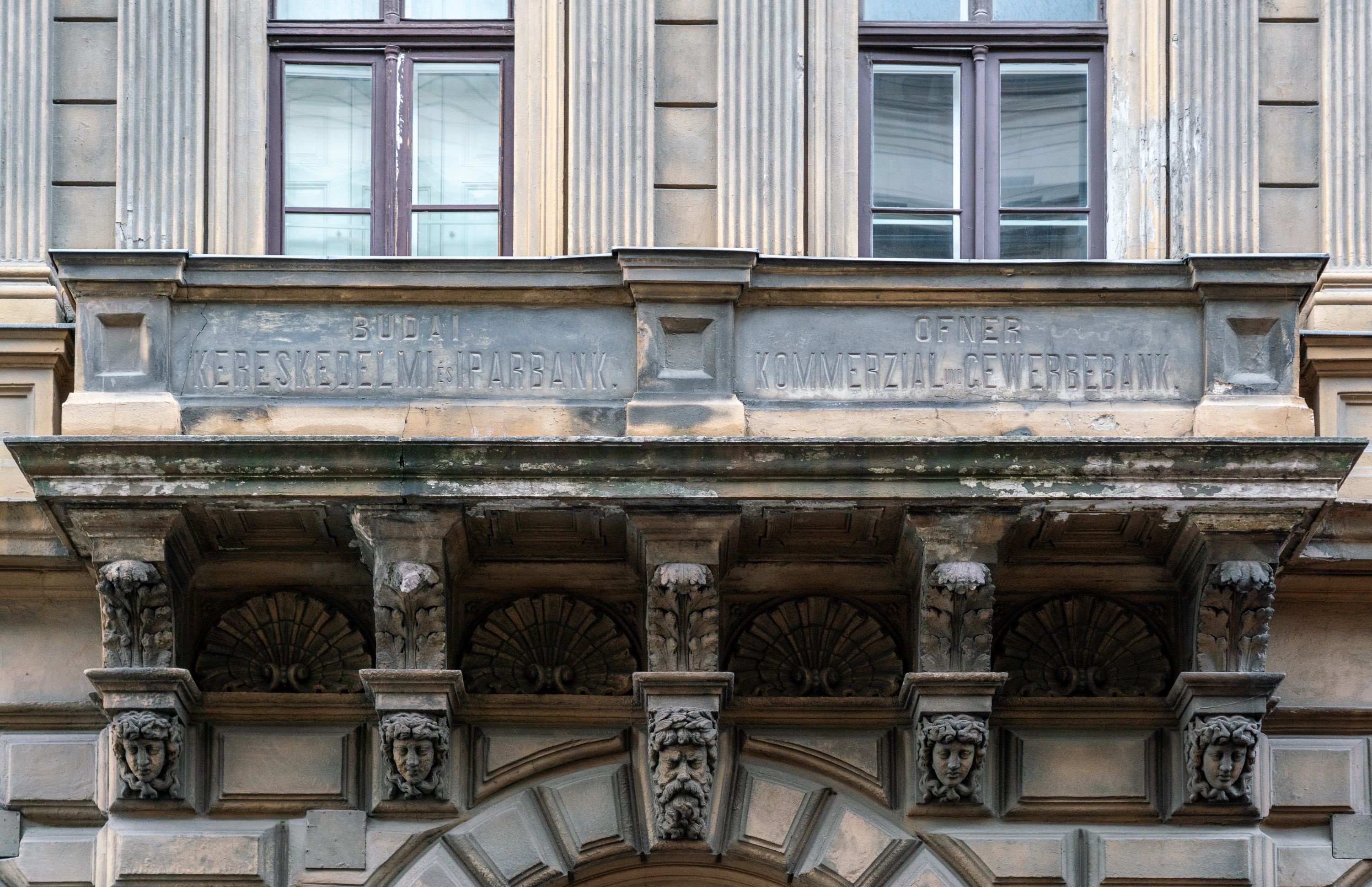
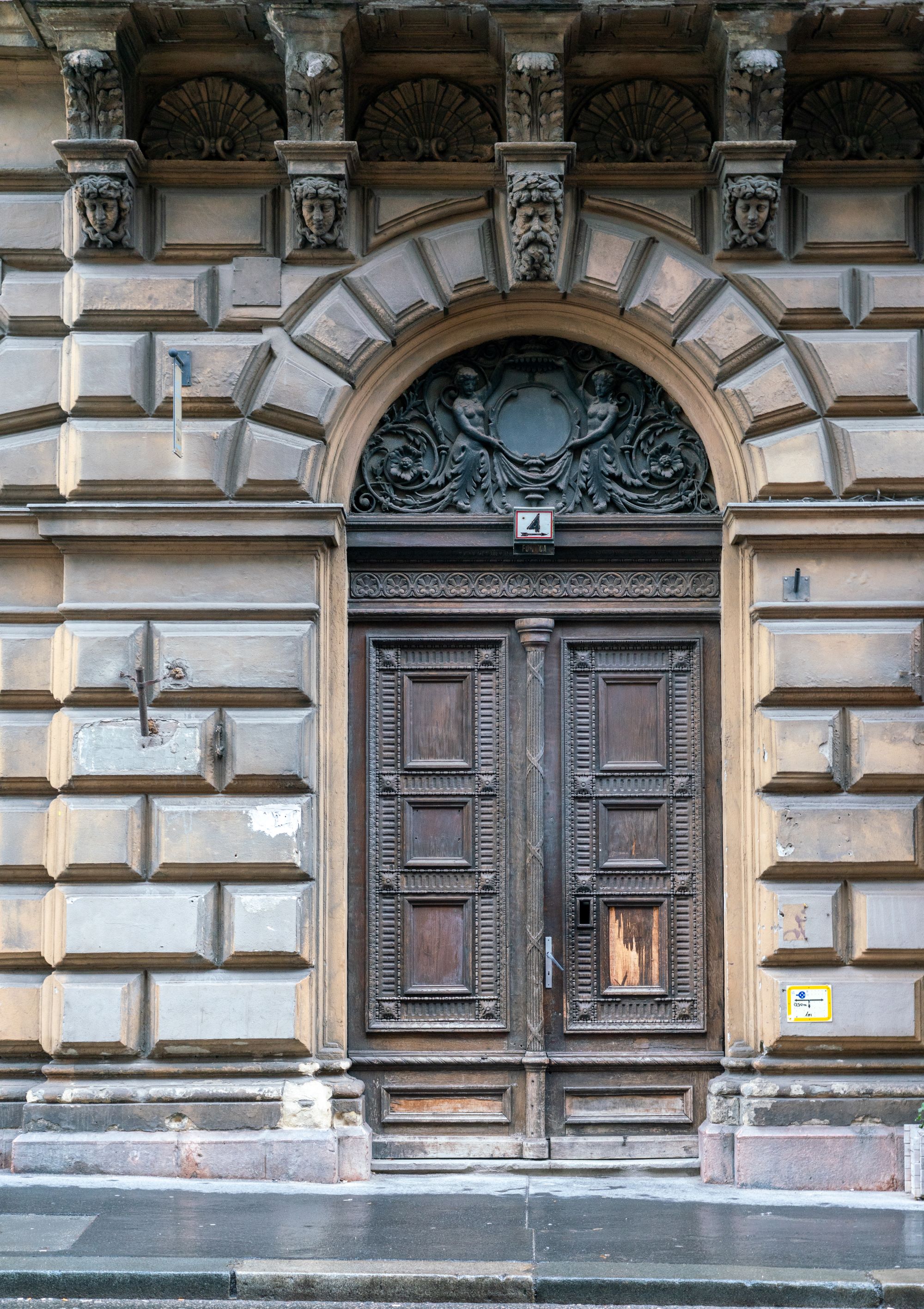
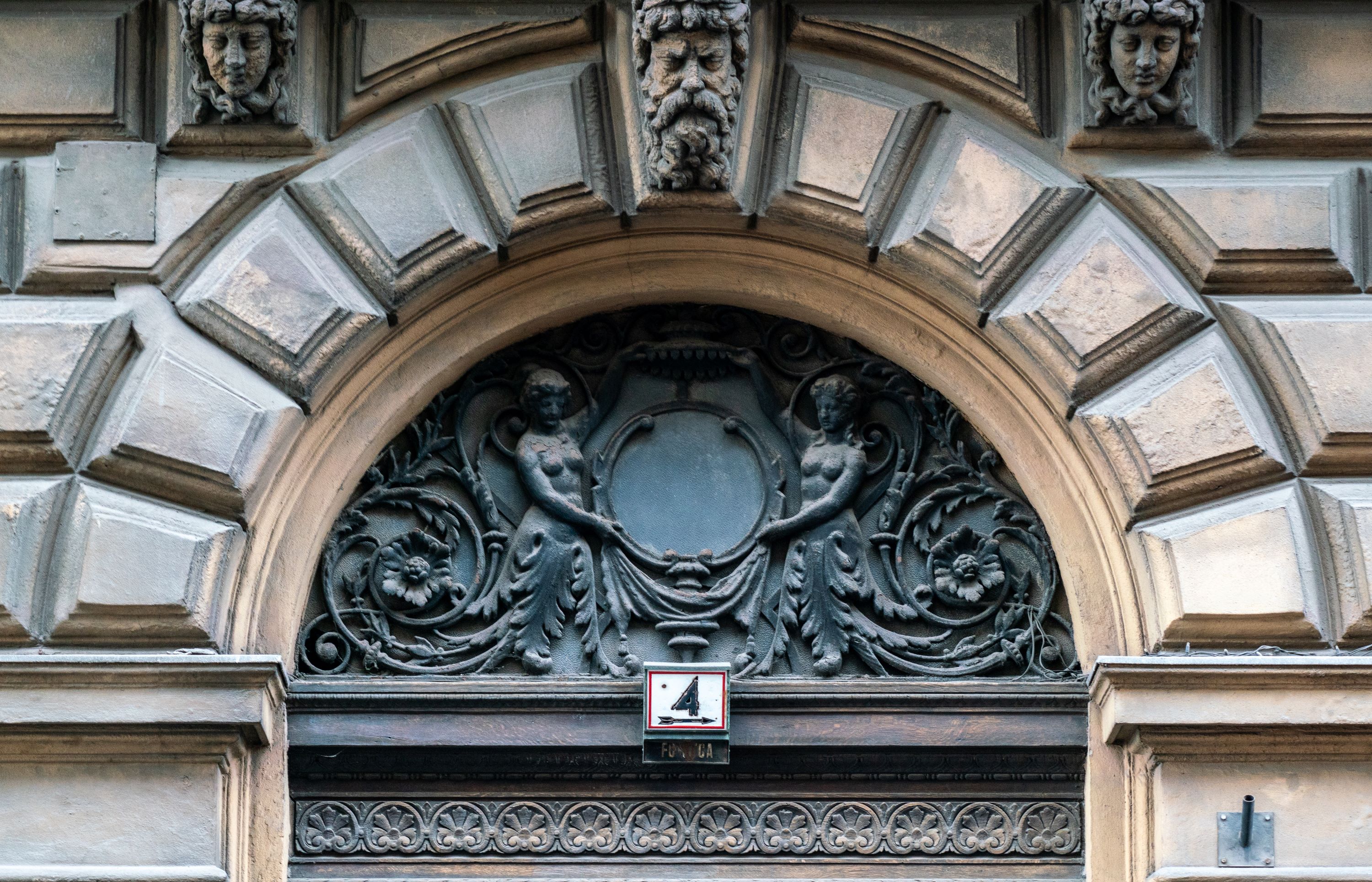
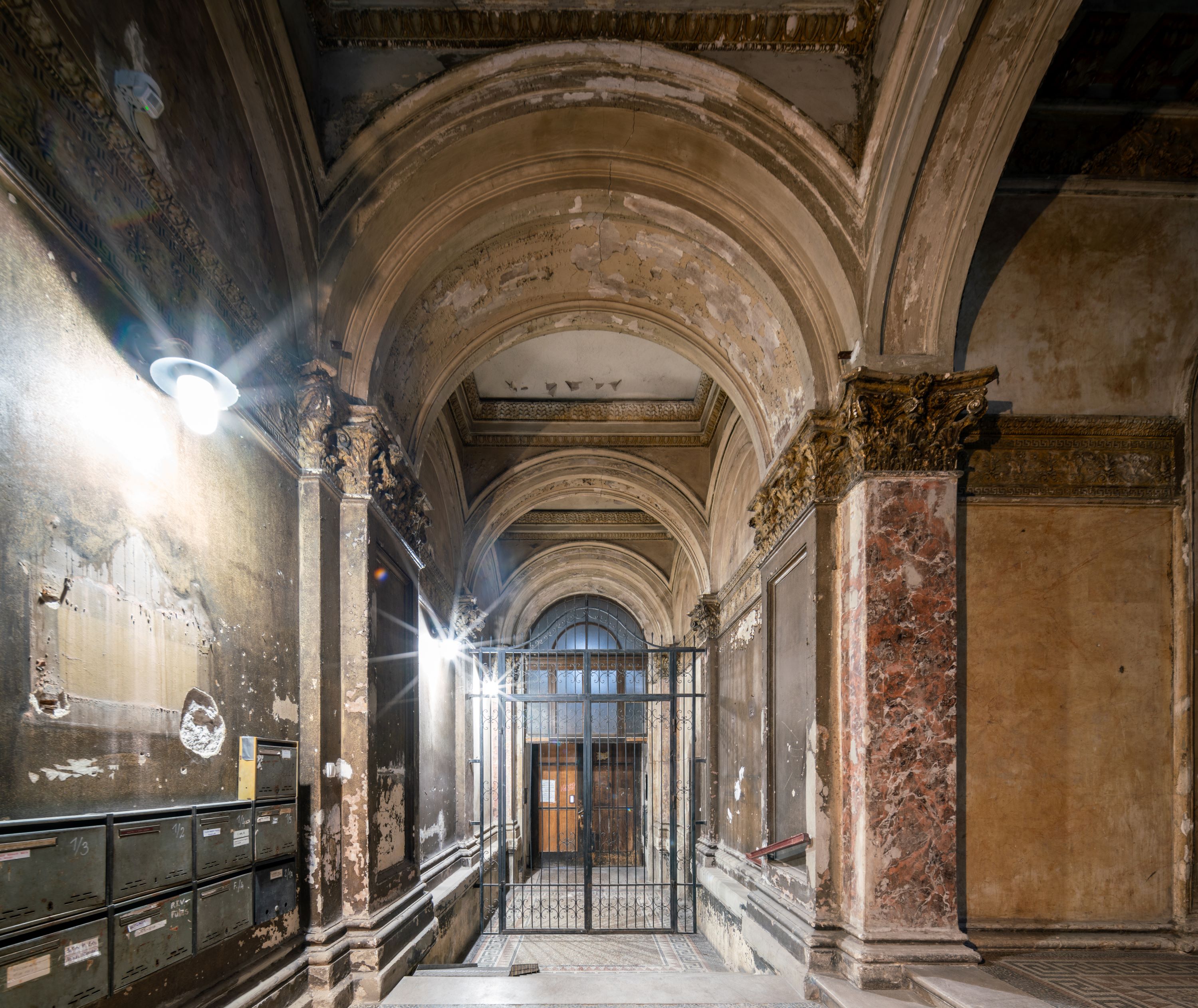
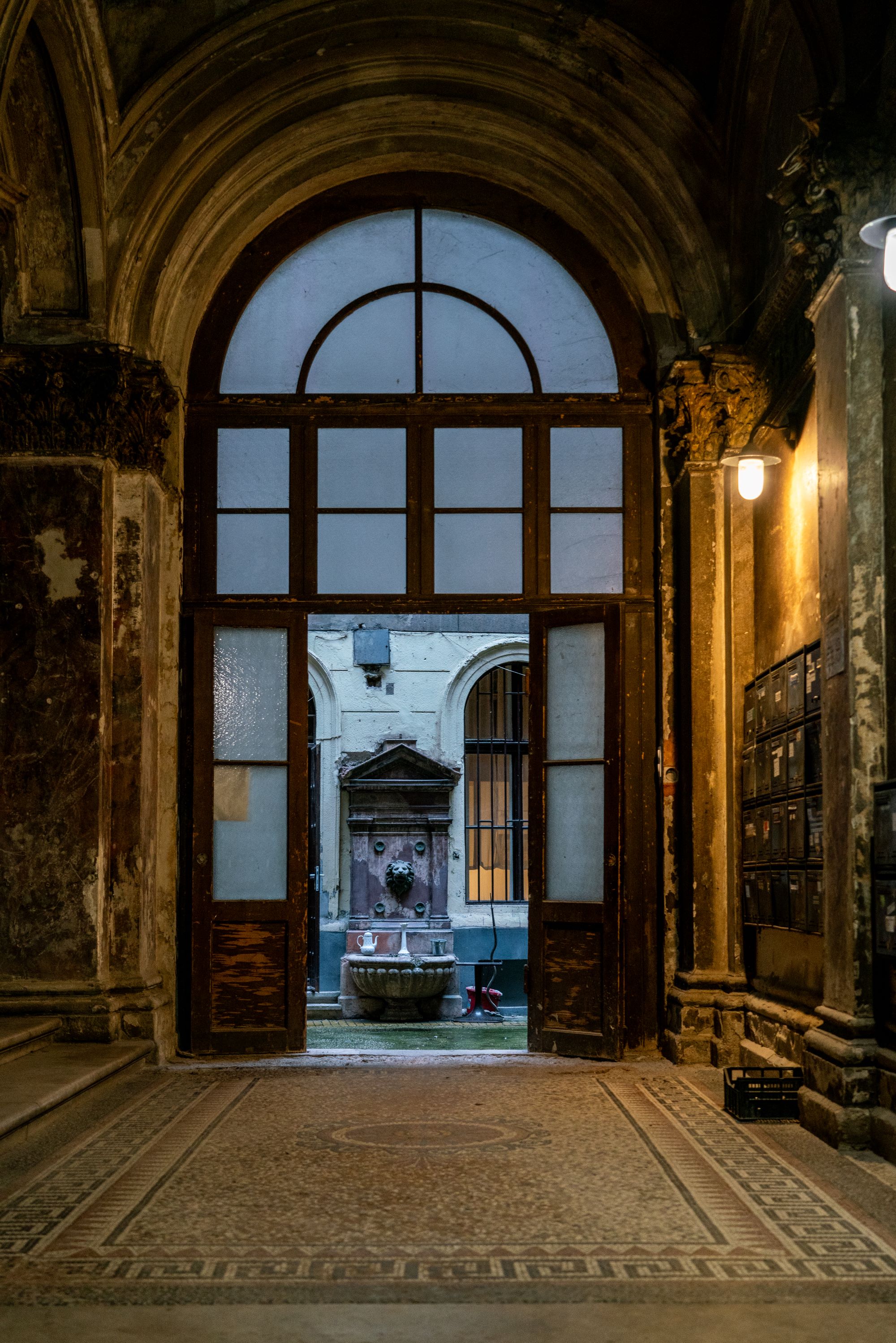
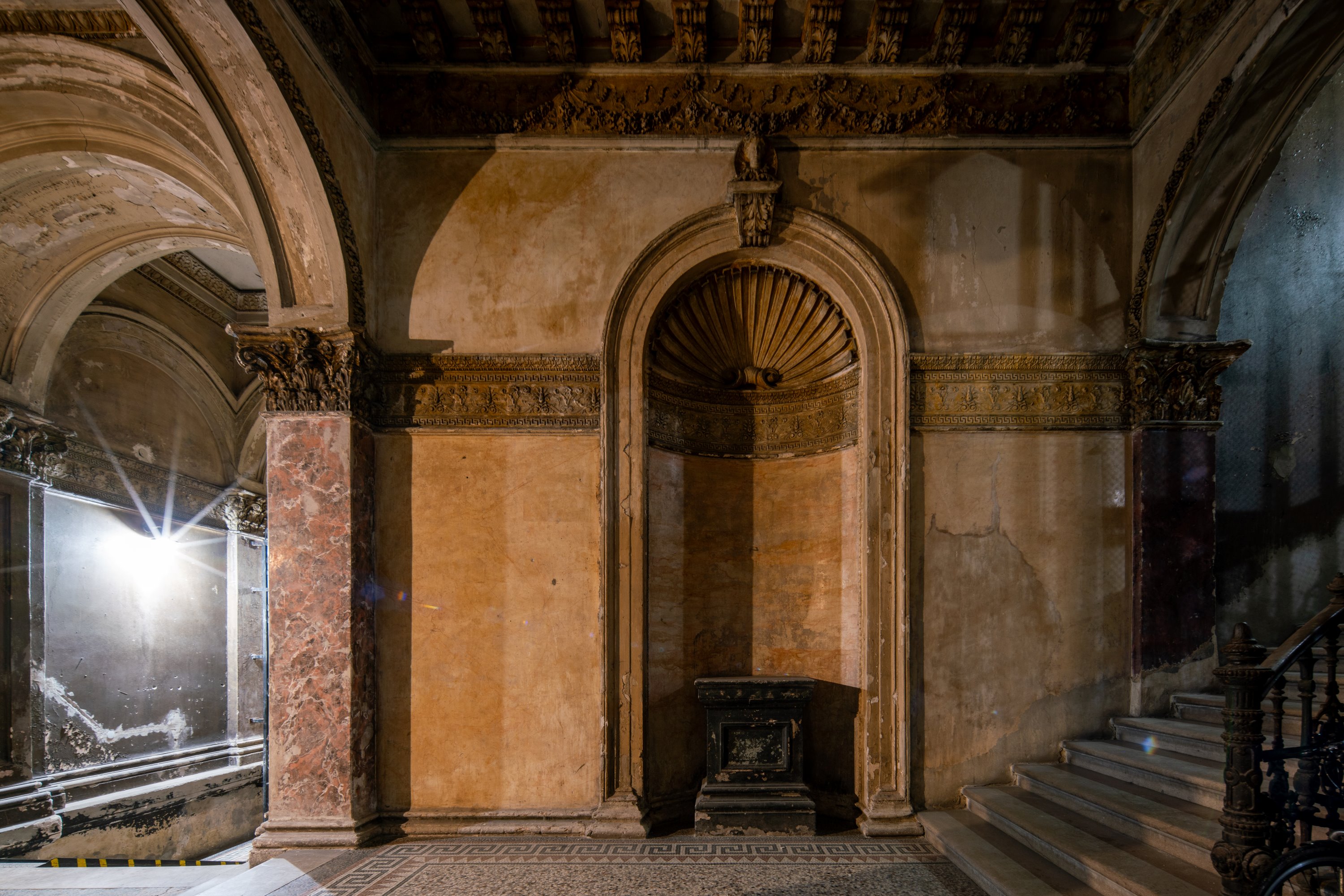
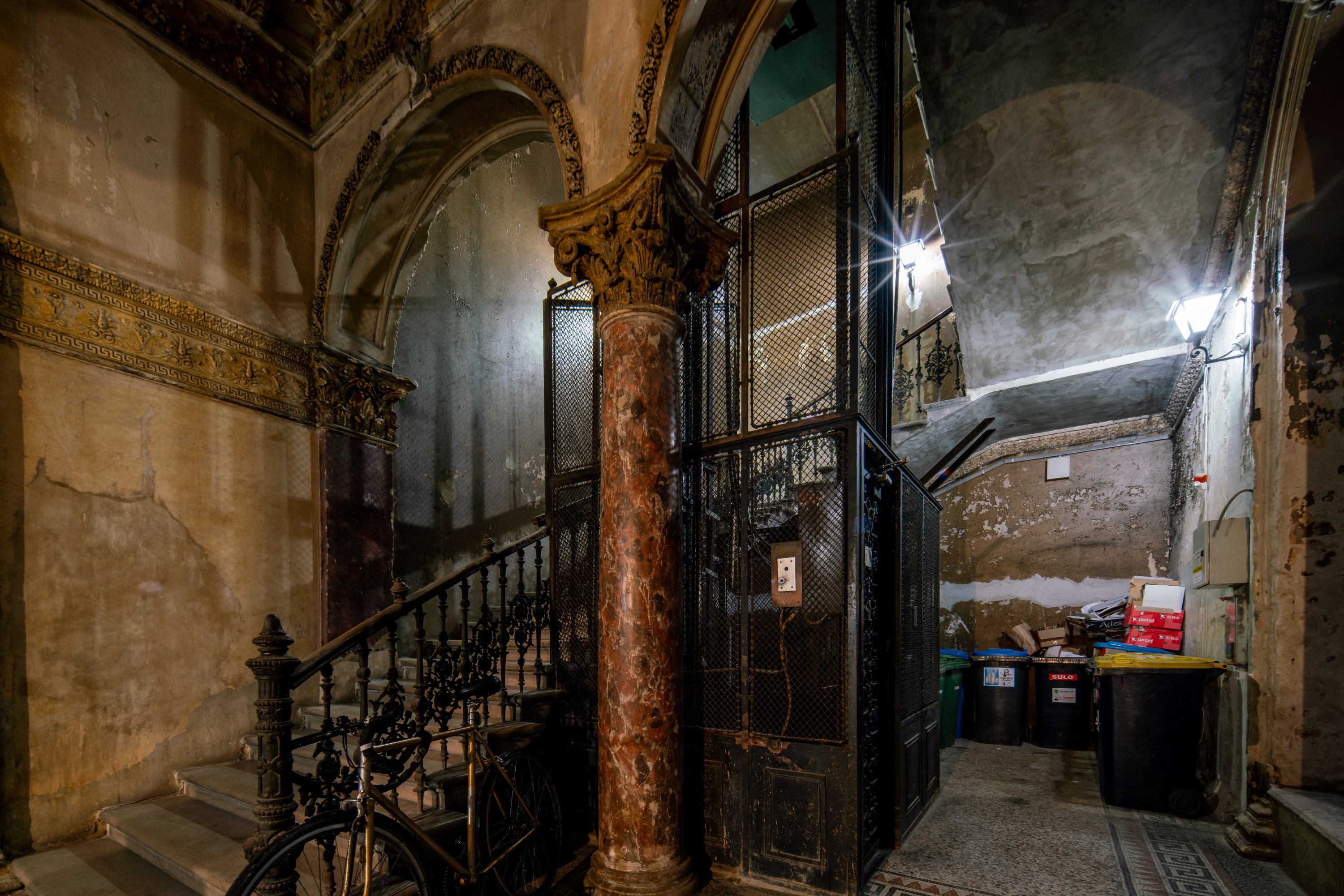
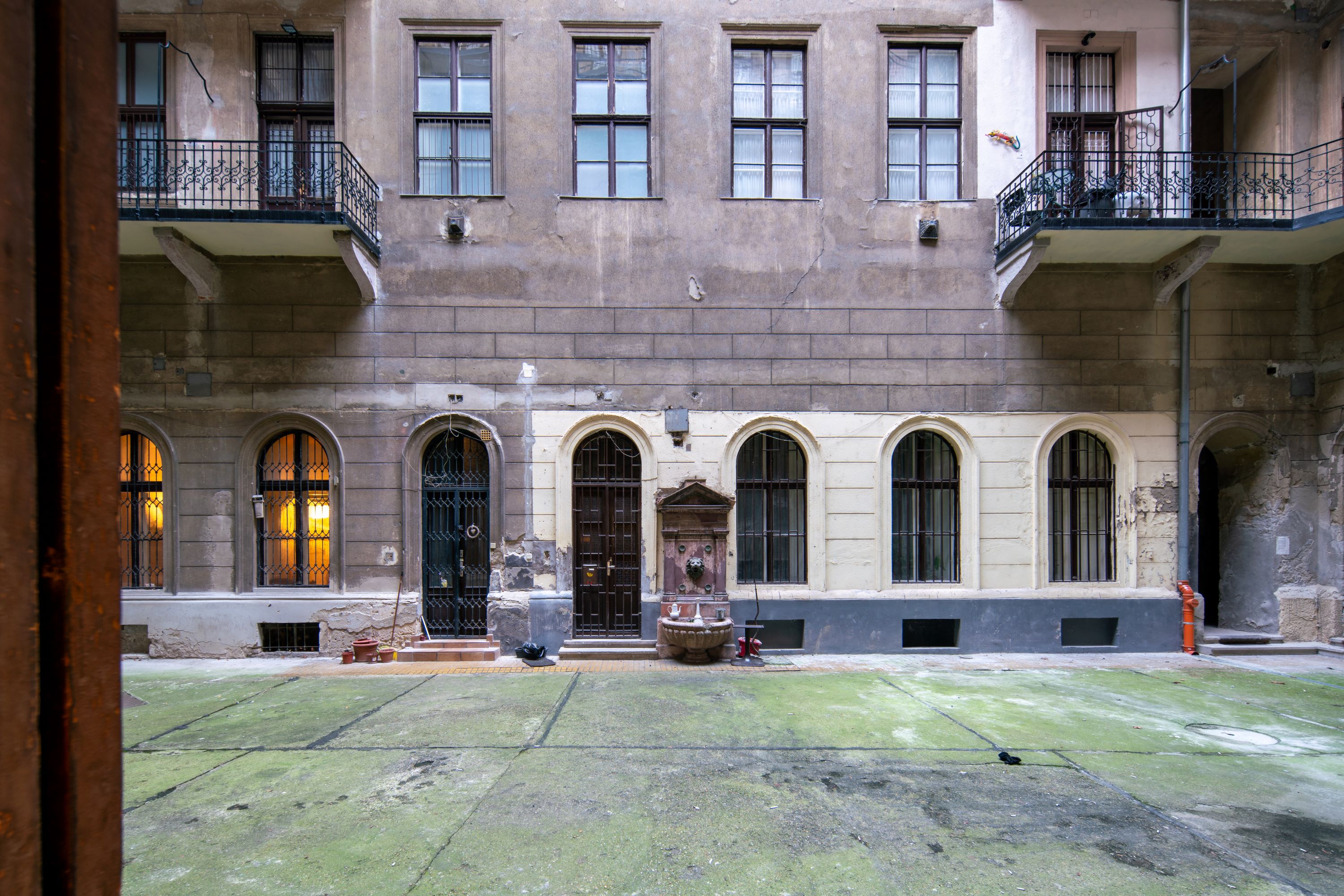
The foyer of Fő utca 4 maintains its beauty despite the evident signs of decay. Erected in 1872, this neorenaissance structure was originally built for the “Buda Commercial and Industrial Bank” (Budai Kereskedelmi és Iparbank) and designed by Imre Steindl, the same architect behind the Hungarian Parliament Building. In my photograph, if you shift your gaze to the left, you’ll notice a niche that once housed a statue of Bacchus; regrettably, it has since disappeared.
Despite its prime location near the Buda bridgehead of the Chain Bridge, this residential building currently languishes in a dilapidated state. The adjacent structure at Fő utca 2 fell victim to bombing during World War II. The renowned “Lánchíd kávéház,” situated on its premises, attracted notable writers like Mihály Babits and Zsigmond Móricz. They, along with others, convened here weekly to edit Nyugat, a significant Hungarian literary journal in the first half of the 20th century. A modern hotel now occupies the space where the Lánchíd kávéház once thrived.
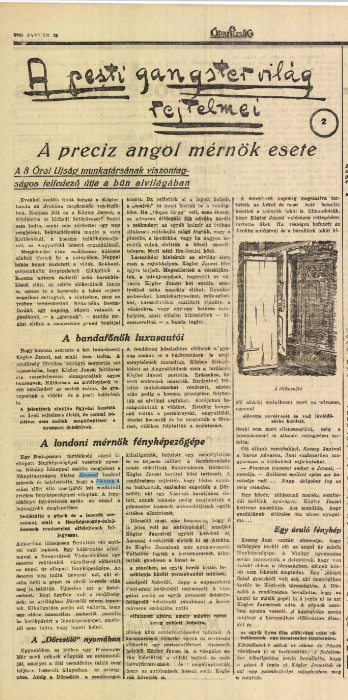
This area has been a popular destination for tourists exploring Budapest since the 1920s-1930s. In January 1935, the “8 Órai Újság” newspaper published a lengthy article uncovering the “secrets of the gangster underworld of Budapest.” The investigation stemmed from the theft of two high-priced cameras from London engineer Howard Pister. Surprisingly, Pister, when reporting the crime, provided the serial numbers of the cameras. This led to the apprehension of a gang specializing in the theft of valuable items and cars. Although the police returned both cameras to Pister, they processed the films discovered inside, ultimately leading to the identification and arrest of another criminal. Interestingly, the accomplices of this last individual had unknowingly taken photos of him using the stolen cameras, providing crucial evidence that contributed to their identification and subsequent arrest.




Leave a Reply