
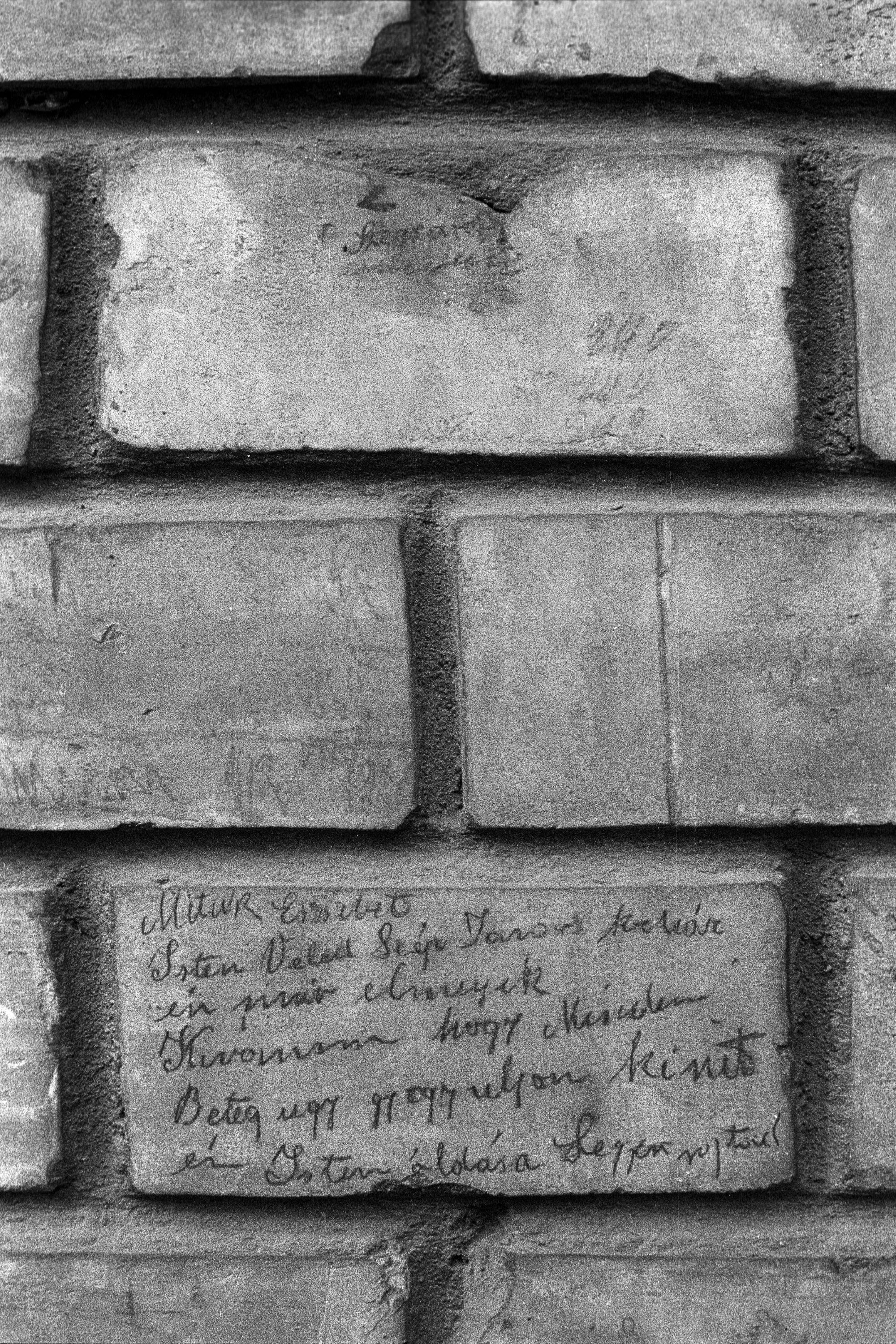
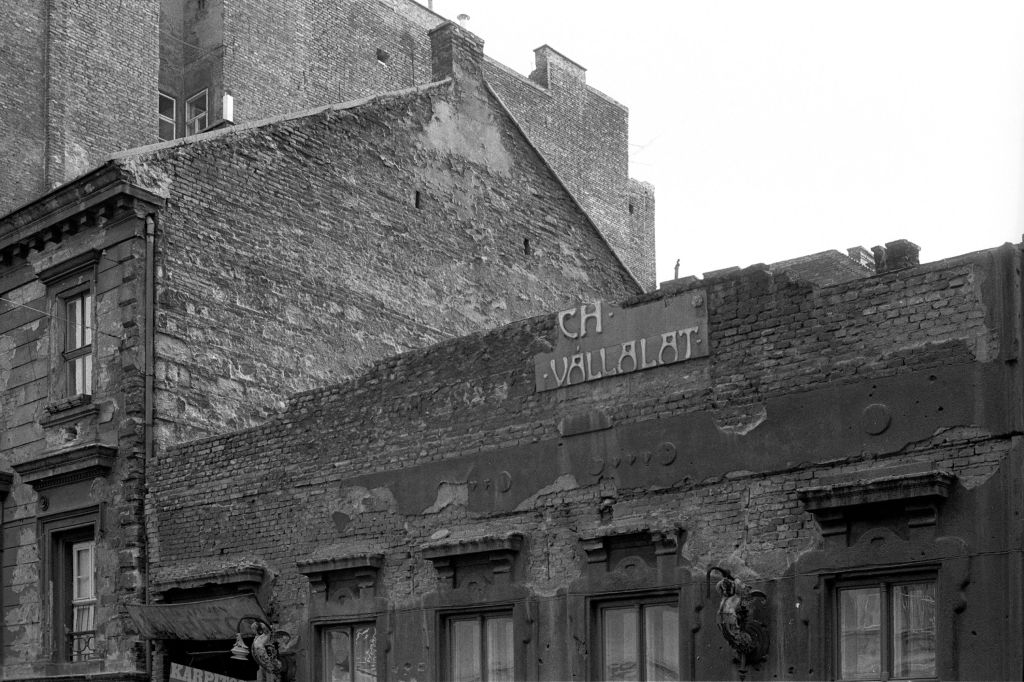
A few years ago, I used to wake up early to explore Budapest’s flea markets, searching for vintage photos. I donated most of my discoveries to Fortepan, a copyright-free and community-based photo archive. One day, amidst my treasure hunt at Bakancsos flea market, I stumbled upon a collection of captivating black and white prints showcasing Budapest’s architectural details in the early 1980s. On their back, each photo bore the stamp of “Benjamin Makovecz,” a name immediately familiar due to the renown of Imre Makovecz, a prominent Hungarian architect of the 2nd half of the 20th.
After some bargaining, I bought 30 prints at a favorable price. Upon further investigation, I confirmed that Benjamin Makovecz was indeed the son of the Imre Makovecz. Benjamin is a talented writer, translator and graphic artist. I contacted him and he invited me to his home (designed by his father!) in the 12th district, where we engaged in a thoughtful conversation. He expressed great surprise upon learning about the discovery of his photo at a flea market. He shared with me that he had previously provided his print to the Municipality of Budapest for a project aimed at publishing a book, which unfortunately never materialized.
After the book project was abandoned, the photos were lost during a city cleanup day (lomtalanitás). Fortunately, Benjamin retained the negatives and had them professionally scanned. In January 2023, Mesélő Város, our association, curated an exhibition at Kelet Café and Gallery, featuring a selection of Benjamin’s photos alongside ours. The exhibition aimed to explore the transformations (or lack thereof) of certain buildings in Budapest over time.
Interestingly, I initially embarked on my project without knowledge of Benjamin’s work. However, I discovered striking parallels between his work from 40 years ago and my own project, Buildings Tell Tales. He captured the essence and atmosphere of aged buildings—an aspect I continue to refine. Familiar with the locations he visited, I observed the changes; some disappeared or underwent significant transformations, while others remained virtually untouched.
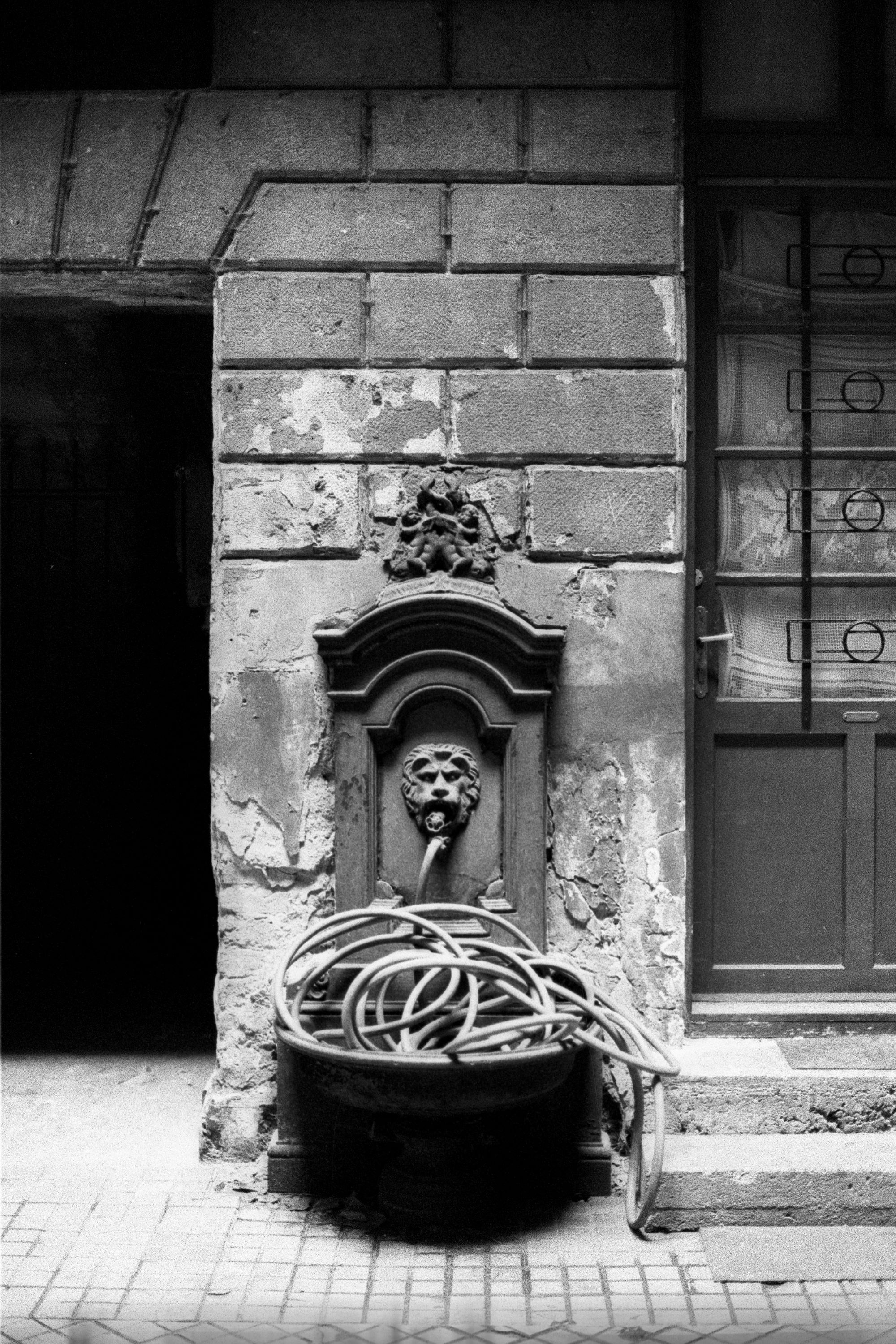
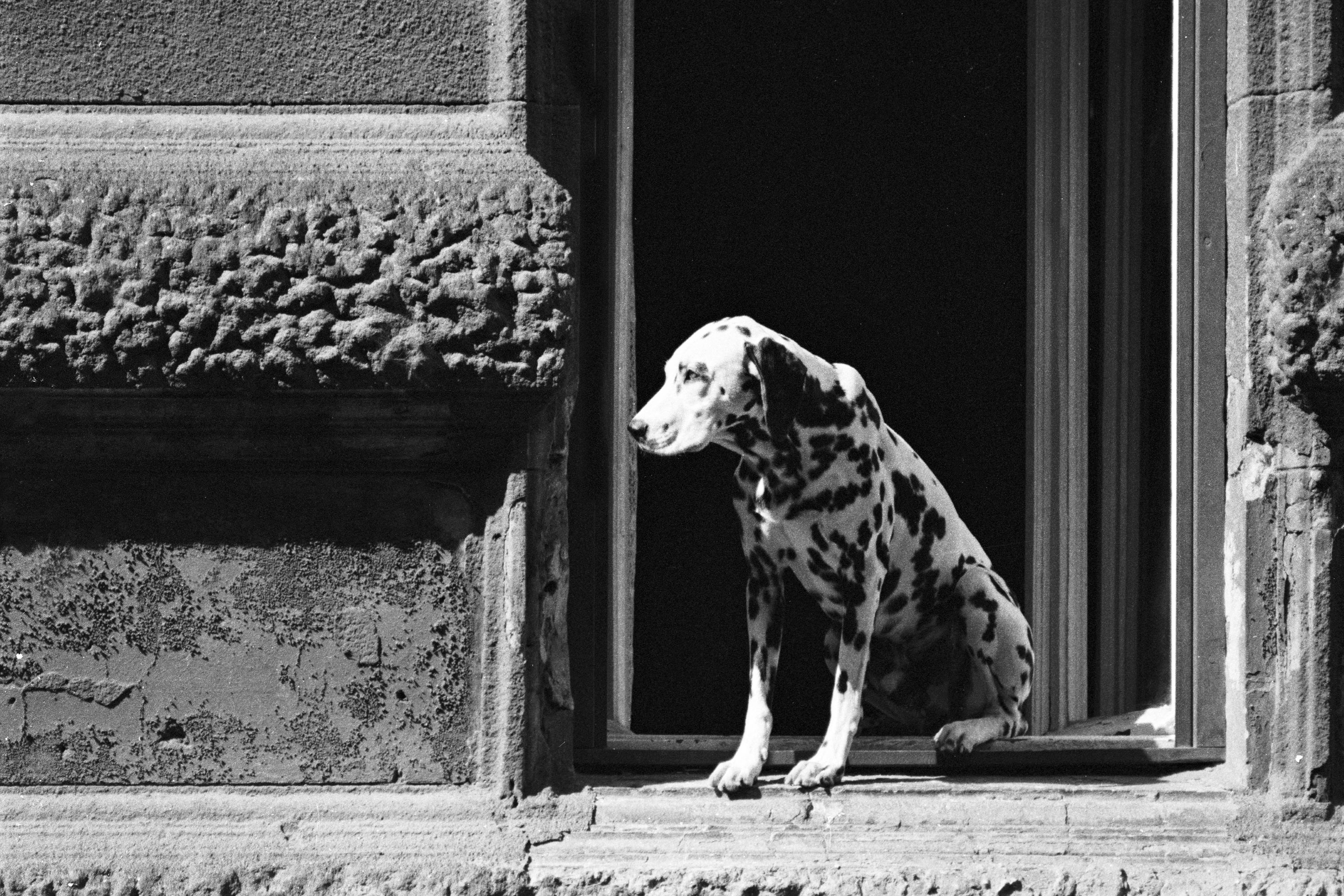
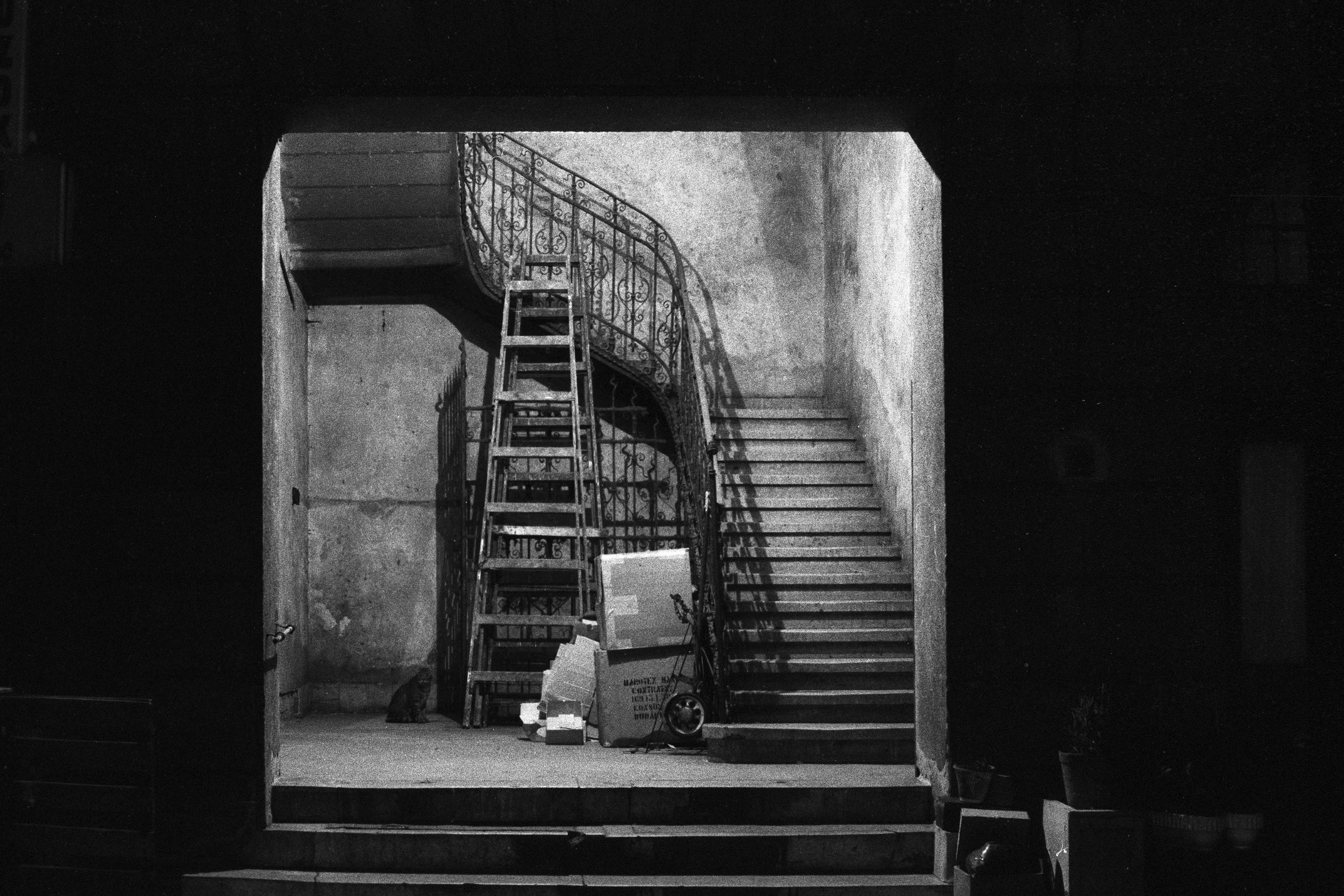
Benjamin took the photo below inside the ‘Tigris Szálló’ building at Nádor utca 5. Here’s how it looks nowadays.

The following are also locations I have recently explored: the Bedő-house – an Art Nouveau gem in Honvéd utca, an old apartment house on Maros utca, another beautiful house on Orlay utca, and a villa that looks like a romantic castle on Zichy Géza utca.
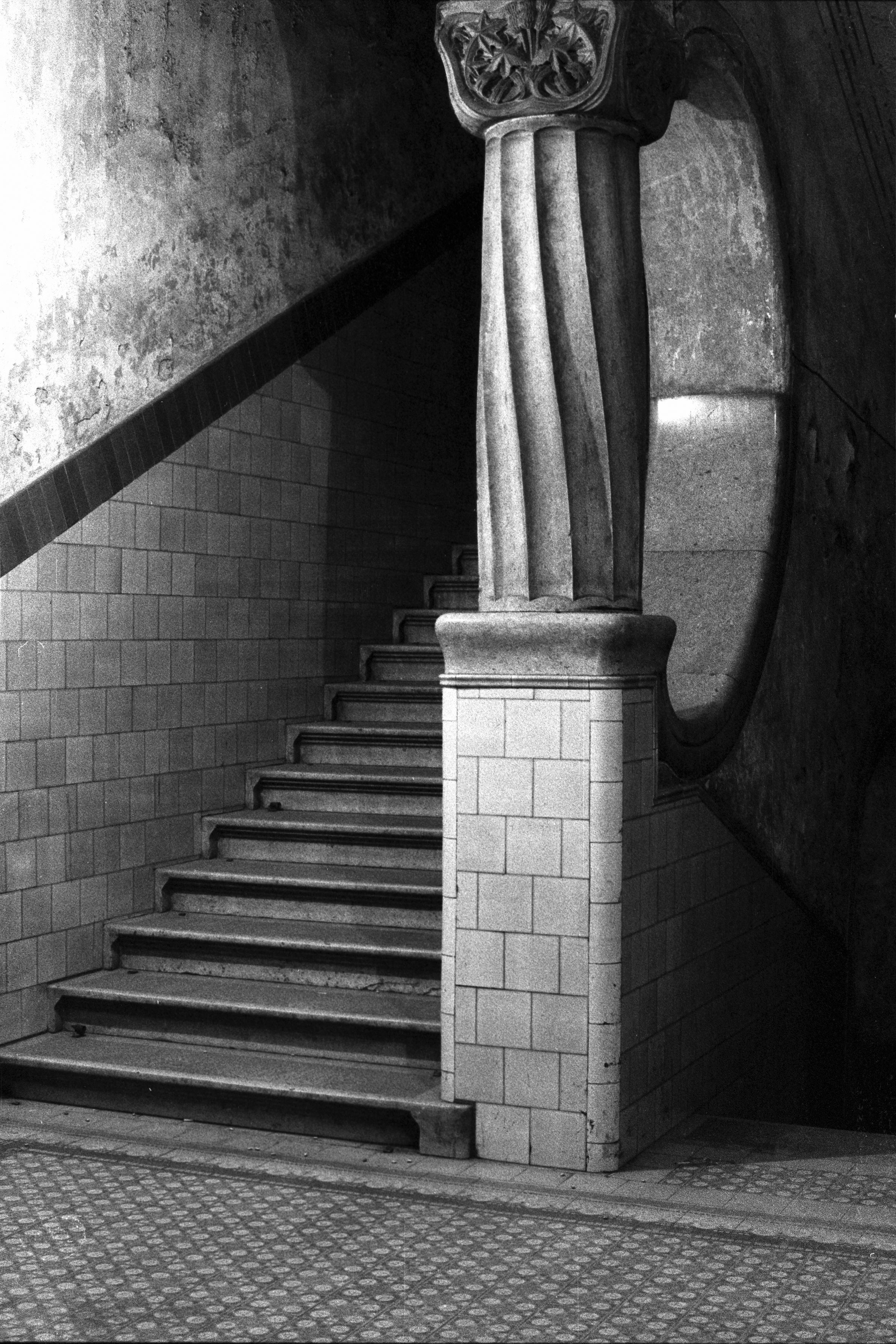
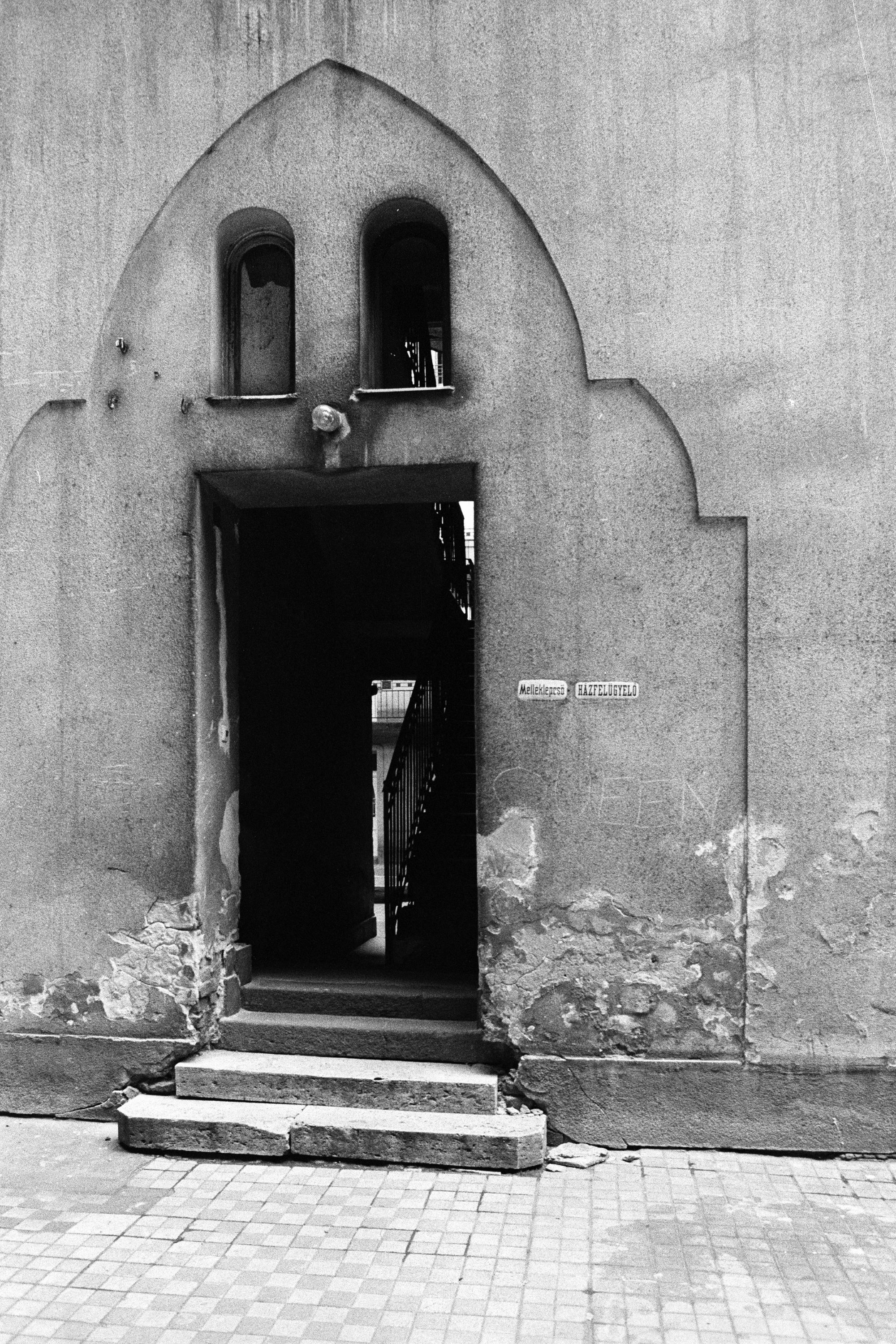
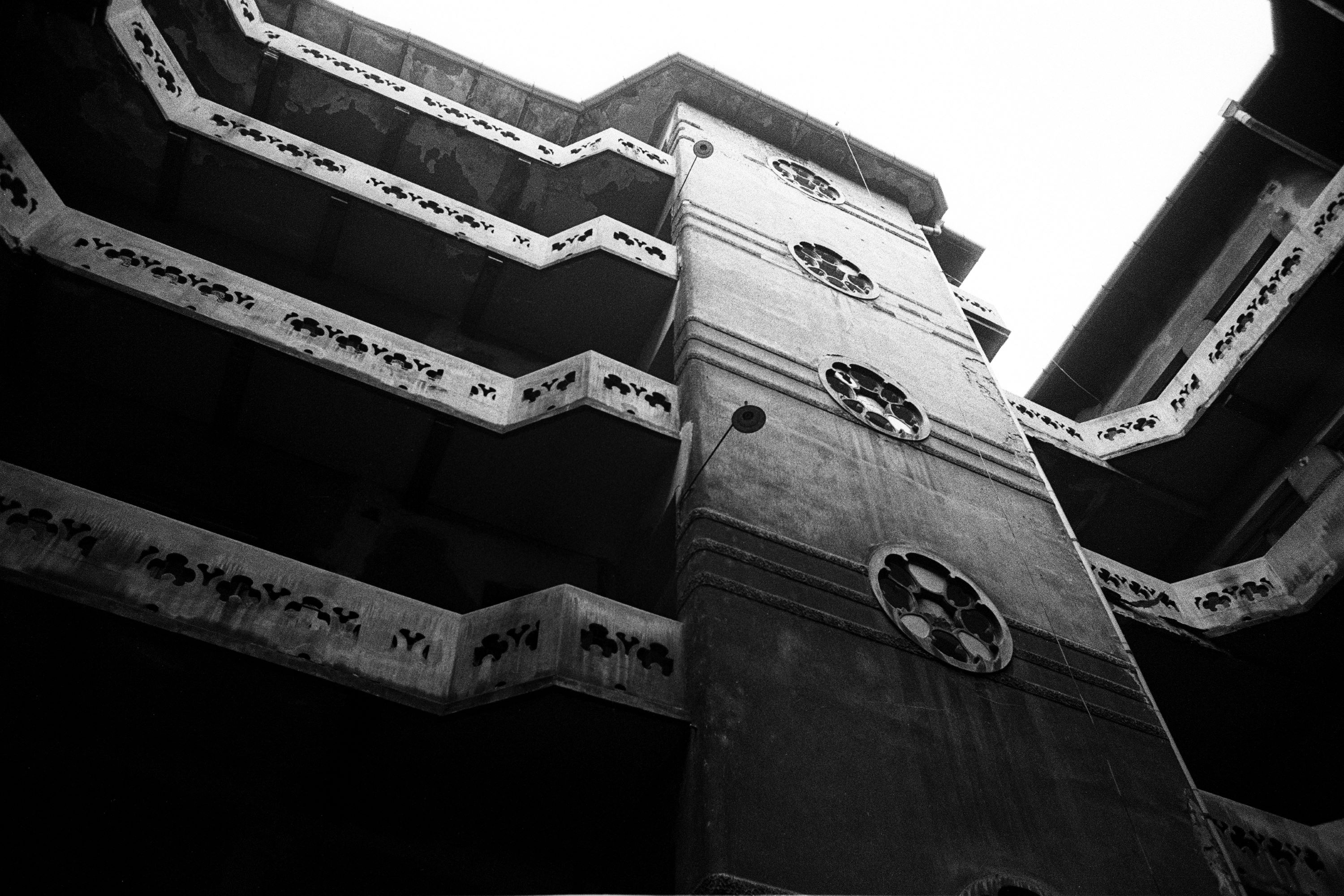
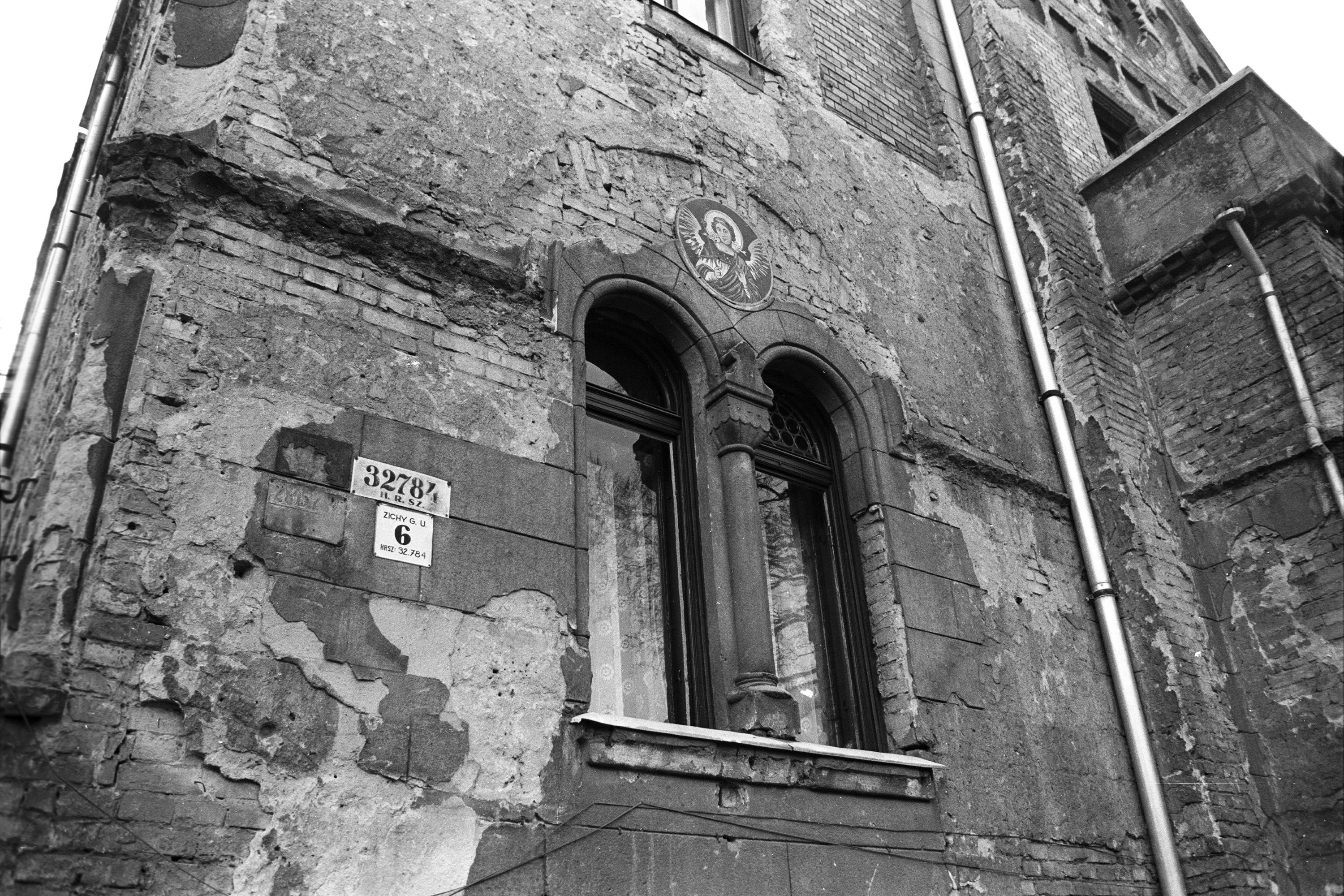
Benjamin also captured photos of the small urban details I love, such as prewar graffiti and old signs


 Buildings Tell Tales
Leave a reply to Orlay utca 2b : István Medgyaszay’s Masterwork on the Slope of Gellért Hill – Buildings Tell Tales Cancel reply