
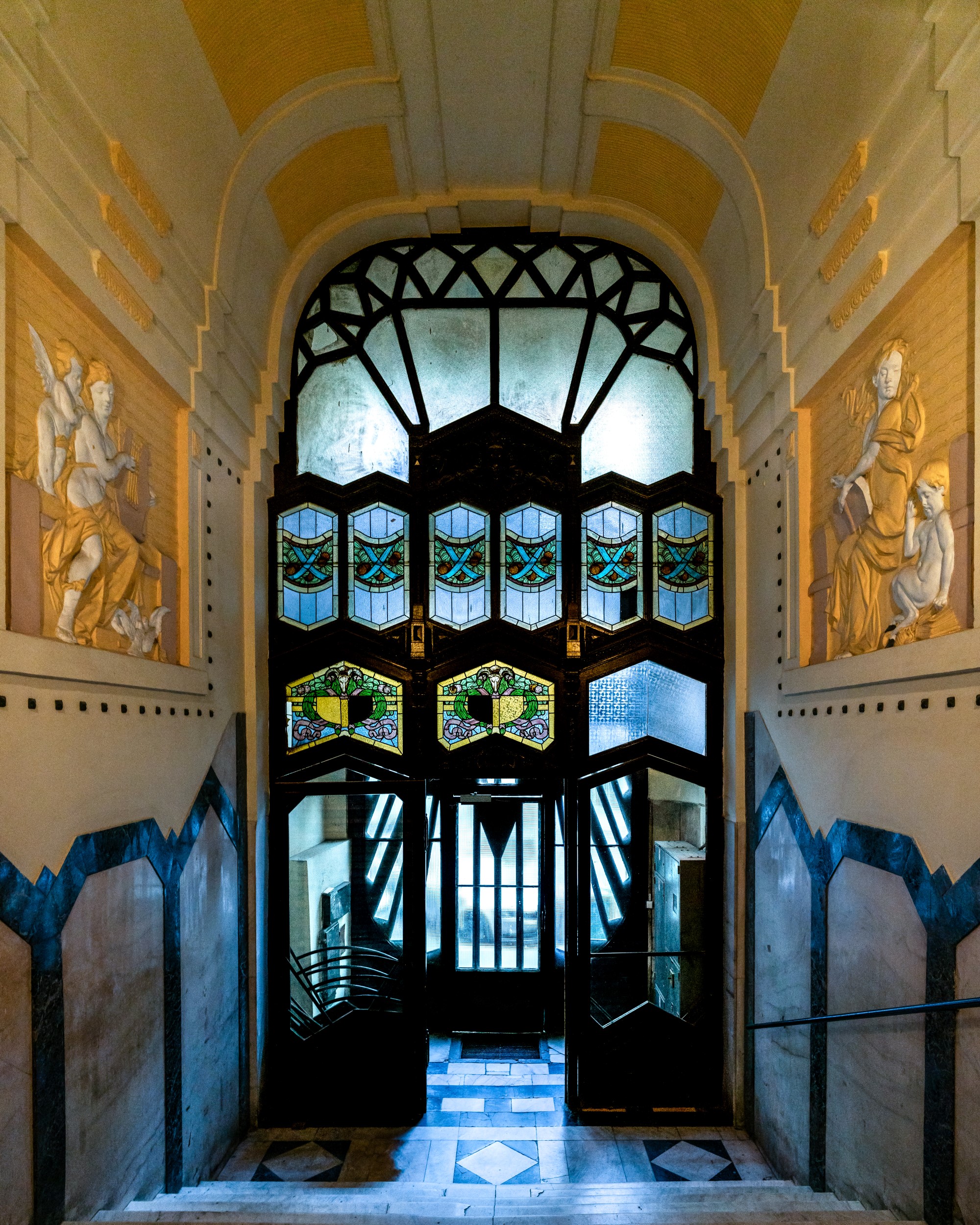
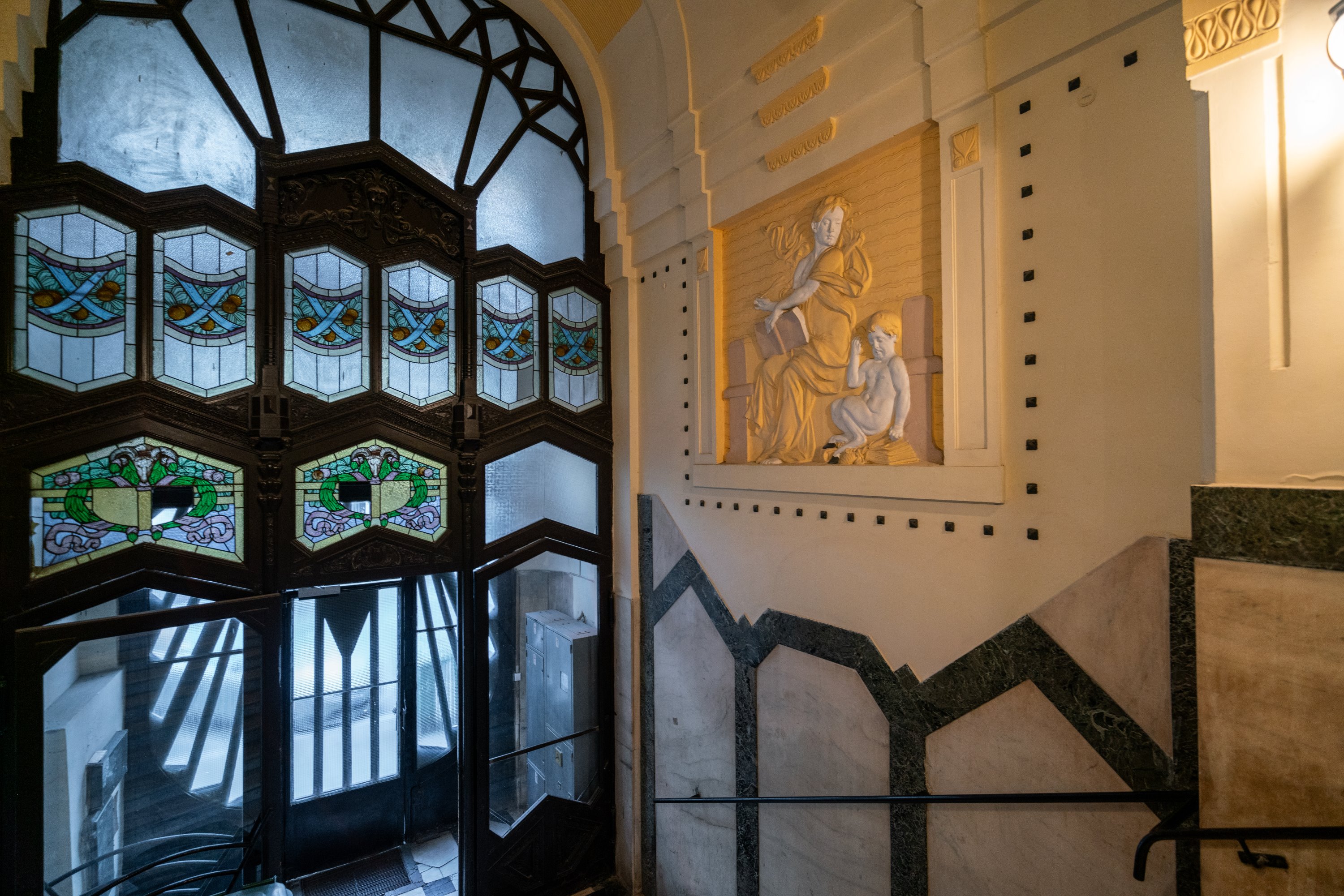
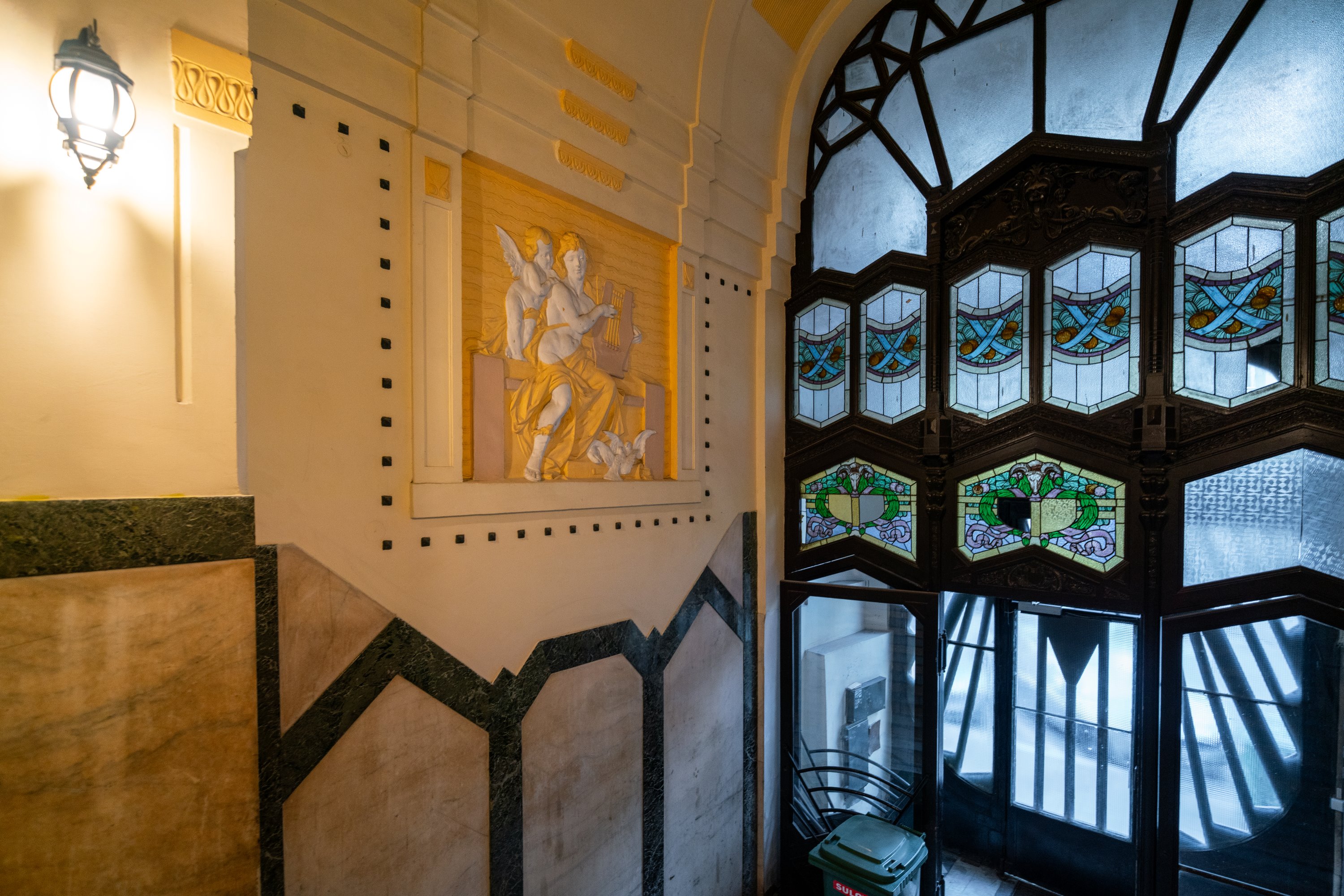
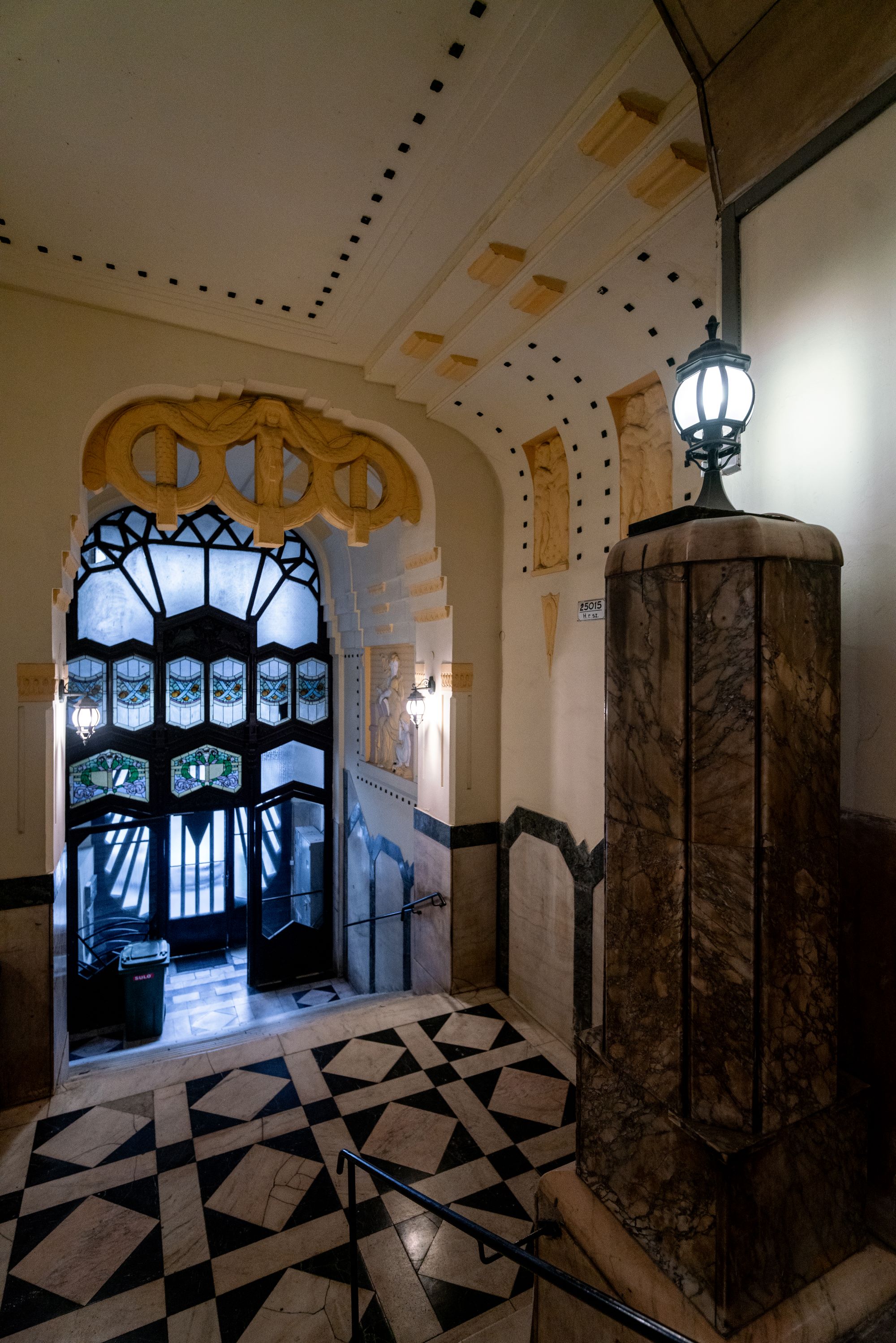
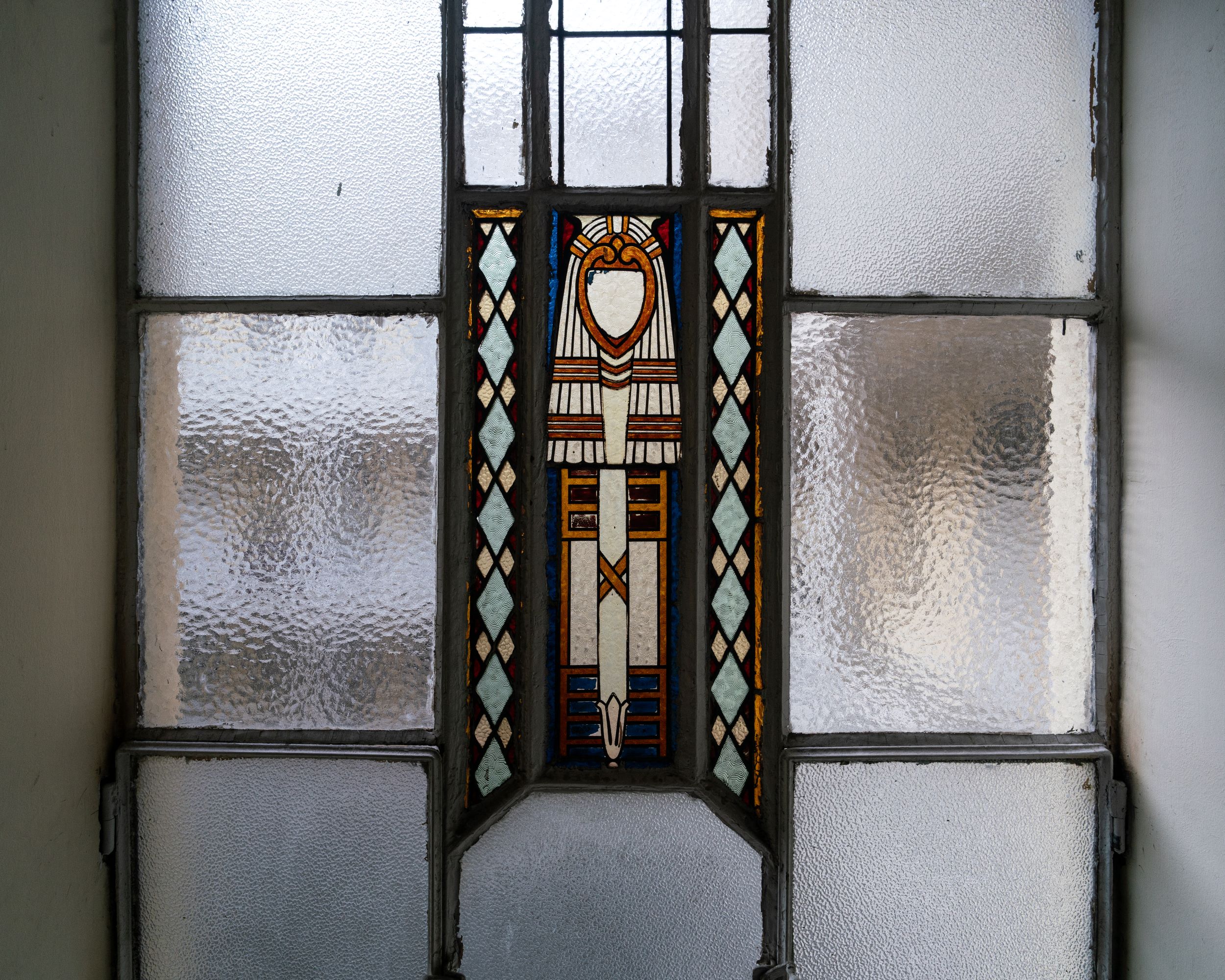
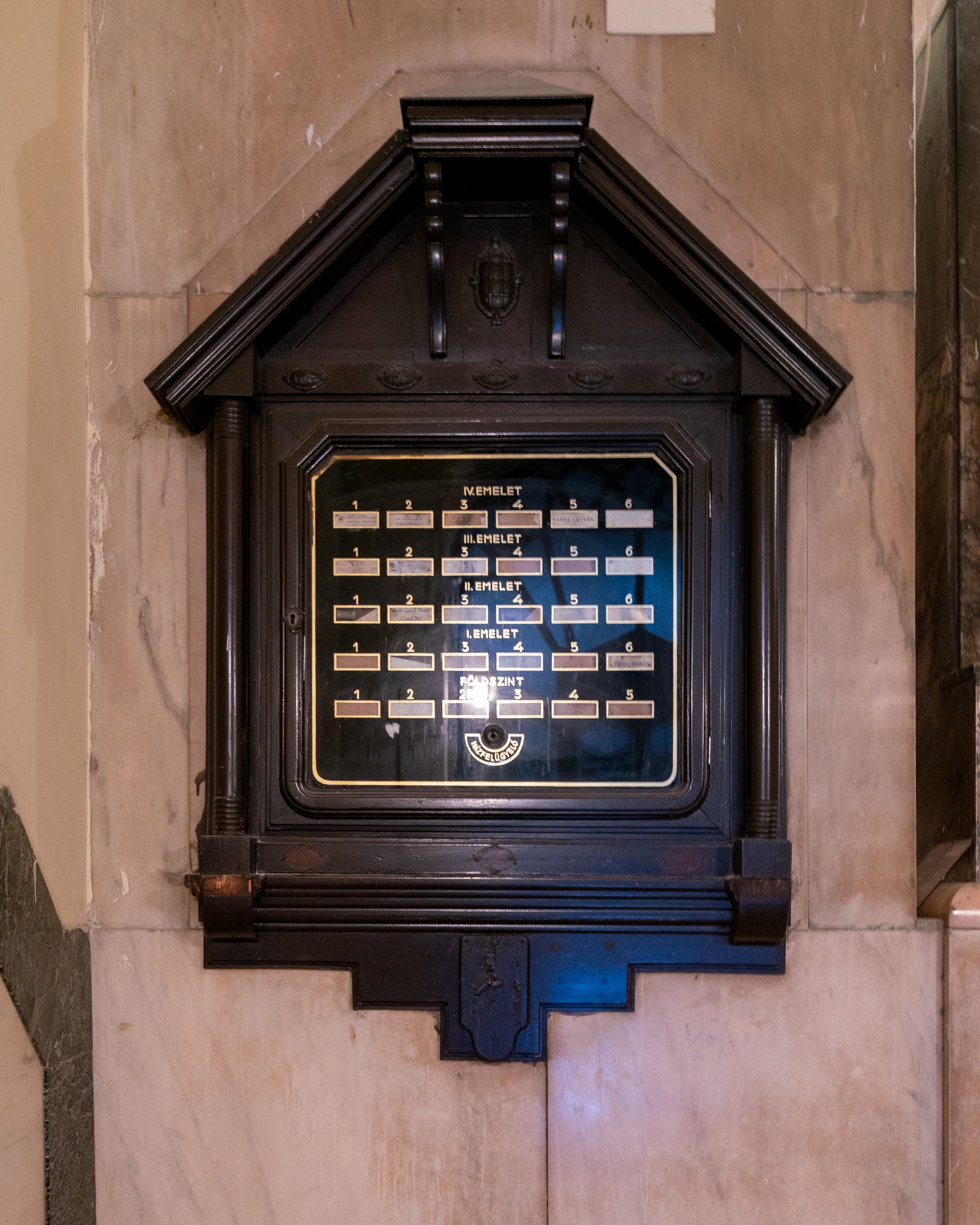
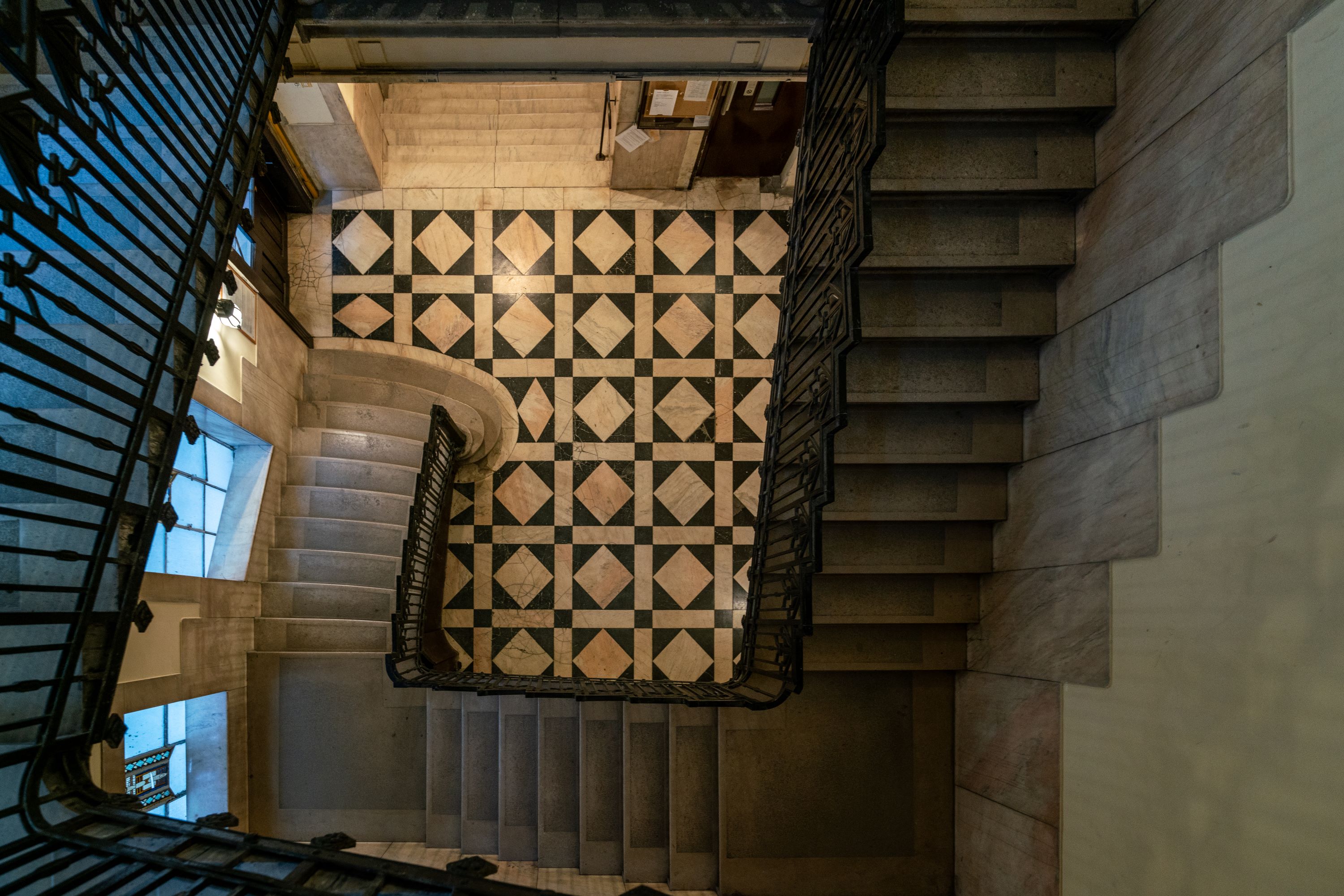
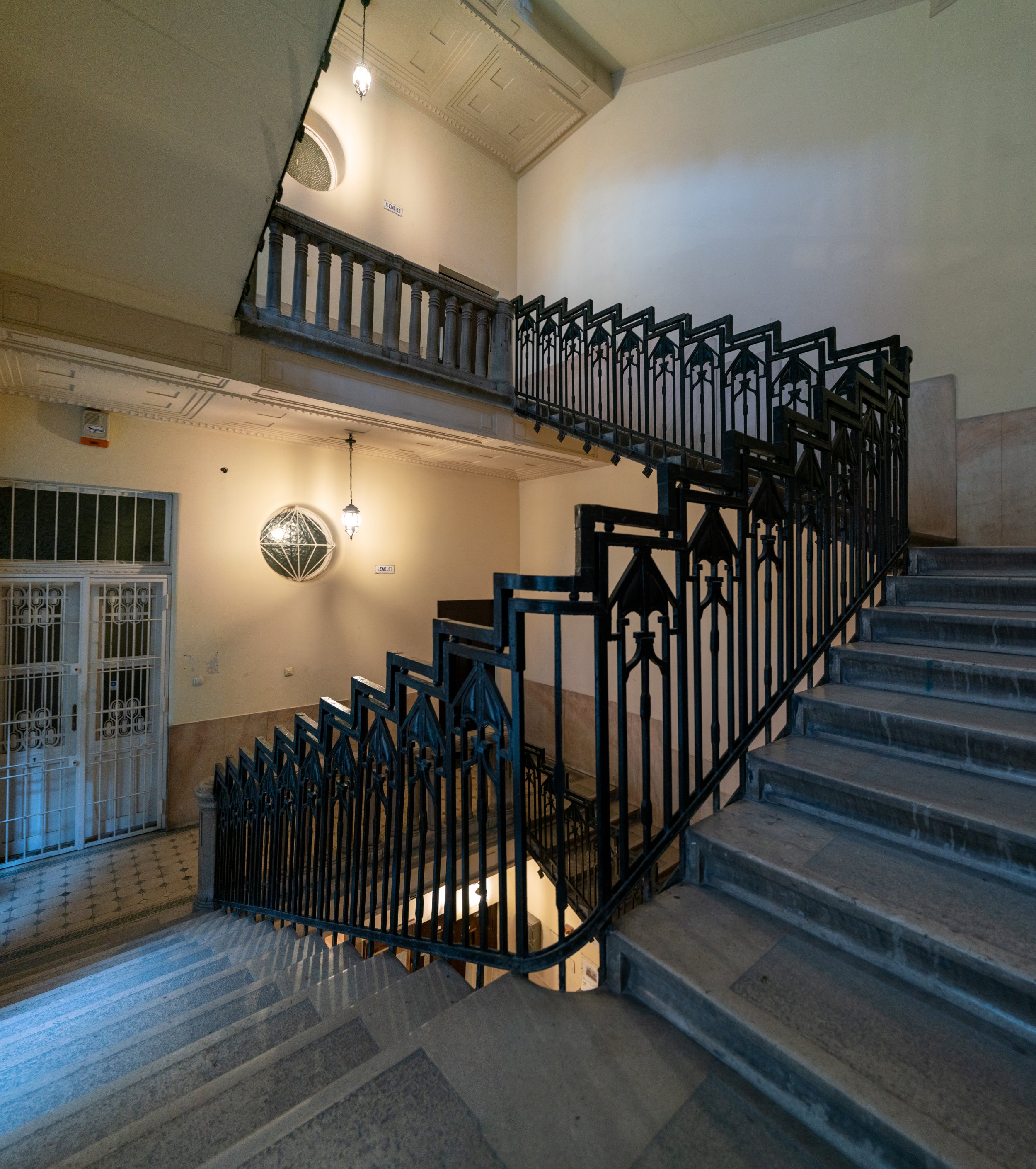
Taking a photo of the breathtaking entrance of Falk Miksa utca 13 is more difficult than one would think. Most of the time, there are many bins next to the door, so I had to wait for a trash collection day and manage to sneak in early in the morning!
This Art Nouveau building was designed by one of my favorite Hungarian architects, Gyula Fodor, who designed many amazing buildings in Budapest such as Csokonai utca 8, Hajós utca 25, Dózsa György út 64 or Baross utca 11. The house was completed in 1912, and mostly upper-middle-class people moved in. Already in the 1910s, many lawyers and doctors lived and worked here, and this remains the case today.
In 1944, this house became a “yellow-star house” a compulsory place of residence for Jews in Budapest, from where they were either sent to the ghetto or to “protected houses.”
In July 1945, in the troubled times that followed the end of the war, a 20-year-old glass grinder named Pál Kővágó rang the doorbell of the apartment of lawyer Dr. Zoltán Nagy. The lawyer received the young man in his office, who pulled out a revolver and pointed it at him, demanding money. Dr. Zoltán Nagy refused, and Kővágó shot him in the stomach. The lawyer died on the spot, and his attacker ran out of the apartment and into the street. There, before he could be apprehended, he shot himself. He was taken to Rókus Hospital in serious condition and later condemned to 8 years of prison. Dr. Nagy Zoltán was not only a lawyer but also a talented writer and poet who belonged to the first generation of the Nyugat (West), an important Hungarian literary journal in the first half of the 20th century.

Perhaps the most remarkable inhabitant of Falk Miksa utca 13 was Margit Ladomerszky, a famous actress. In 1944, when the house got marked with a yellow star, Christian inhabitants had to leave and were housed in apartments confiscated from their previous owners. The authorities offered Margit Ladomerszky to live in a luxurious villa in Buda, but she refused and stayed in the house. She leveraged her fame and her network to get forged papers and food to the Jewish inhabitants of the house.





 Buildings Tell Tales
Leave a reply to Rózsa utca 29 : The Poet who Wanted to Die – Buildings Tell Tales Cancel reply