
The Battle of Budapest, one of the longest and bloodiest sieges of WWII, endured for 102 days. It commenced with the initial sighting of a Soviet tank and concluded with the capture of Buda Castle on 13 February 1945. These tragic events have left enduring marks on Budapest’s walls, such as signs indicating the presence of shelters, bullet holes, and inscriptions left by Soviet soldiers signifying the clearance of explosive devices.
Such inscriptions, written in Cyrillic, can be found in both Budapest and Pest. They confirm the removal of all mines and explosive devices, including the date and the name of the soldier responsible for the removal/defusing process.
Throughout the demining of Budapest, sappers meticulously inspected and cleared over 4,000 km of streets, main roads, 150 km² of land, gardens, 33,000 buildings, and 420 industrial plants from mines.
Presently, a few dozen of these inscriptions can still be discovered in Budapest. Most are on stone or brick walls that remain unpainted. Regrettably, some were erased in recent years, but there are also commendable examples where inhabitants have preserved the inscriptions as precious memories of the house’s past.
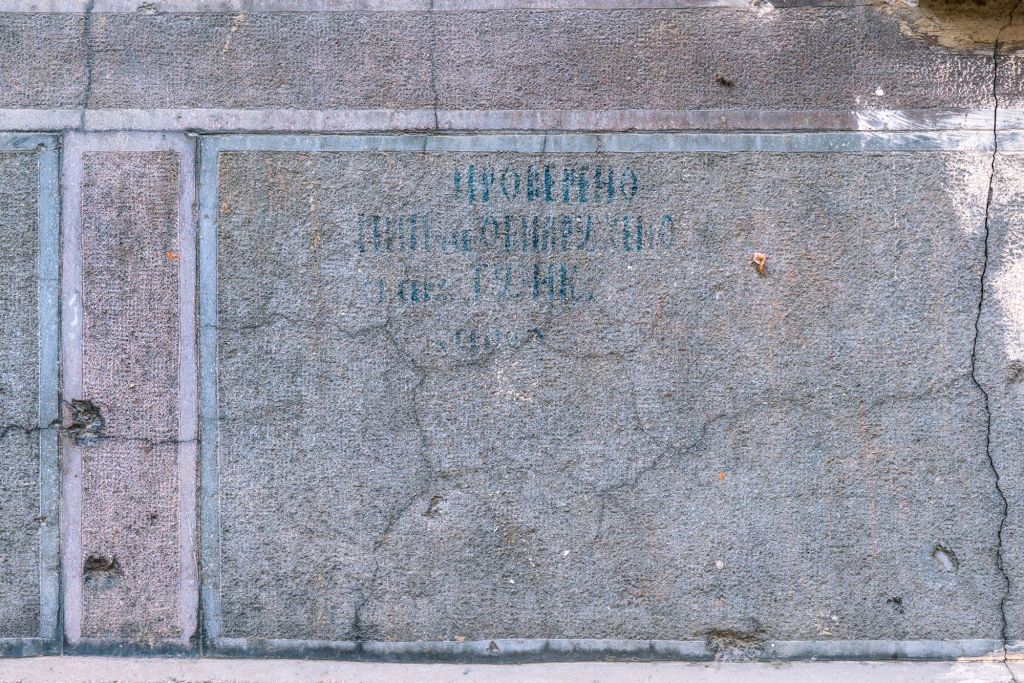
This inscription can be found on a wall in Lőportár utca, in the 13th district of Budapest. Interestingly, a ghost sign is also observed on the same wall.
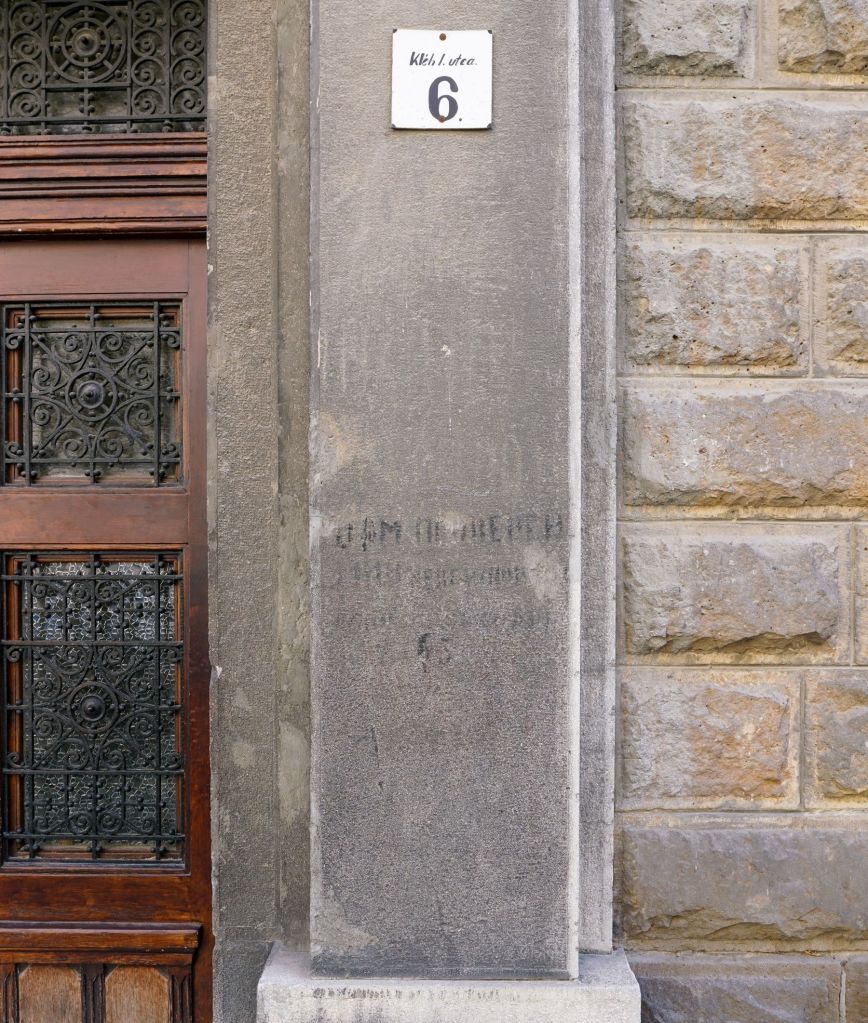
This inscription can be found on a wall in Kléh utca, in the 12th district of Budapest.
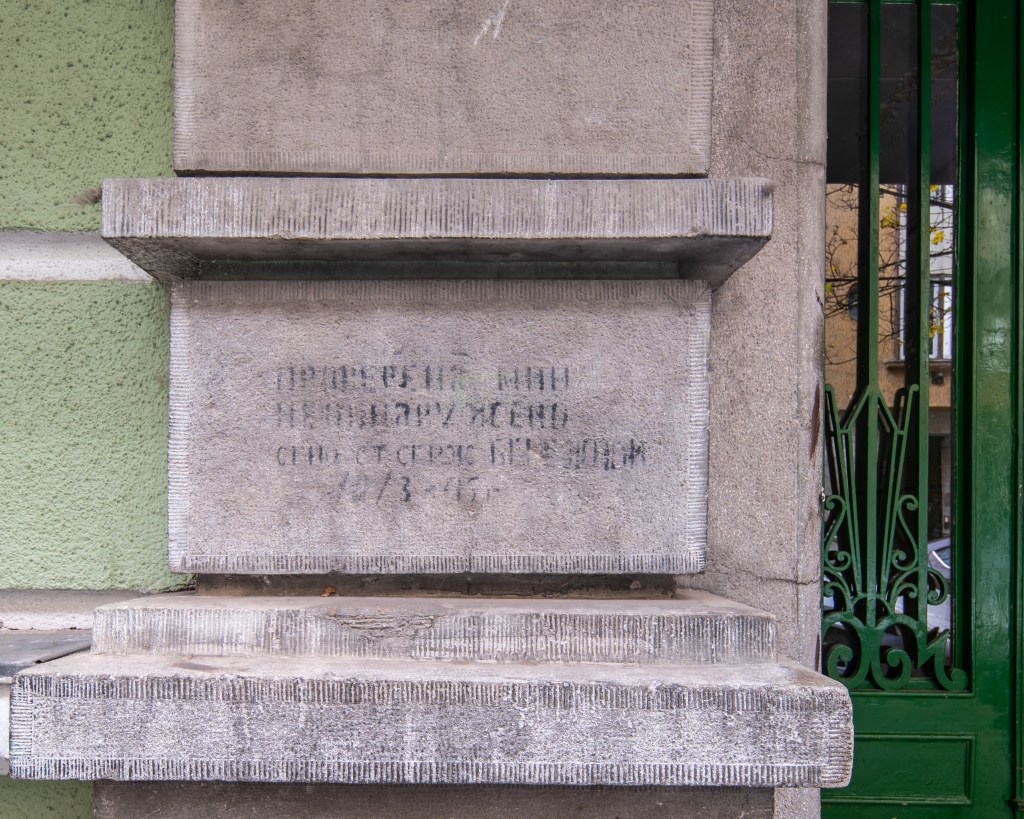
This inscription can be found on a wall in Lágymányosi utca, in the 11th district of Budapest.
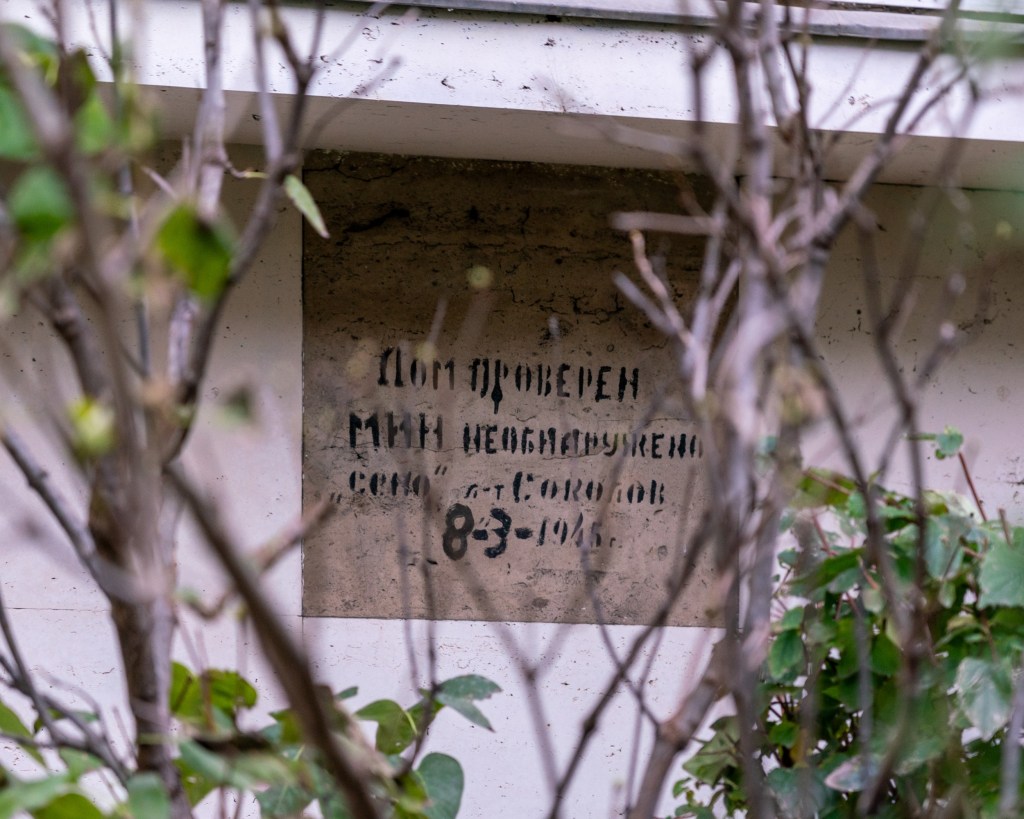
This inscription can be observed on a wall in Beethoven utca, 12th district of Budapest. When the house was recently painted, they made sure to keep the inscription intact.


 Buildings Tell Tales
Leave a reply to Dózsa György út 17 : Prewar Zsolnay tiles in the 14th district of Budapest – Buildings Tell Tales Cancel reply