
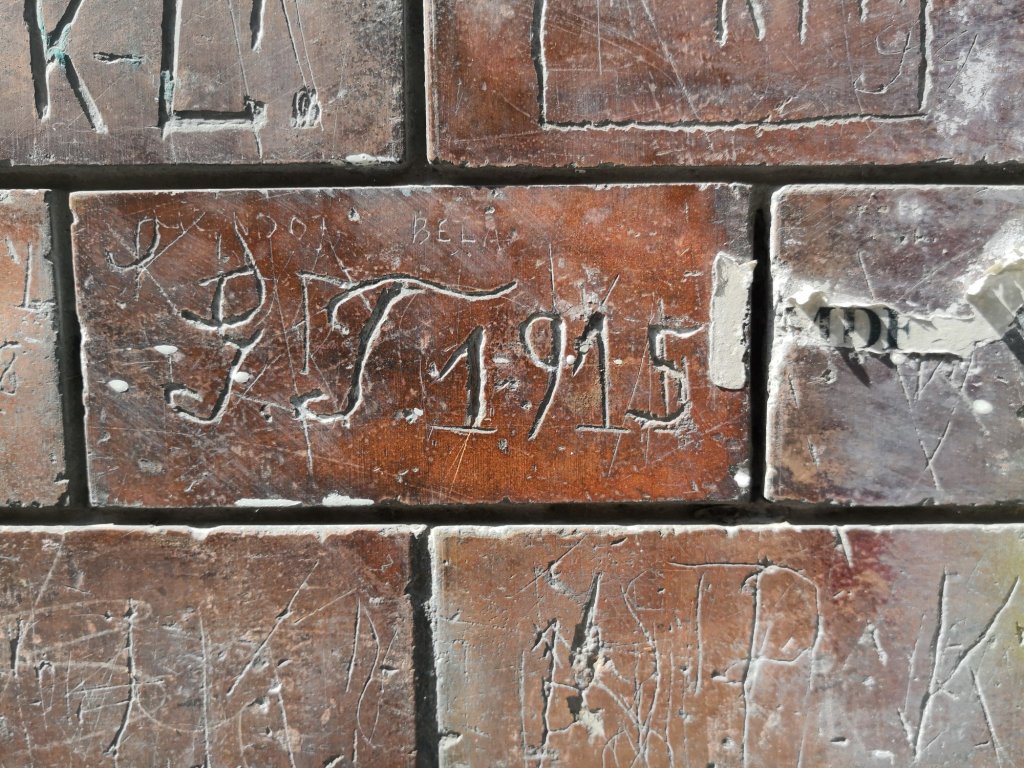
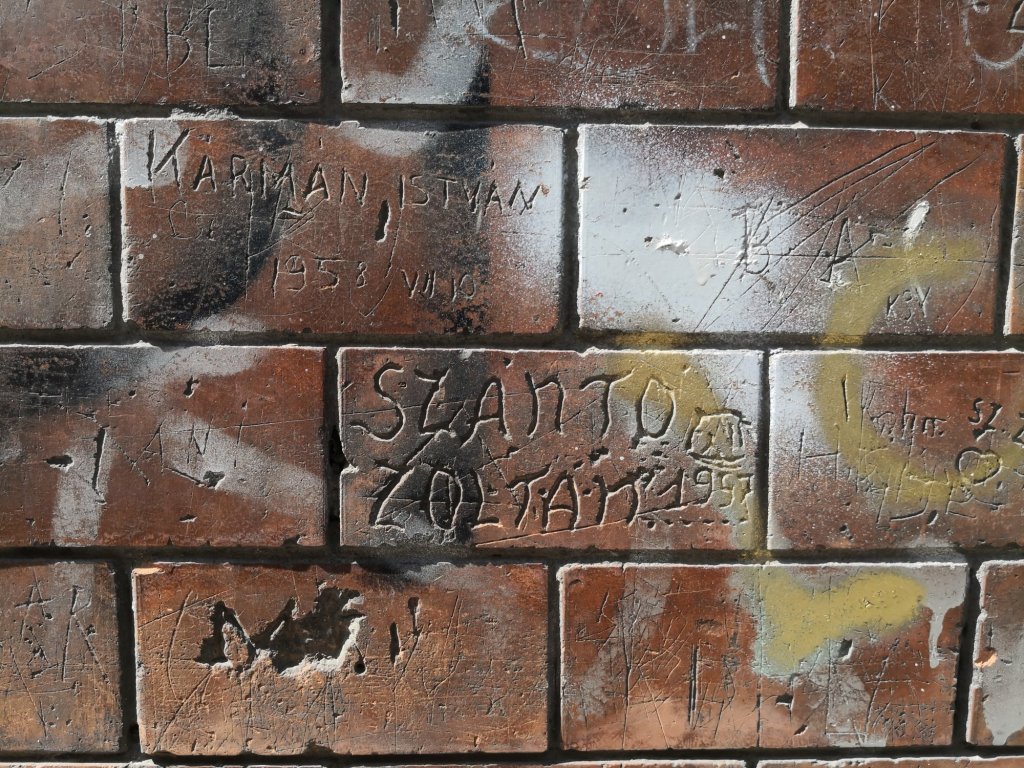
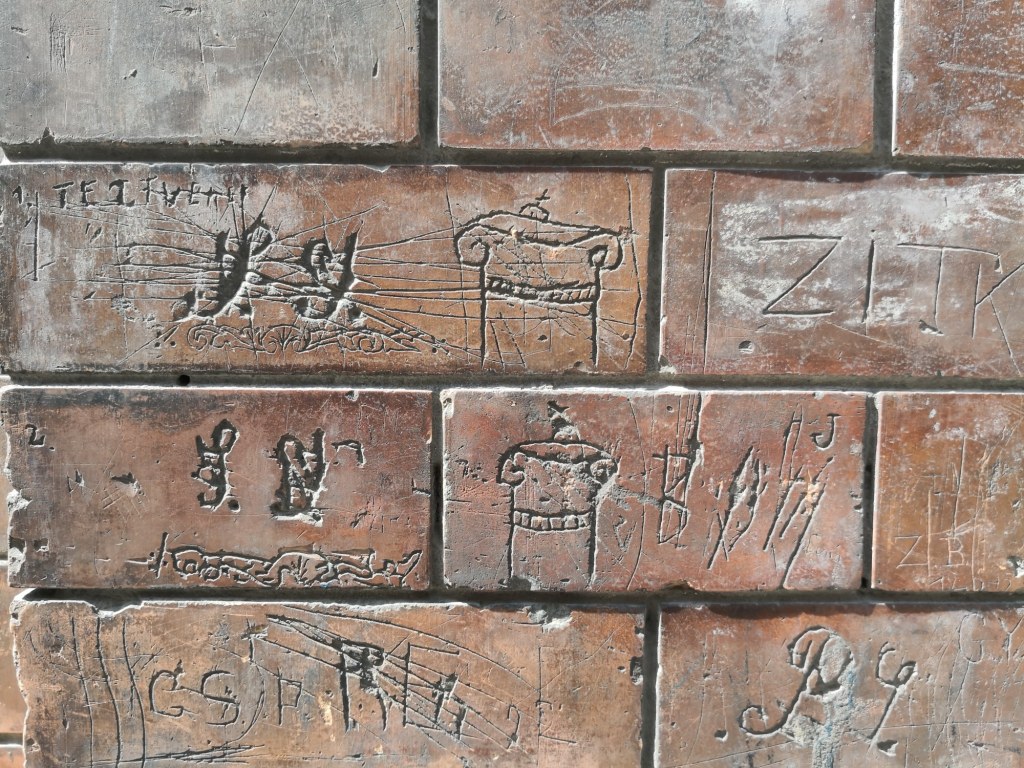
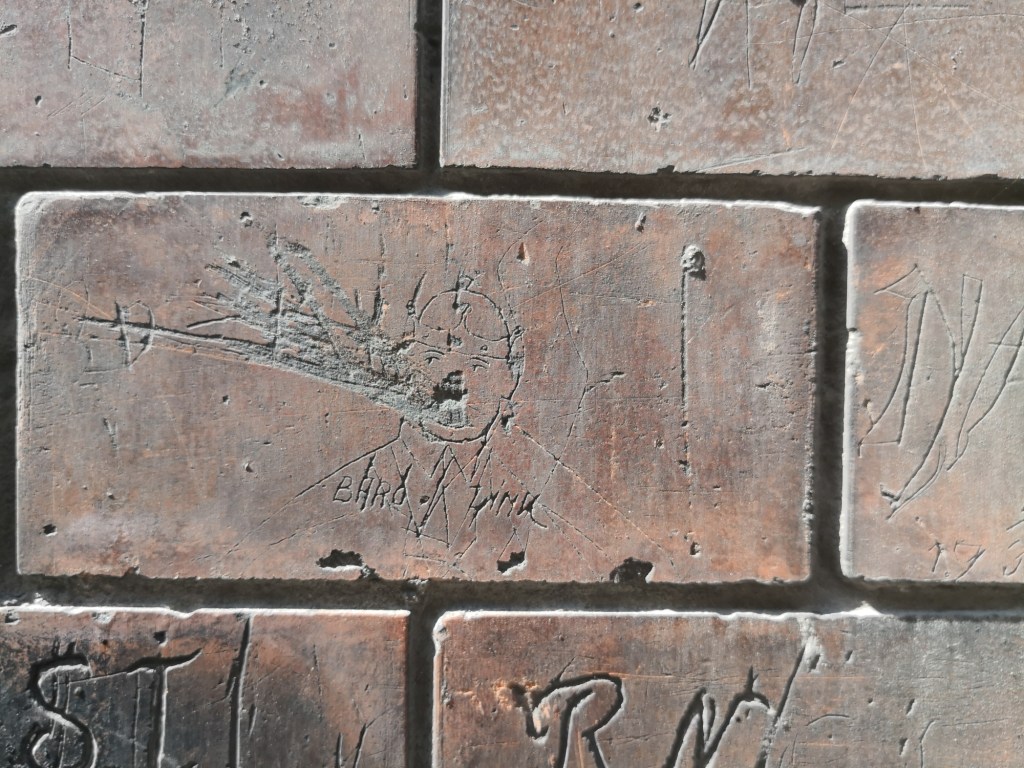
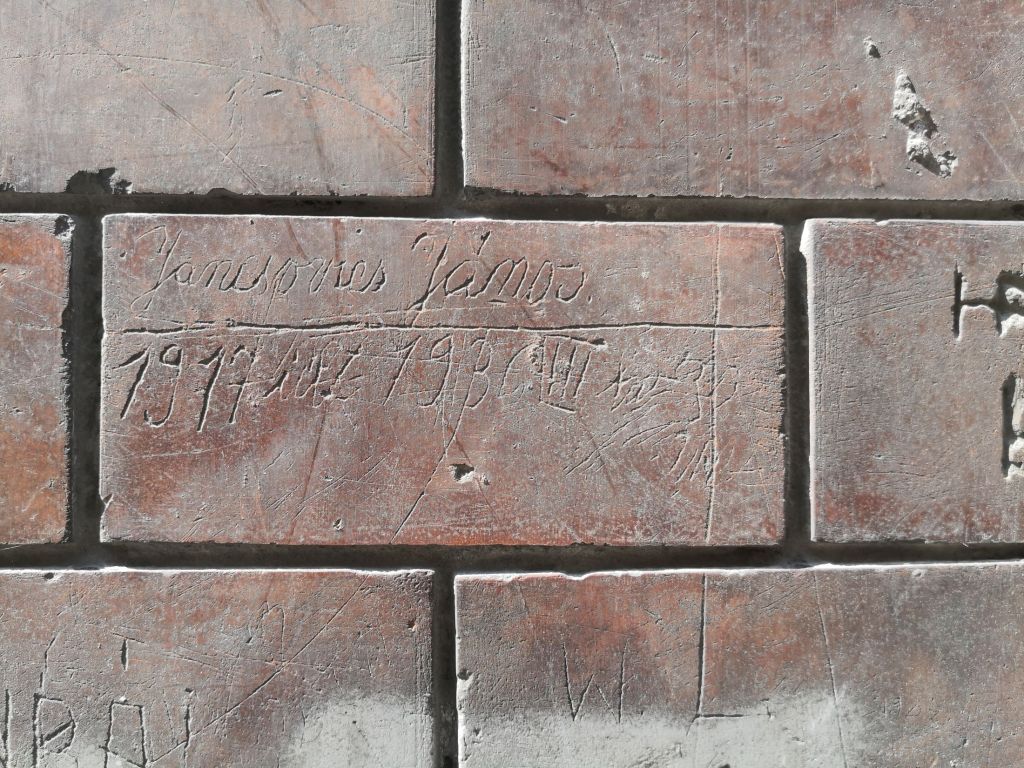
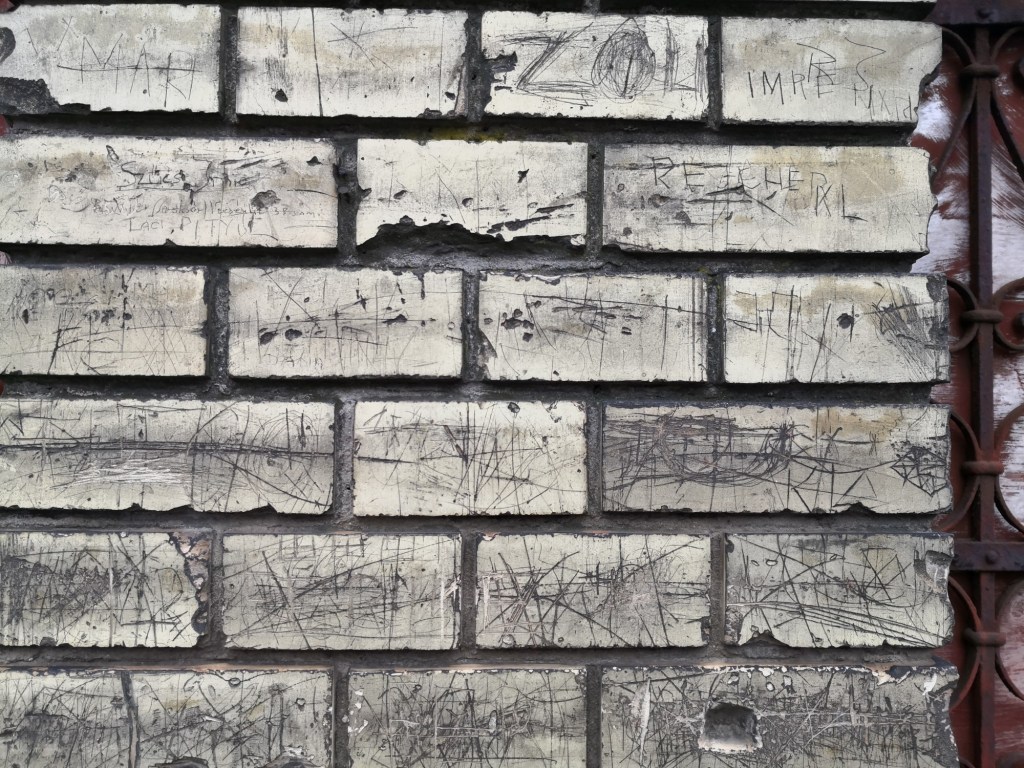
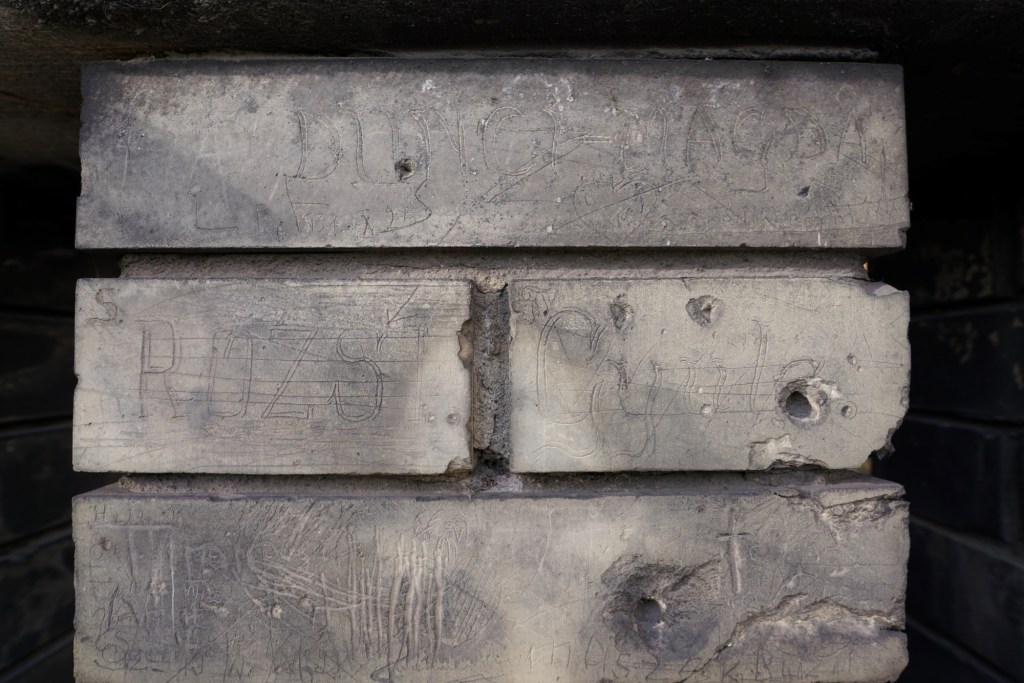
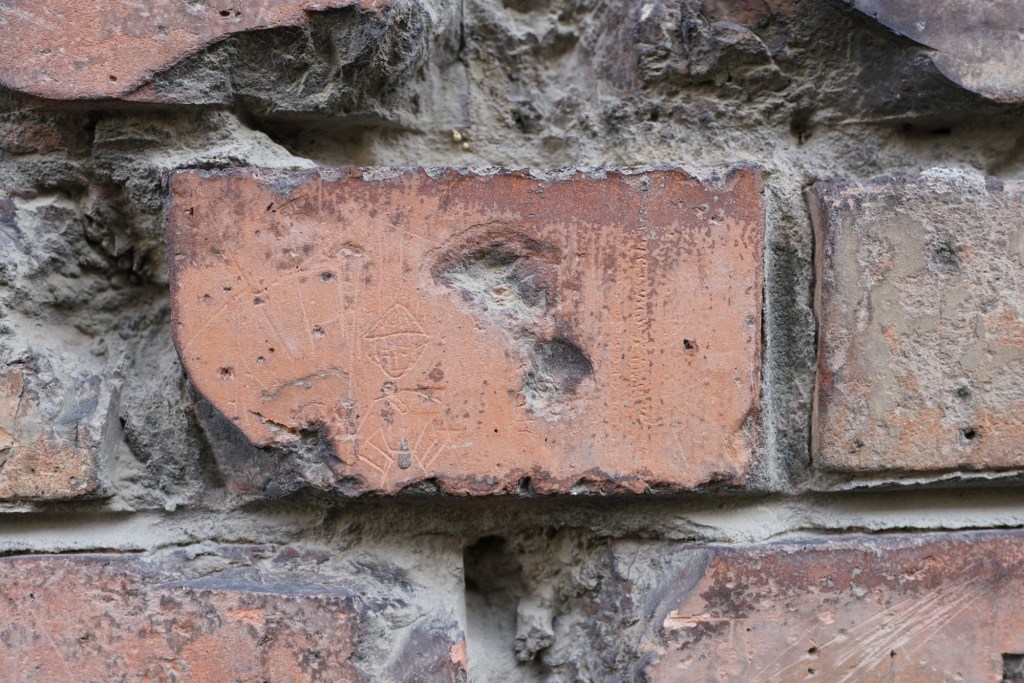
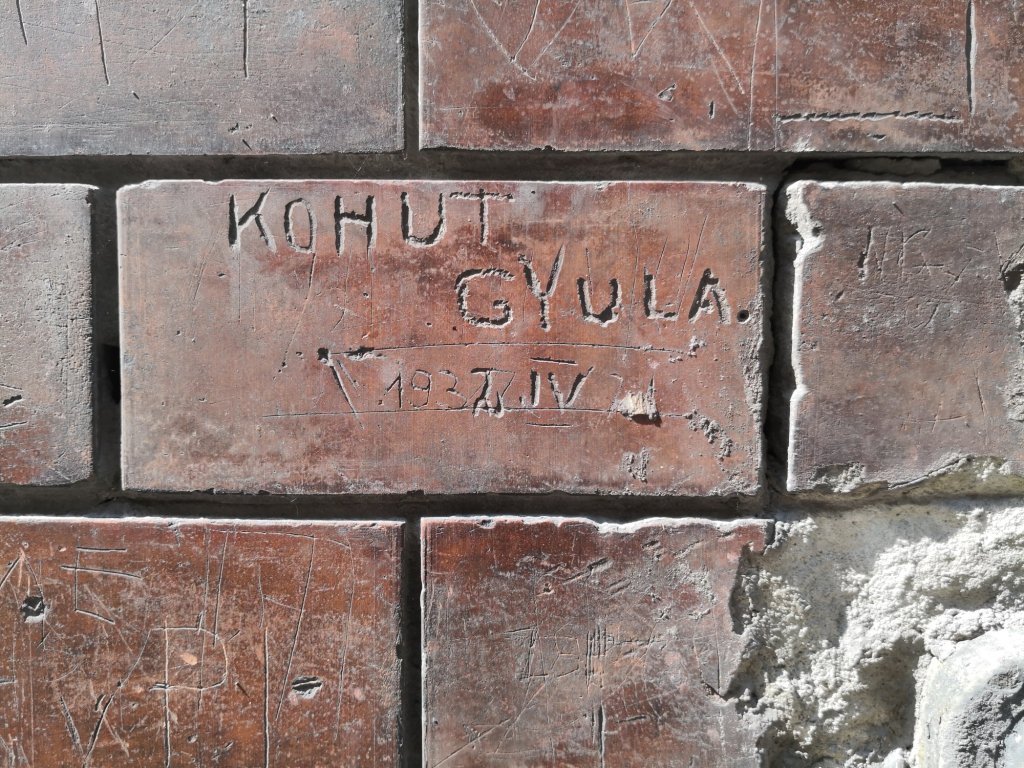
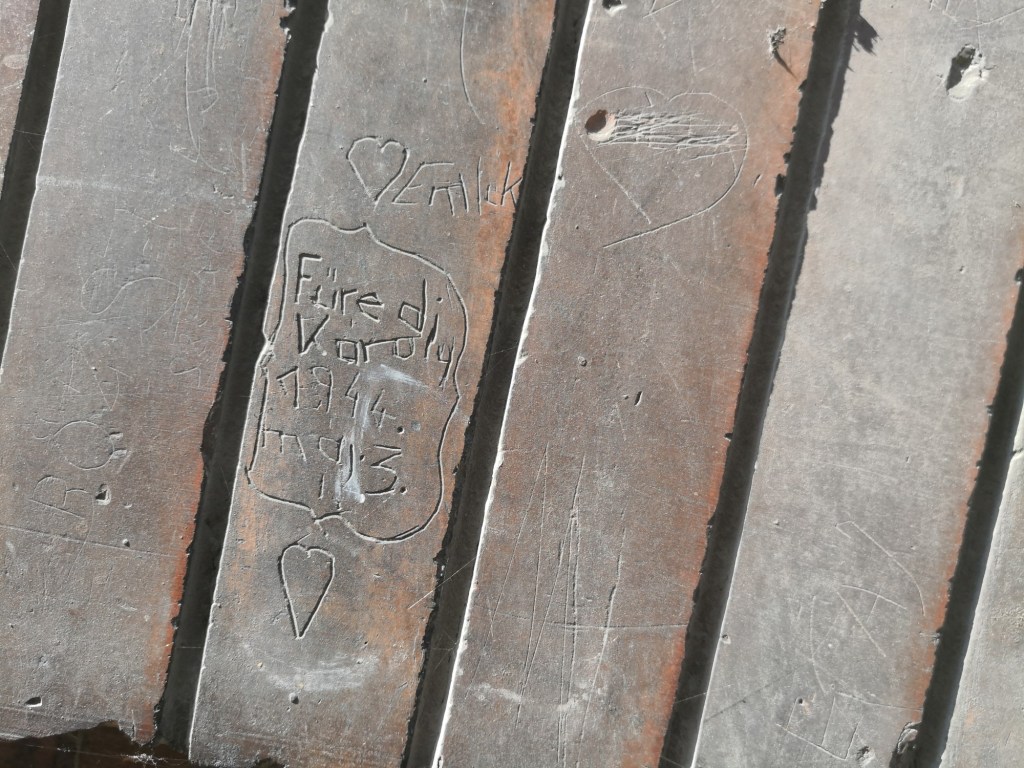
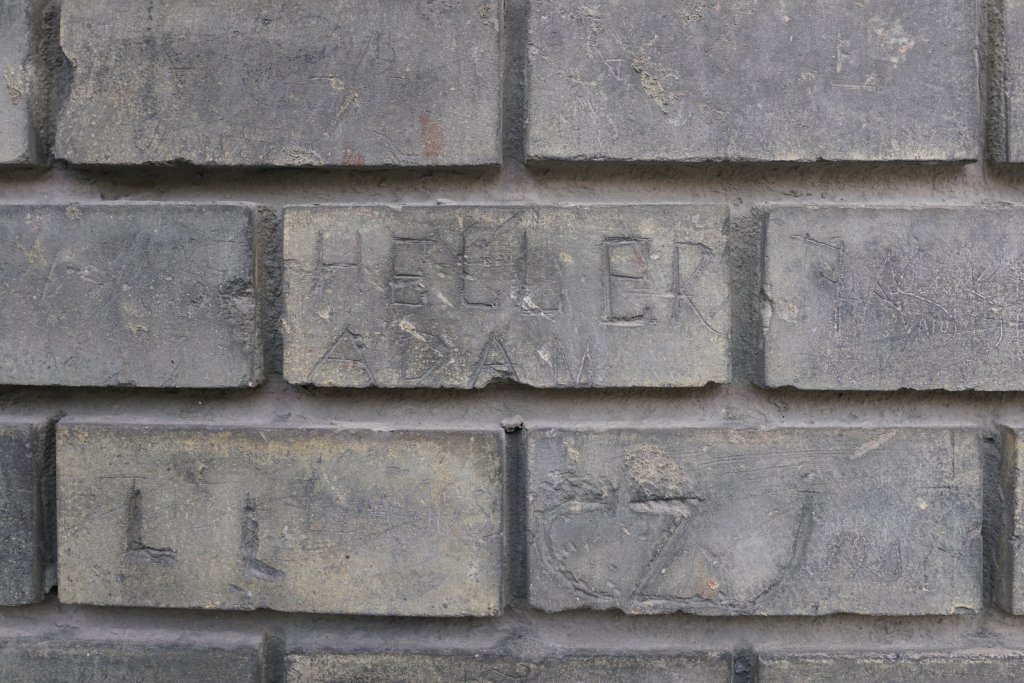
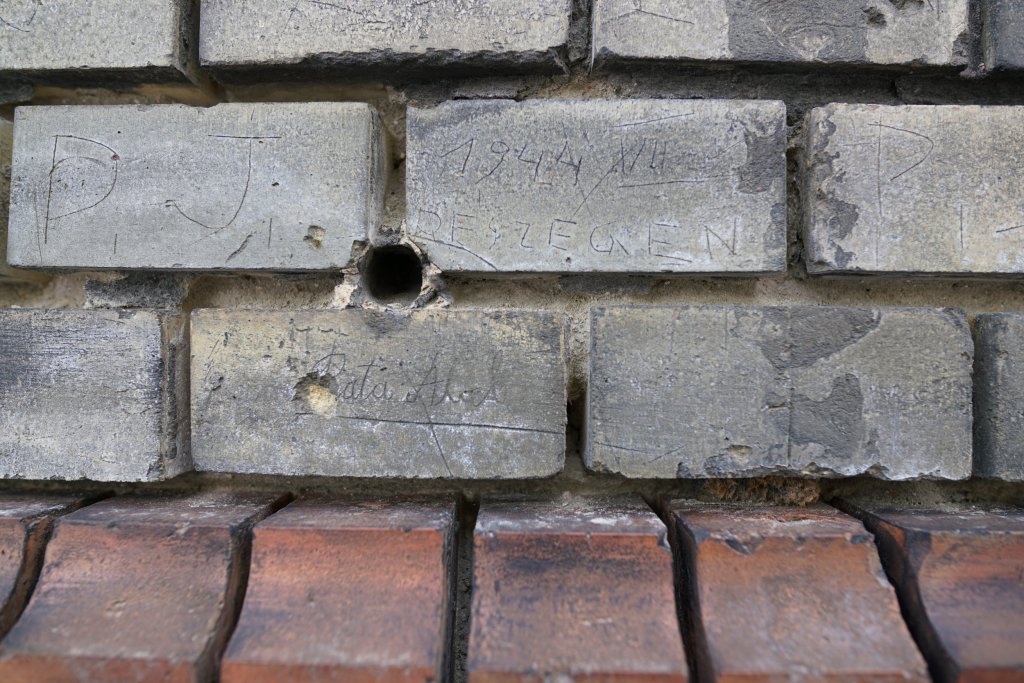
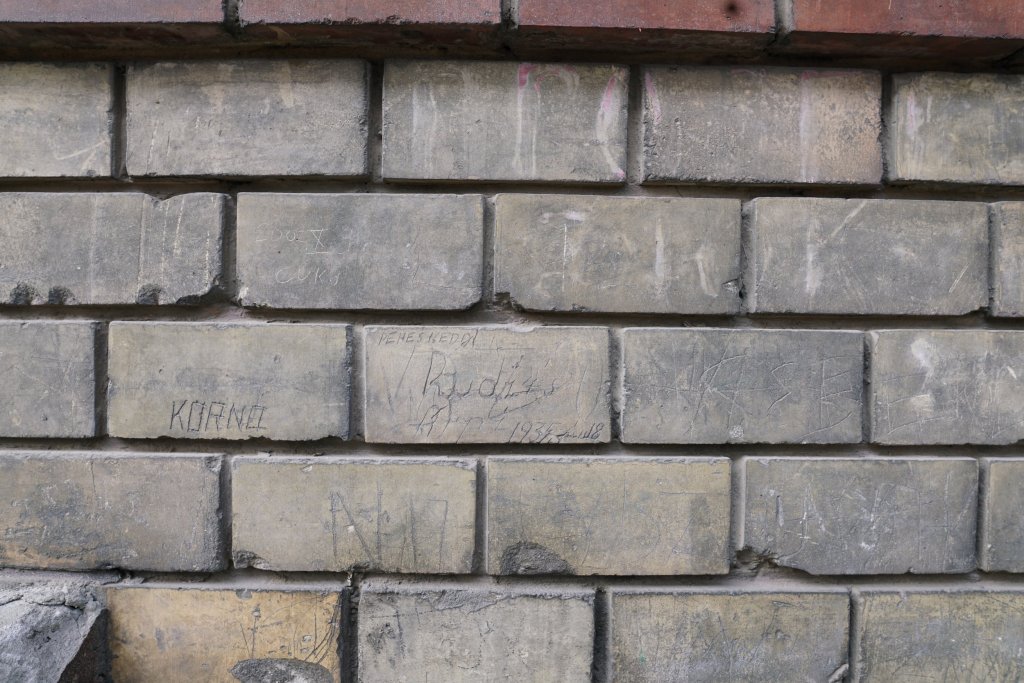
If you find yourself strolling along an old brick wall while visiting Budapest, take a moment to observe it closely. If you’re fortunate, you may discover old names, messages, or even drawings carved directly into the bricks. These historical markings can serve as valuable sources for research, establishing a tangible link between a building and its former inhabitants or those who once passed by. Many of these historical graffiti pieces contain names, dates, and places, revealing fascinating stories.
Documenting and researching these historical graffiti marks marked the beginning of my engagement with Budapest’s history. I launched a Facebook page in Hungarian named ‘Budapest Téglái’ and an English Instagram page titled ‘Bricks of Budapest.’ Soon, this project gained interest, leading to features in various media outlets. In 2019, I had the opportunity to speak at a conference in Cologne!
These carved marks are not exclusive to Budapest but can be found throughout Hungary and in cities that were once part of the Kingdom of Hungary, such as Arad, Timisoara (Temesvár), or Kosice (Kassa). While I have encountered similar marks in other countries, nowhere have I discovered as many as here.
In my view, the high density of carved graffiti in Hungary can be attributed to two main factors. Firstly, many buildings were constructed with yellowish bricks, which are much softer than the bricks found in the United Kingdom or Poland, making them easy to carve with a knife, key, or even a pen. Secondly, I believe that Hungarian society was more permissive of these small carved graffiti than with modern-day sprayed graffiti. I have come across many marks left by on-duty police officers in the 1910s-1930s.



 Buildings Tell Tales