
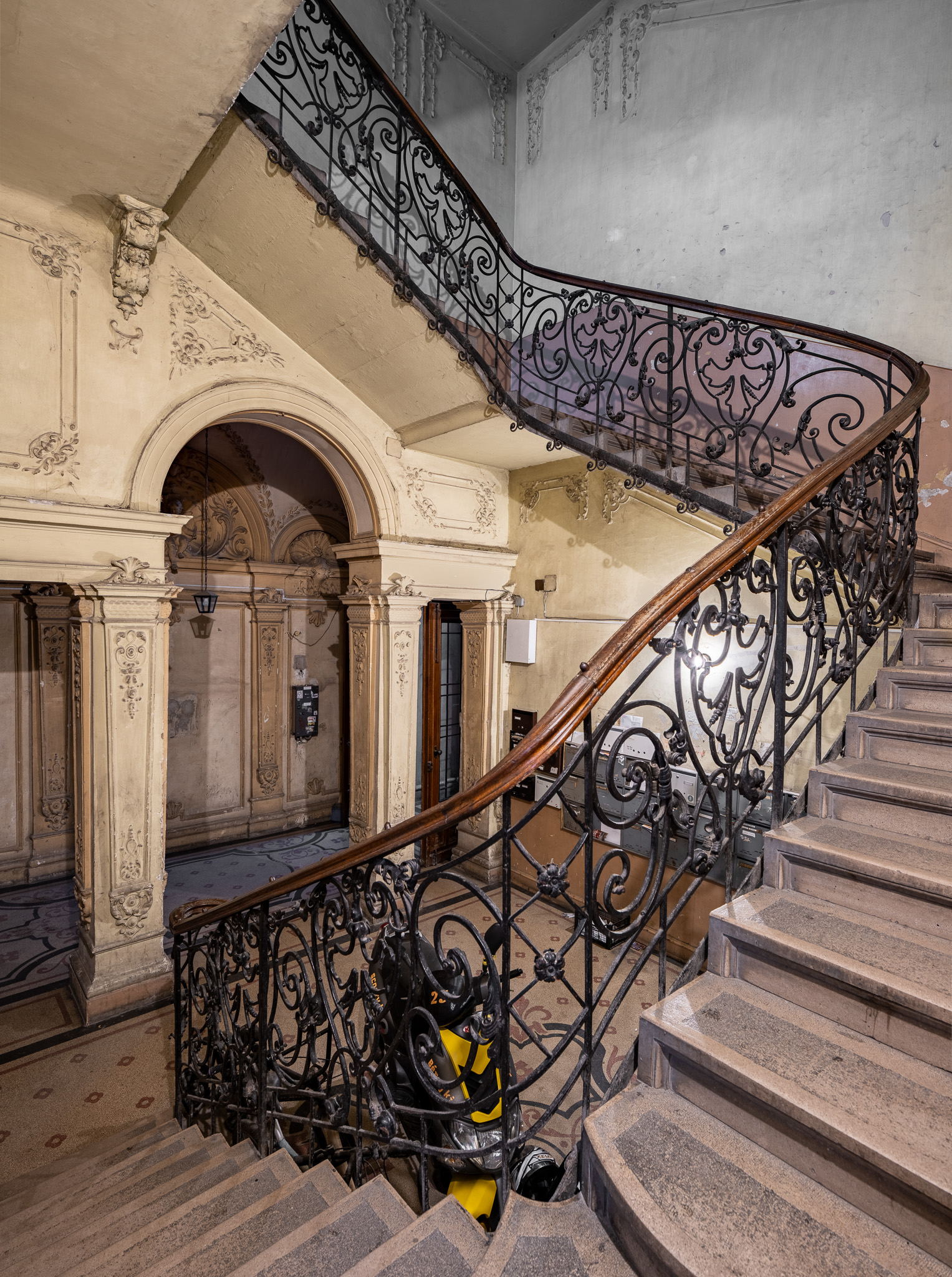
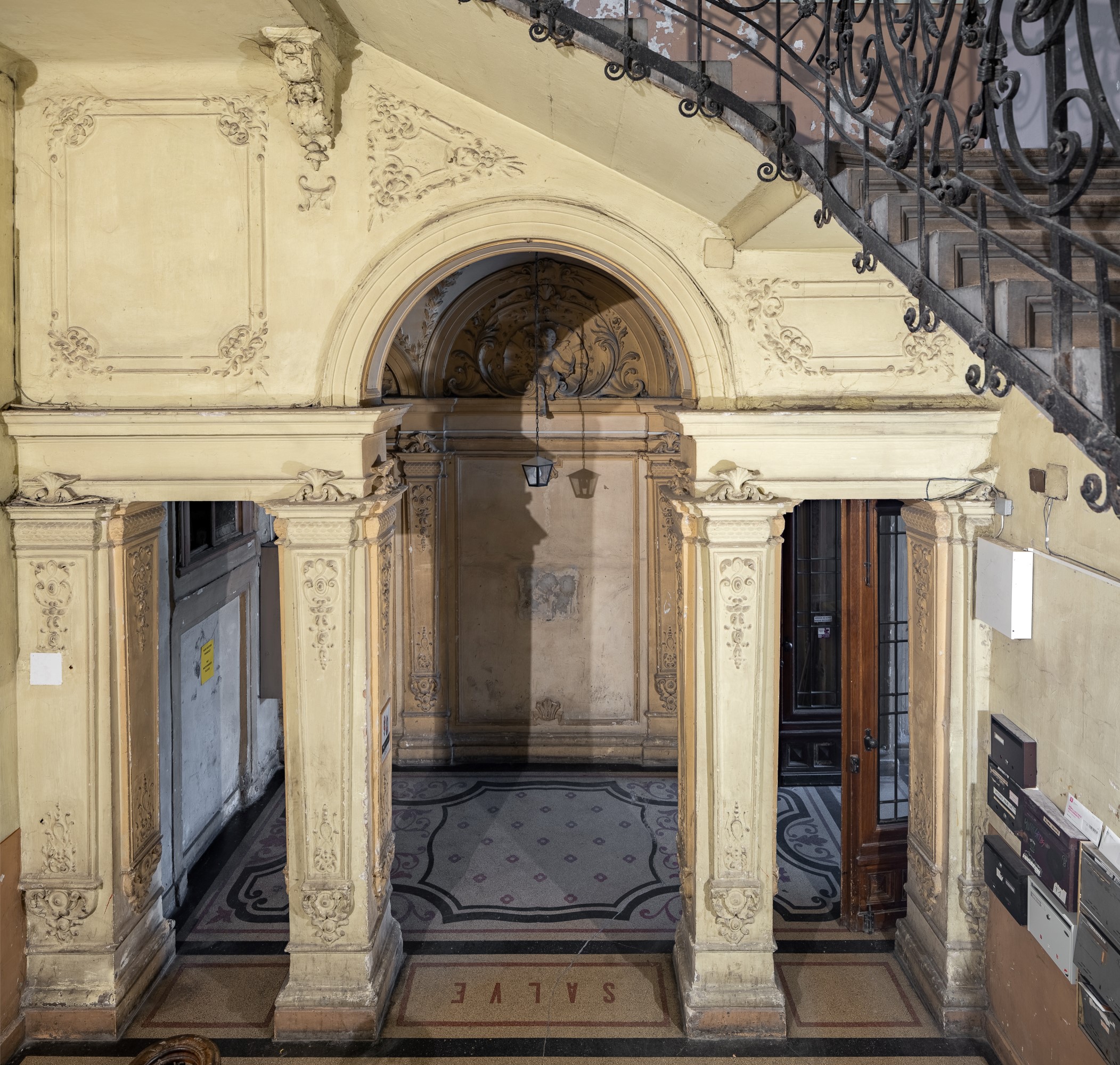
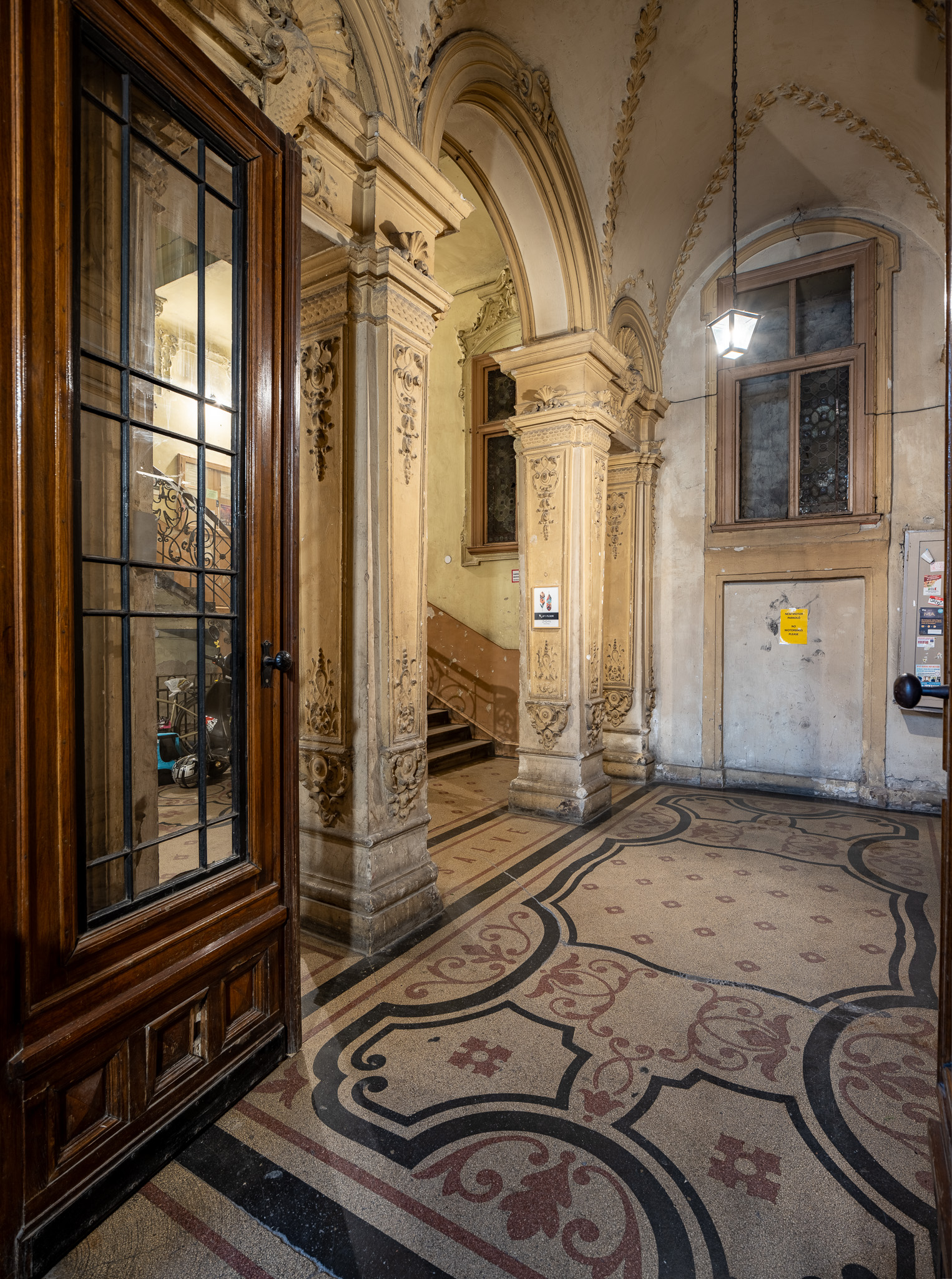
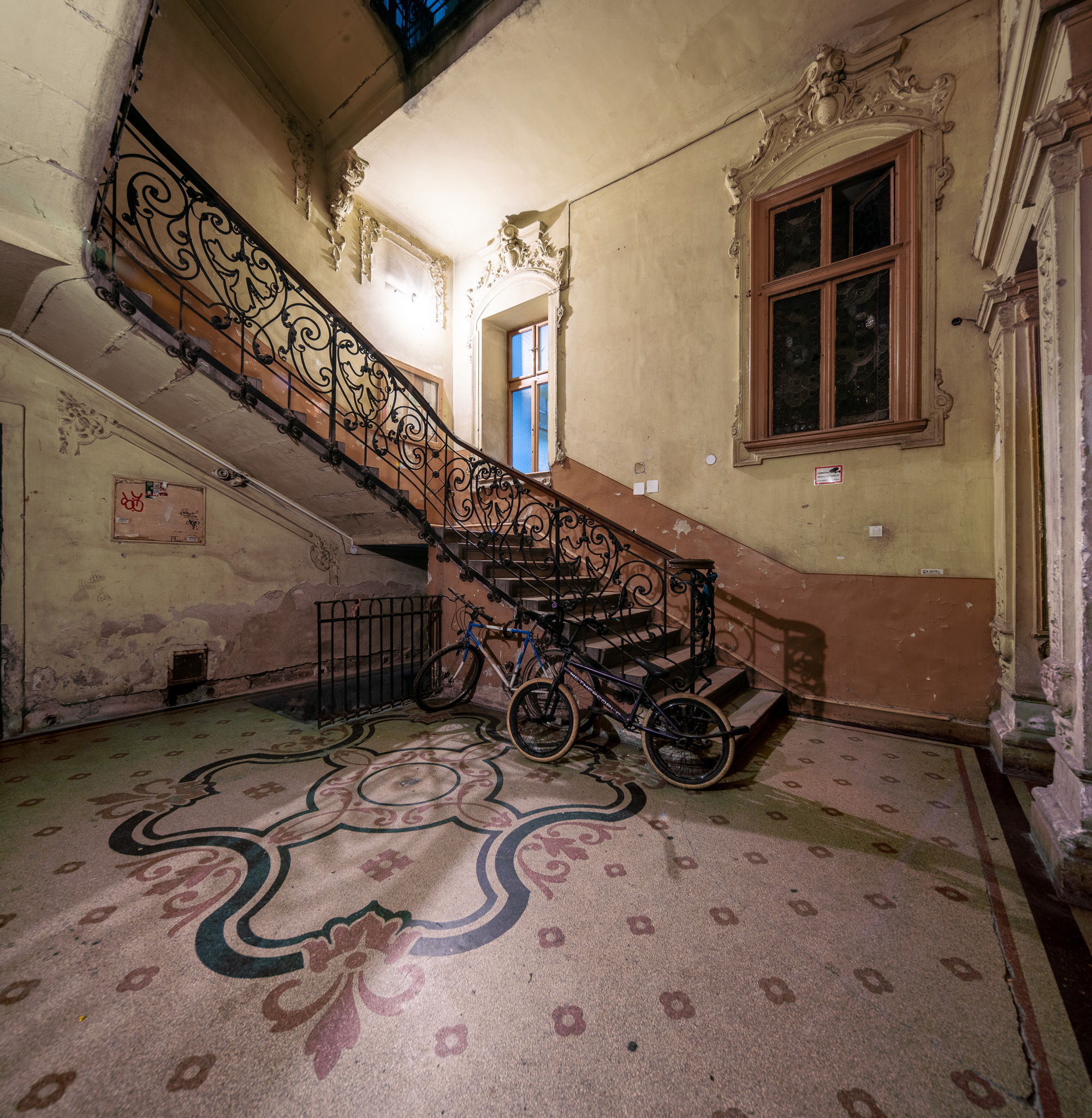
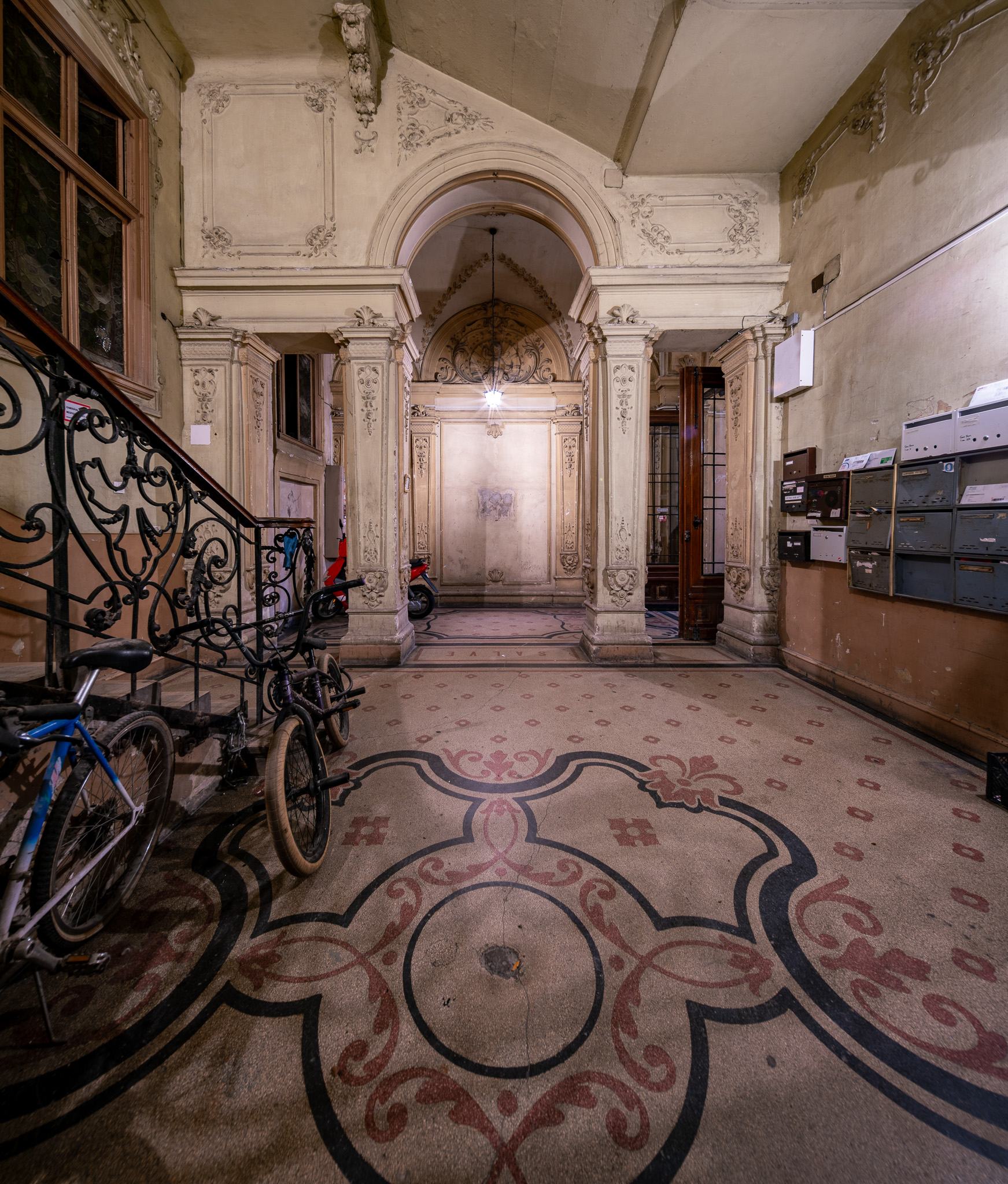
Over the past few months, I have had the opportunity to revisit Vámház körút 5 several times. This beautiful 19th-century apartment house, located in Ferencváros, the 9th district of Budapest, welcomes its visitors with the Latin word “SALVE” which can be read on the floor before entering the staircase. Behind a recently renovated facade, you can feel this building’s past grandeur despite the decay.
According to several sources, this house was designed by Ulrich Keresztély, an Austrian architect born in Vienna. Before its nationalization in 1948, a ceramic and glassware store was located on the ground floor of the house. Nowadays, a Chinese restaurant and an Asian food store occupy that space. The store used to sell items produced in the factories and workshops owned by János Kossuch. János Kossuch, born into a poor family in Kövi (a village now located in Slovakia), became a successful merchant. He opened his first store on Vámház körút in 1838 and moved it to Vámház körút 5 upon its completion. Following his death in 1868, his family continued his business, exporting ceramics to many countries. Nowadays, porcelain plates or glasses that were sold in this store (some produced by the Zsolnay factory) can occasionally be found in antique shops or online.
Vámház körút 5 had many other interesting inhabitants, including several dentists. Perhaps its most famous resident was the mathematician and university professor Gyula Kőnig, who lived here until his death in 1913. Gyula Kőnig’s son, Dénes, was also a mathematician, and Kőnig’s theorem, a fundamental result in graph theory, is named after him.


 Buildings Tell Tales
Leave a comment