
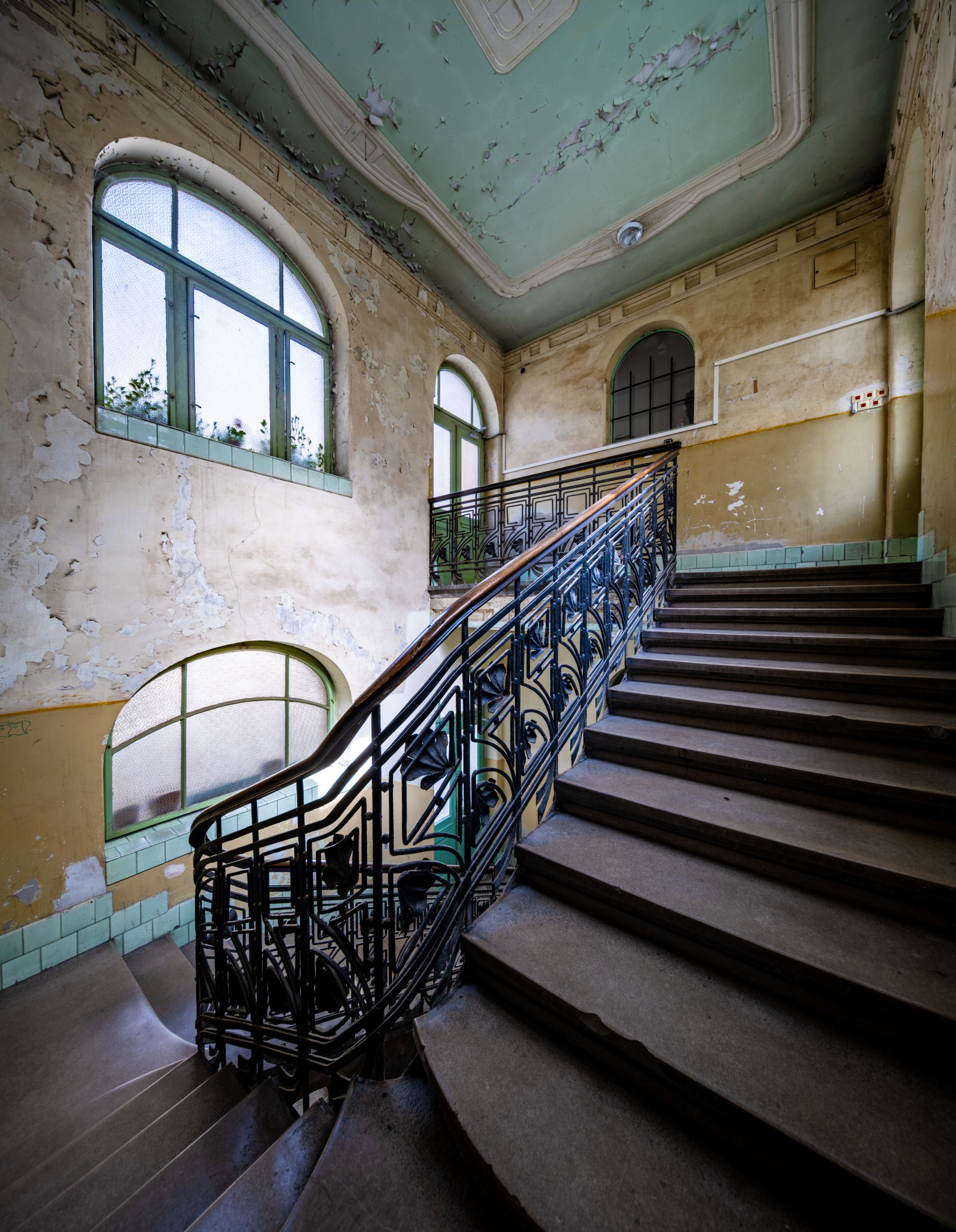
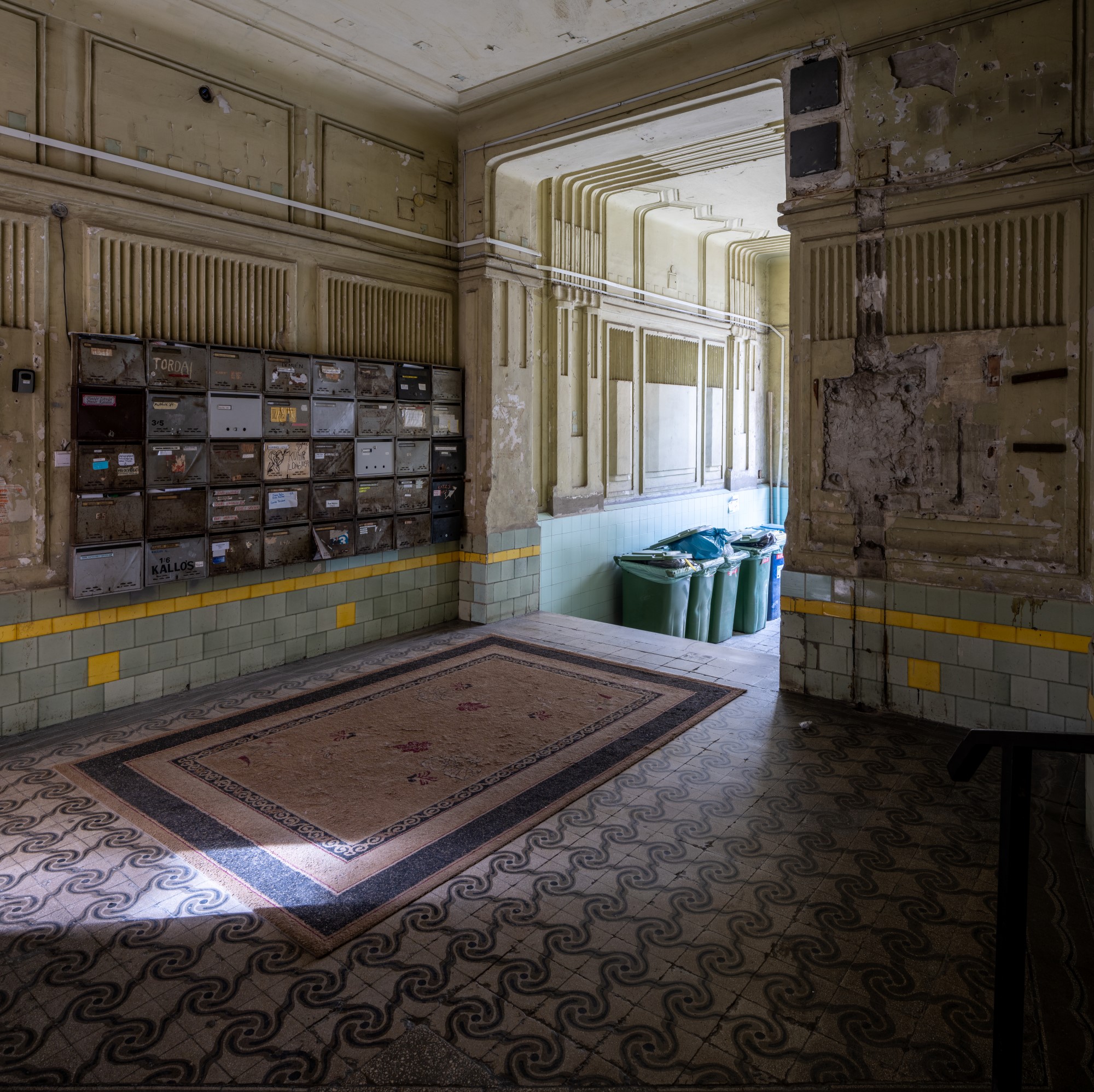
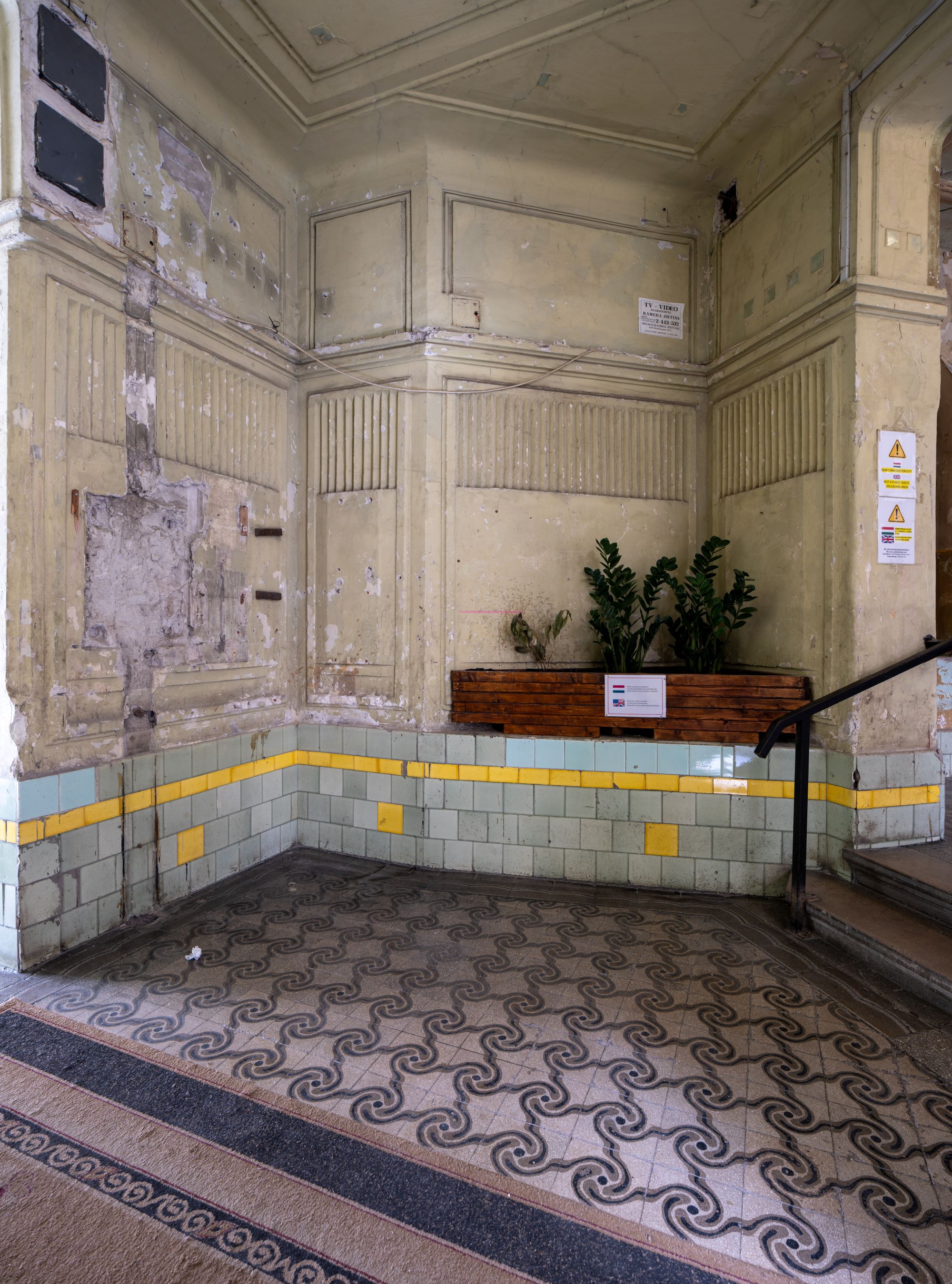
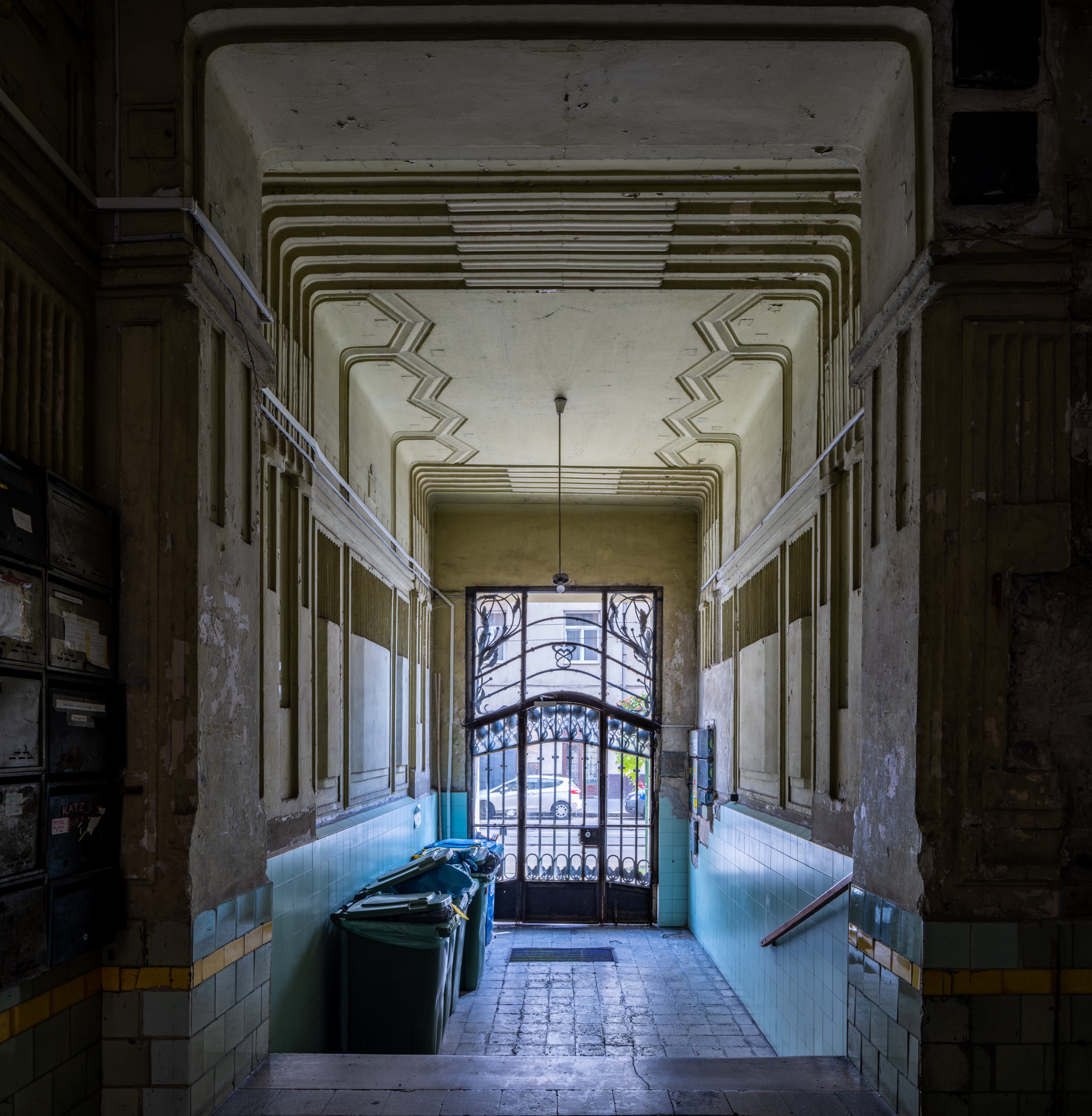
Here are a few of my photos of Népszínház utca 40 in Józsefváros, the 8th district of Budapest. This house, designed by József Porgesz (who also designed Salétrom utca 6) and Izsó Sugár, was built in 1907 for Mór Szenes. If you’re interested in Budapest’s Art Nouveau architectural heritage, you might recognize the name Szenes from the famous “Szenes-house,” built for him in 1906 and known for its distinctive butterfly-shaped ironwork.
Népszínház utca is one of the most architecturally diverse streets in Budapest, filled with grand bourgeois buildings that have seen better days. Some of these structures were designed by top Hungarian architects, like the Löffler brothers. Historically, this street was home to many Jewish residents, including numerous poor immigrants from Galicia. The flea market at Teleki tér and the many kosher restaurants were well-known landmarks in the area.
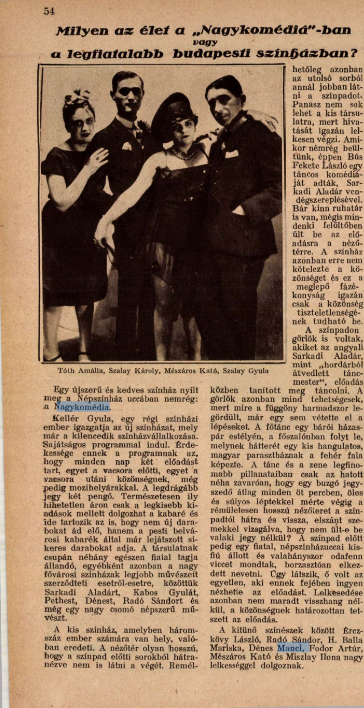
In 1928, a theatre called Nagy Komédia (Grand Comedy) opened on the ground floor of Népszínház utca 40. This venue, directed by Gyula Kellér, had a short life but played an important role in the Jewish cultural life of Budapest. The “Tolnai Világlapja” magazine reported on 14 March 1928 that the small theatre, which had only 300 seats, “offers two performances every day: one for the audience before dinner and one for the audience after dinner, both at movie theater prices. The most expensive ticket costs two pengő. Naturally, at such an incredibly low price, the cabaret can only operate with minimal expenses, which also means that it does not present new shows. Instead, it features successful pieces already performed by downtown Budapest cabarets.” Nevertheless, some of the most famous Jewish comedians of that time performed on the stage of the Nagy Komédia, such as Gyula Kabos, Aladár Sarkadi, Mariska Balla, László Érckövy, Artúr Fodor, and Sándor Rado.
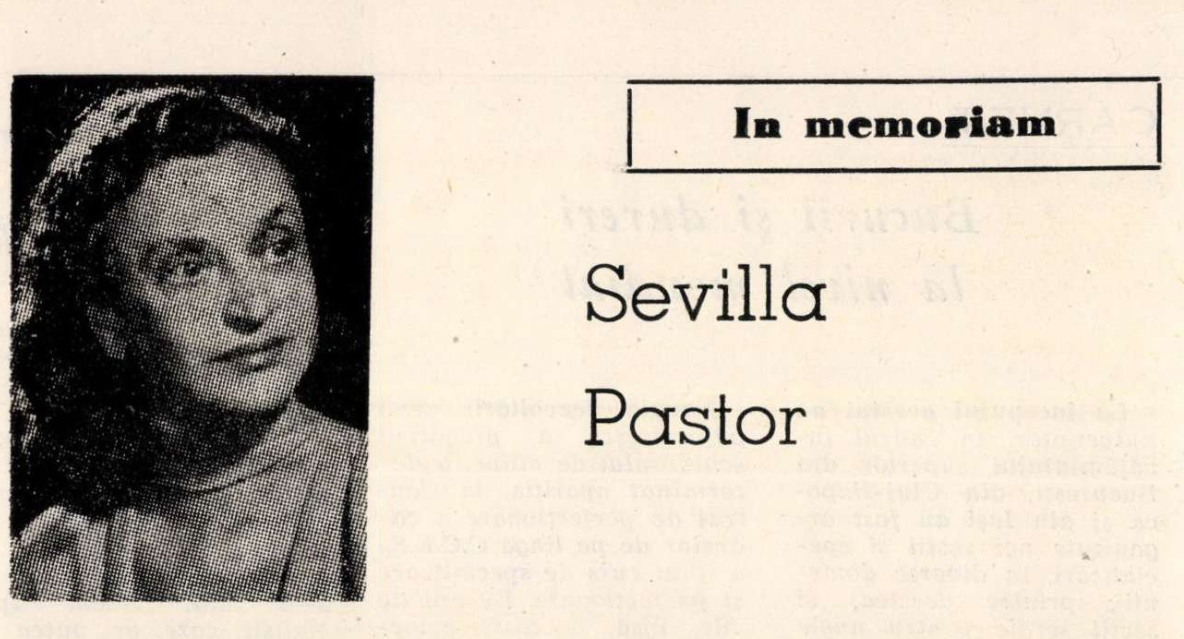
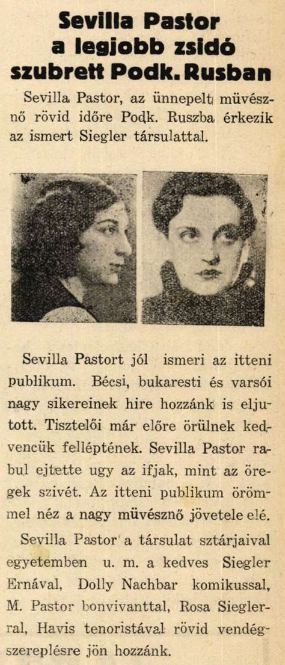
The Nagy Komédia gained notoriety in the newspapers for staging S. An-Sky’s play inspired by Jewish folklore, “The Dybbuk” with music composed by Ede Donáth based on “original Hebrew songs he collected in Jerusalem.” Moreover, the venue featured the famous theatrical troupe of the Siegler family from Czernowitz (now Chernivtsi in Ukraine), which performed in Yiddish. The troupe’s prima donna was Sevilla Pastor (born Sevilla Siegler), who played an important role in Jewish theatre, mostly in Romania, but was also famous in Budapest and Vienna.
In 1941, Sevilla Pastor and the rest of the Siegler family, with the exception of her husband Muniu Pastor, who was later murdered in the ghetto of Lodz in Poland, were deported from Czernowitz to Transnistria, which was administered by Romania until German troops took control on 1 April 1944. The Sieglers organized a Jewish theatre in the camp of Şmerinca, where they were interned, helping the other prisoners to bear the hardships. After the war, the family settled in Romania, and in 1948, Sevilla Pastor became one of the first actresses to be employed by the newly formed State Jewish Theater in Bucharest. Until her passing in 1981, she was one of the most prominent figures of Jewish theatre and was featured in many plays.

During the dark year of 1944, Népszínház utca 40, along with 20 other houses on the street, was designated a “yellow star house.” These were compulsory residences for Jews in Budapest, who were either sent to the ghetto or moved to “protected houses.”
While I was taking photos, I started talking with a man in his late 50s who was born and raised in this building. He told me that even in the 1960s, many of the residents were Jewish survivors of the Holocaust.



 Buildings Tell Tales
Leave a comment