
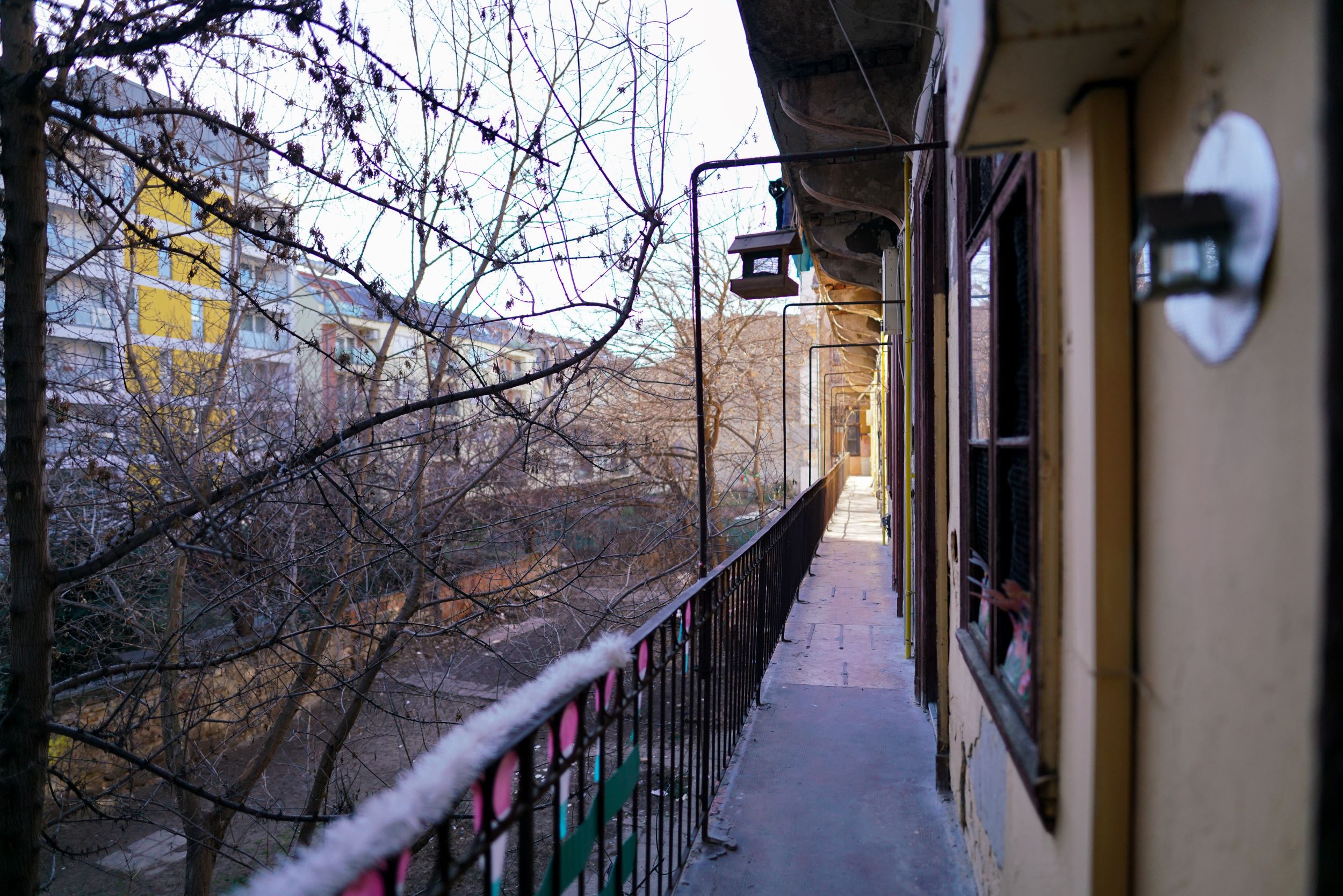
Back in January 2022, I posted on my Facebook page about an old building located at Balázs Béla utca 27./b in Budapest’s 9th district. At the time, I was curious about the fate of this apartment house, given the recent demolition of many old buildings in this deprived area of Budapest.
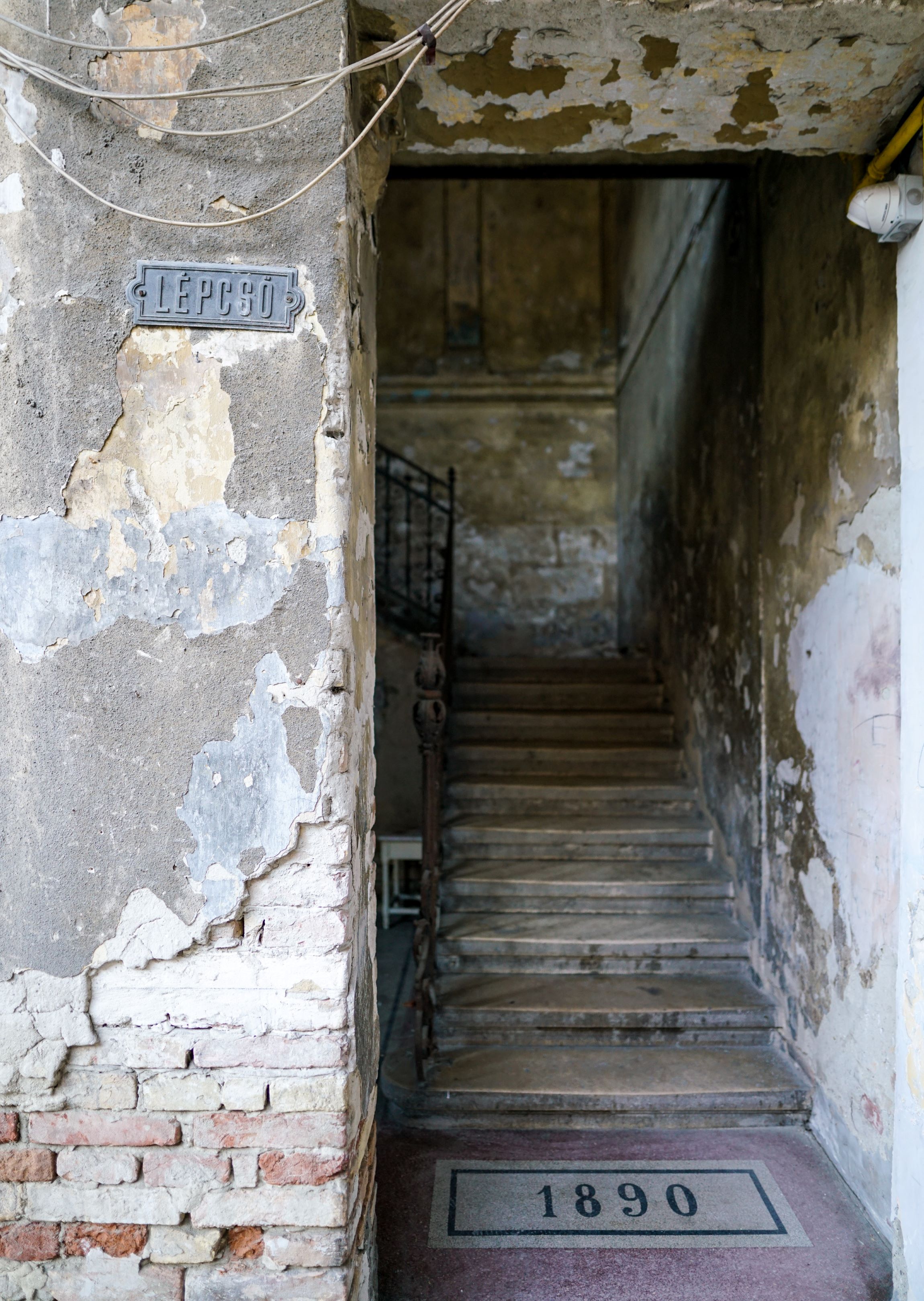
In June of the same year, while passing by Balázs Béla utca, I noticed that the door was locked. Although I intended to conduct some research, I became occupied with other tasks and eventually forgot about it. Then, just last week, Miklós Vincze, a journalist specializing in Budapest’s architectural heritage, published an article that addressed my inquiries. According to the article, the building’s facade is protected by local authorities. Furthermore, ongoing renovations are underway, with plans to add two additional floors (you can view photos in Miklós’ article). I remain hopeful that the preservation of the old staircase is included in the renovation plans, although often only the facade remains intact.
Constructed in 1890 by the architect Lajos E. Szeleczky, Miklós uncovered fascinating stories about its history, which you can explore in his article (available in Hungarian, with Google translation to English). Here are some stories from this house’s past:
In June 1911, news outlets reported an incident involving an eighteen-year-old servant girl who, after enduring mistreatment from her stepmother, allegedly threw vitriol (concentrated sulfuric acid) or vinegar into her face following an argument.
In August 1915, a seventeen-year-old typesetter accidentally shot and killed a three-year-old boy with what was described as a “toy pistol” in one of the apartments.
In 1933, Árpád Neuwirth, a former respected artist with a troubled past, attempted to break into a rented apartment occupied by a young woman named Alajosné Kovács. After forcibly entering, he dragged her onto the balcony in an attempt to harm her, but she was saved by the intervention of other residents. In March of the following year, Neuwirth claimed that the woman had jumped onto the balcony after he broke in, and he was merely trying to prevent her from jumping off. However, witnesses contradicted this, alleging that Neuwirth had romantic intentions towards the woman and was willing to commit murder if necessary. Released from prison in 1937, Neuwirth was arrested again in 1938 for selling ineffective remedies at a national fair. Shortly after, he posed as an Italian miracle doctor, performing tooth extractions and selling a supposed miracle cure for pain in Pesterzsébet.




 Buildings Tell Tales
Leave a comment