
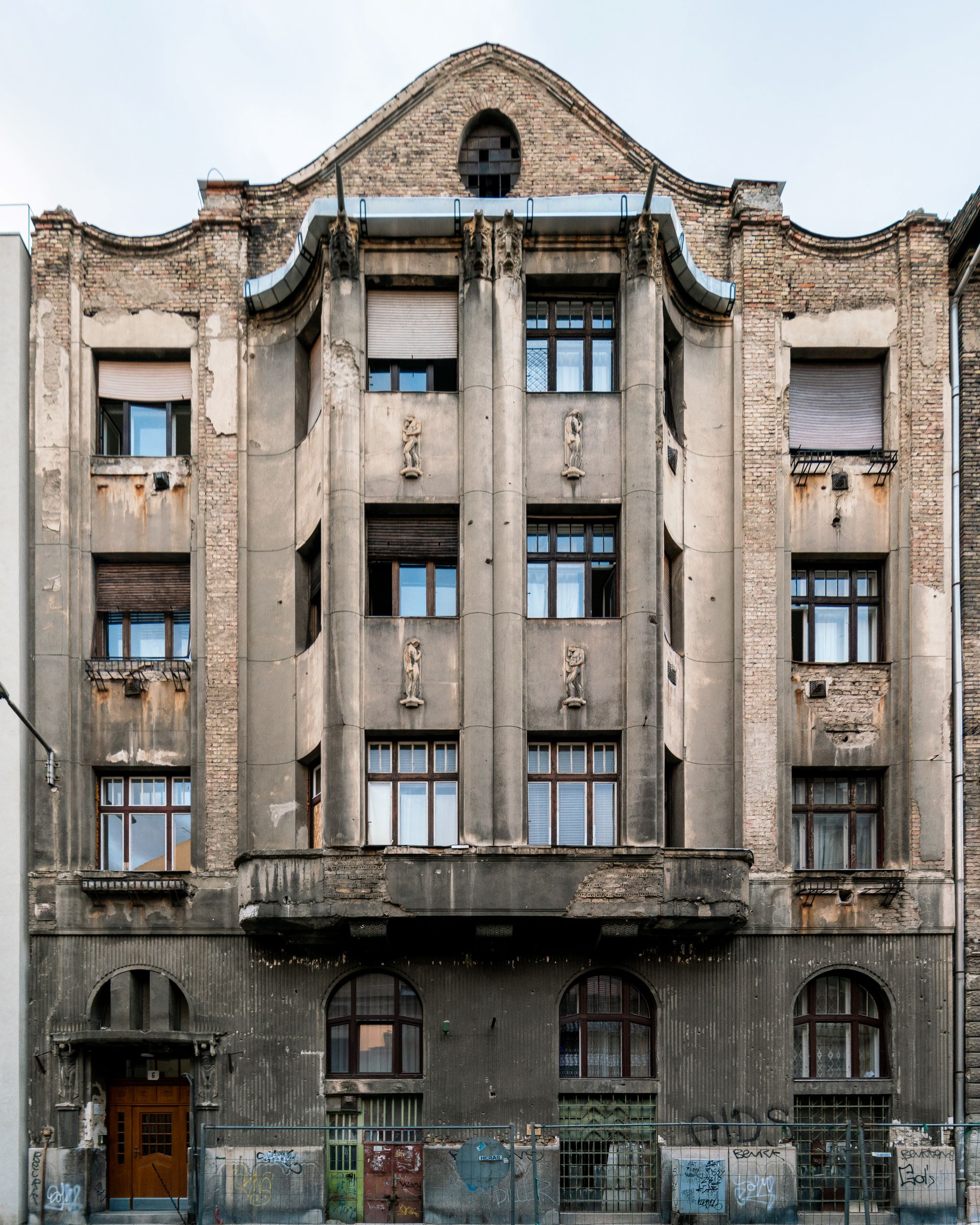
On the façade of this late Art Nouveau apartment building, meticulously designed by József Porgesz for Ármin Sauer at Salétrom utca 6, stand two distinctive figures known as “atlantes” (the plural of “atlas”).
These atlantes draw their name from the Titan condemned in Greek mythology to bear the weight of the sky on his shoulders for eternity. József Porgesz found inspiration for these statues in the work of the renowned German sculptor Franz Metzner. Consequently, it’s not uncommon to encounter similar figures gracing Art Nouveau/Jugendstil structures in Austria or the Czech Republic.
Albert Szirmai
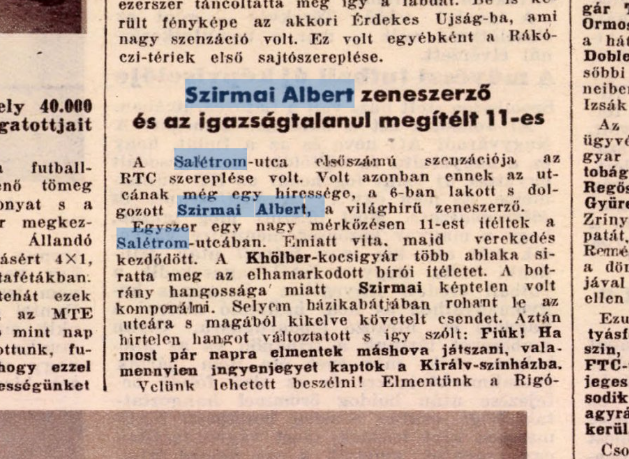
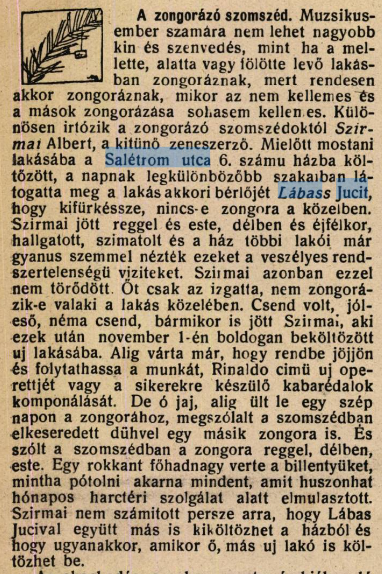
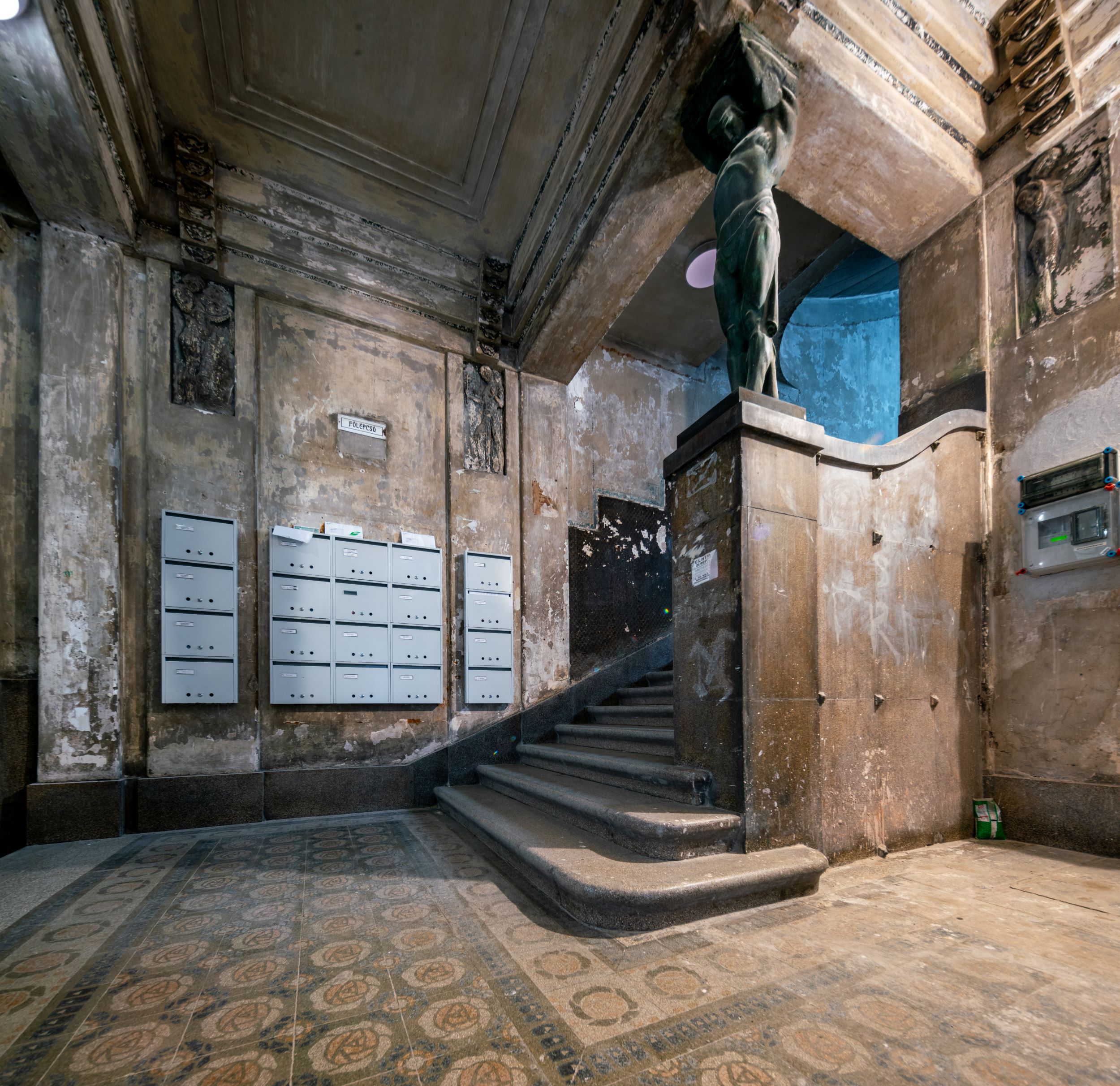
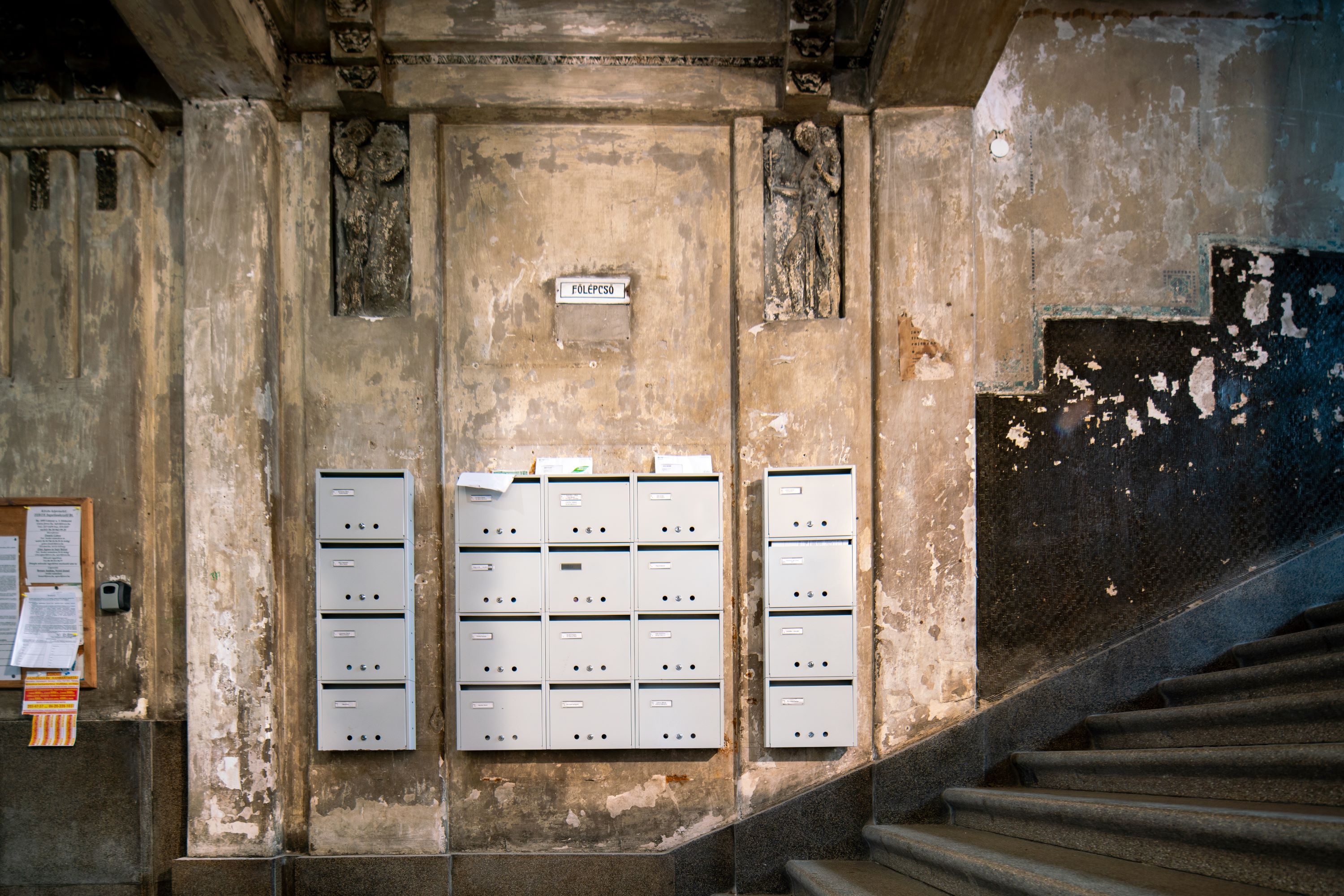
Upon entering, you will find lobby adorned with yet another atlas who has witness to numerous events over the years. In October 1916, this sentinel observed the peculiar visits of Albert Szirmai, a celebrated Hungarian operetta composer. Szirmai, looking to rent the apartment once occupied by comedian Juci Lábass, meticulously ensured no piano-playing disturbances in the building. As chronicled by a journalist from the Hungarian theater magazine Színházi Élet, “for a musician, there is no greater torture than hearing someone else play the piano in the next apartment. It’s never the right time, and it never sounds good.”
Despite relocating to New York in 1923, Szirmai maintained his Budapest flat and returned often. In 1941, while working on a new operetta, he sought respite from the street footballers below, striking a deal: quiet streets in exchange for complimentary tickets to his operettas.
The Kodelka-killing
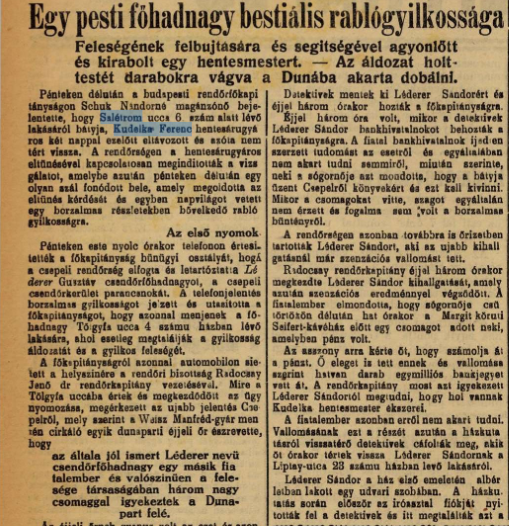
In January 1925, tragedy struck Salétrom utca 6 when Ilona Schuck reported her brother’s disappearance to the police. Unfortunately, Ferenc Kodelka, her brother, had already fallen victim to one of the most infamous crimes in interwar Hungary. Killed by Gusztáv Léderer, a Hungarian army lieutenant turned member of Pál Prónay’s far-right paramilitary unit during the White Terror of 1919, Kodelka was among the many innocent lives lost to the unit’s violence.
Following the disbandment of paramilitary units in 1920, Léderer moved to Budapest, where he joined the gendarmerie, continuing his criminal exploits with his wife. After an unsuccessful attempt in 1924, they resorted to a fatal shooting of the wealthy butcher Ferenc Kodelka in January 1925. The gruesome act led to public outrage, and Léderer faced prosecution for fraud, robbery, and murder. He was eventually sentenced to death by hanging, meeting his fate on November 12, 1926.


 Buildings Tell Tales
Leave a comment