
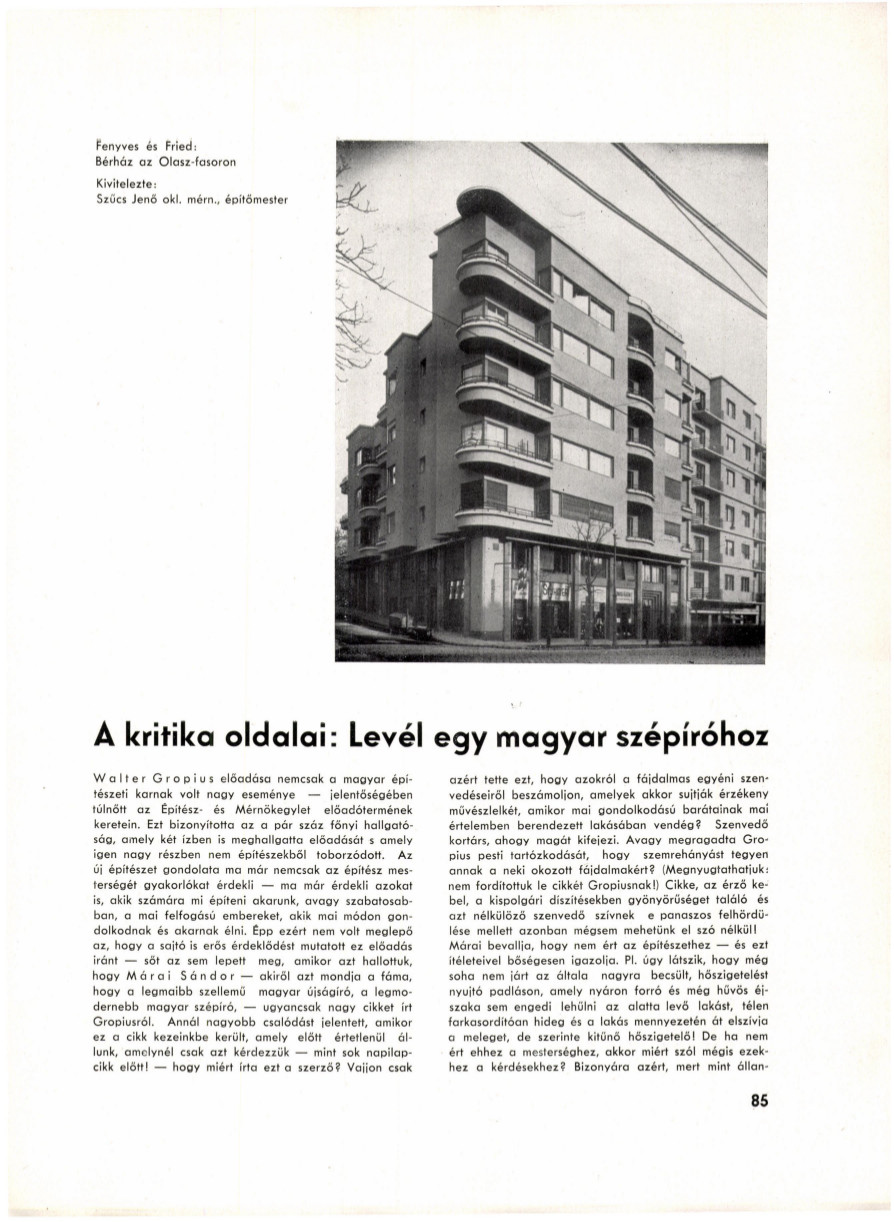
This elegant modernist residential building is located at Szilágyi Fasor 5, in the 2nd district of Budapest. It was constructed in 1933 based on the designs of István Fenyves and Miksa Fried. A captivating article from “8 Órai Újság” on Friday, March 5, 1943, sheds light on a mysterious incident within these walls.
Situated in the heart of Budapest, the enigmatic death of János Erdélyi, a renowned 30-year-old dancer residing at Olasz Fasor 5, prompted a thorough police investigation amidst suspicions of foul play. However, recent medical examinations revealed a different truth: János passed away due to a brain condition, not criminal activity.
János shared a close friendship with Sonja Sontens, a Danish dancer of remarkable talent. Hailing from Denmark, Sonja spoke multiple languages, including German, French, English, Italian, Spanish, and Danish. Her intellectual curiosity and her presence during the events of that tragic night made her a central figure in this unfolding story.

On the tragic night, János called Sonja from a café in Budapest, seeking her help to return to his apartment due to illness. Despite Sonja’s suggestion to call a doctor, János insisted that she leave after some time.
After Sonja left, János’s health worsened, leading to his passing within his apartment. The apartment showed signs of struggle, indicating the challenges he faced in his final moments, with Sonja nearby.
In conclusion, the mystery surrounding János’ untimely death was resolved with the revelation that it resulted from a medical condition rather than foul play. Sonja Sontens, his friend, was with him during his last moments where the tragic story unfolded.



 Buildings Tell Tales
Leave a comment