
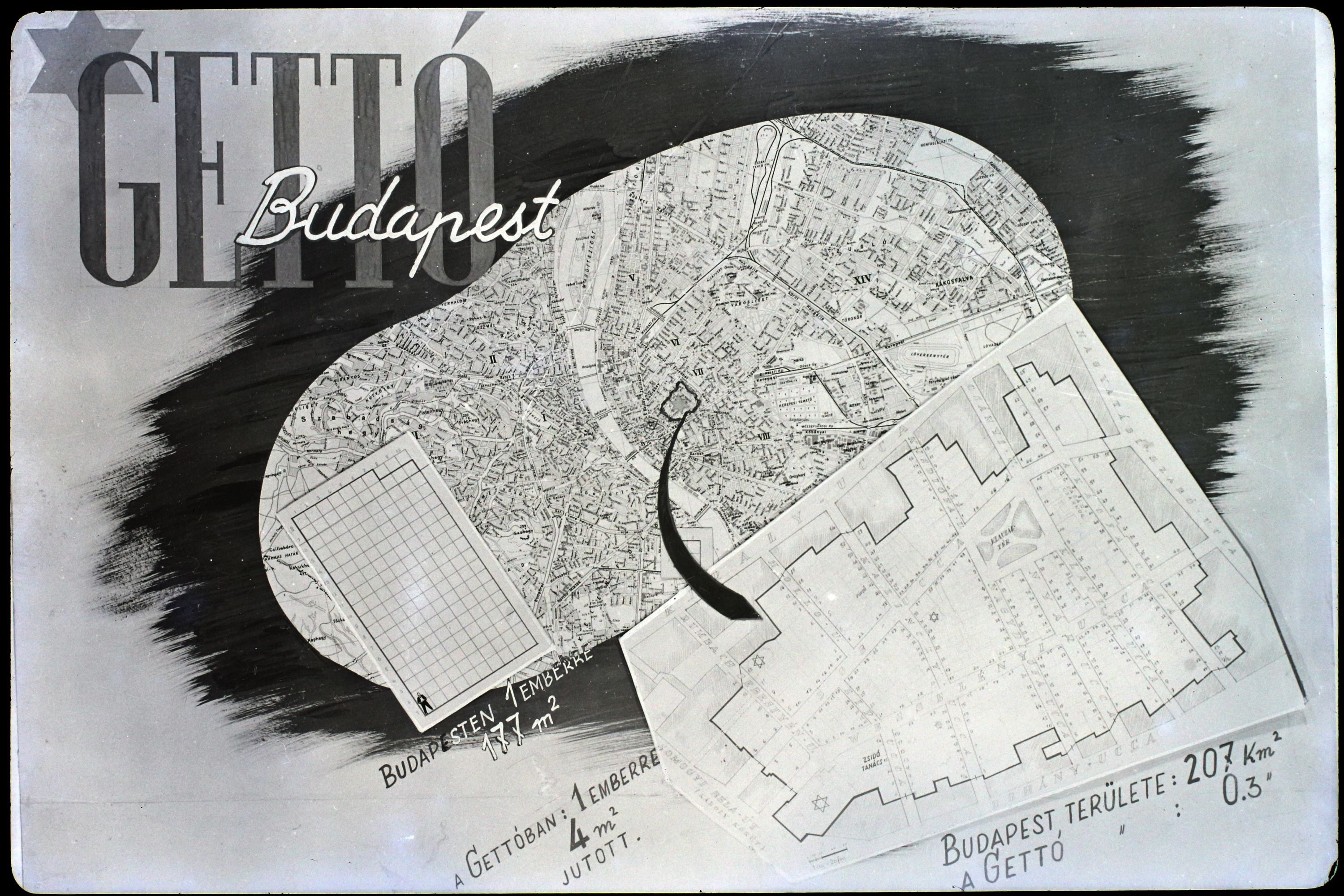
Between June and November 1944, the 1,944 compulsory places of residence for Jews in Budapest were designated, from where they were either sent to the ghetto or to “protected houses.”
This network of yellow-star houses comprised almost 1,950 designated compulsory places of residence for approximately 220,000 Budapest Jews from June 21, 1944, until late November 1944. Both the houses and their residents were mandated to display the yellow star by a Budapest mayoral decree.
The Mayor’s office issued the list of these yellow-star houses on June 24, 1944. With Jews constituting almost 25% of the population at that time, they had only a few days to relocate. The relocation process was managed by the police and the Jewish council, marking these houses with a yellow star. In November 1944, the Jews were relocated to the ghetto in the 7th district of Budapest. Alternatively, some had the option to move to the “protected houses” of the “international ghetto,” which were houses under the protection of neutral states.
Even though homes for Jews were sometimes marked in other places, what made Hungary different during the Holocaust was that they had a rule to put a yellow star on every house in Budapest where Jews had to live. The mass relocation was overseen by the police and the Jewish Council.
In 2014, a very detailed website about Yellow-Star Houses was created: https://www.yellowstarhouses.org/ – all the houses are shown on a map, and often photos as well as testimonies were added too. Since many of the houses I am documenting were Yellow-Star Houses during this tragic period of Budapest’s history, I have listed them here so you can reach the relevant posts easily.










 Buildings Tell Tales
Leave a comment