
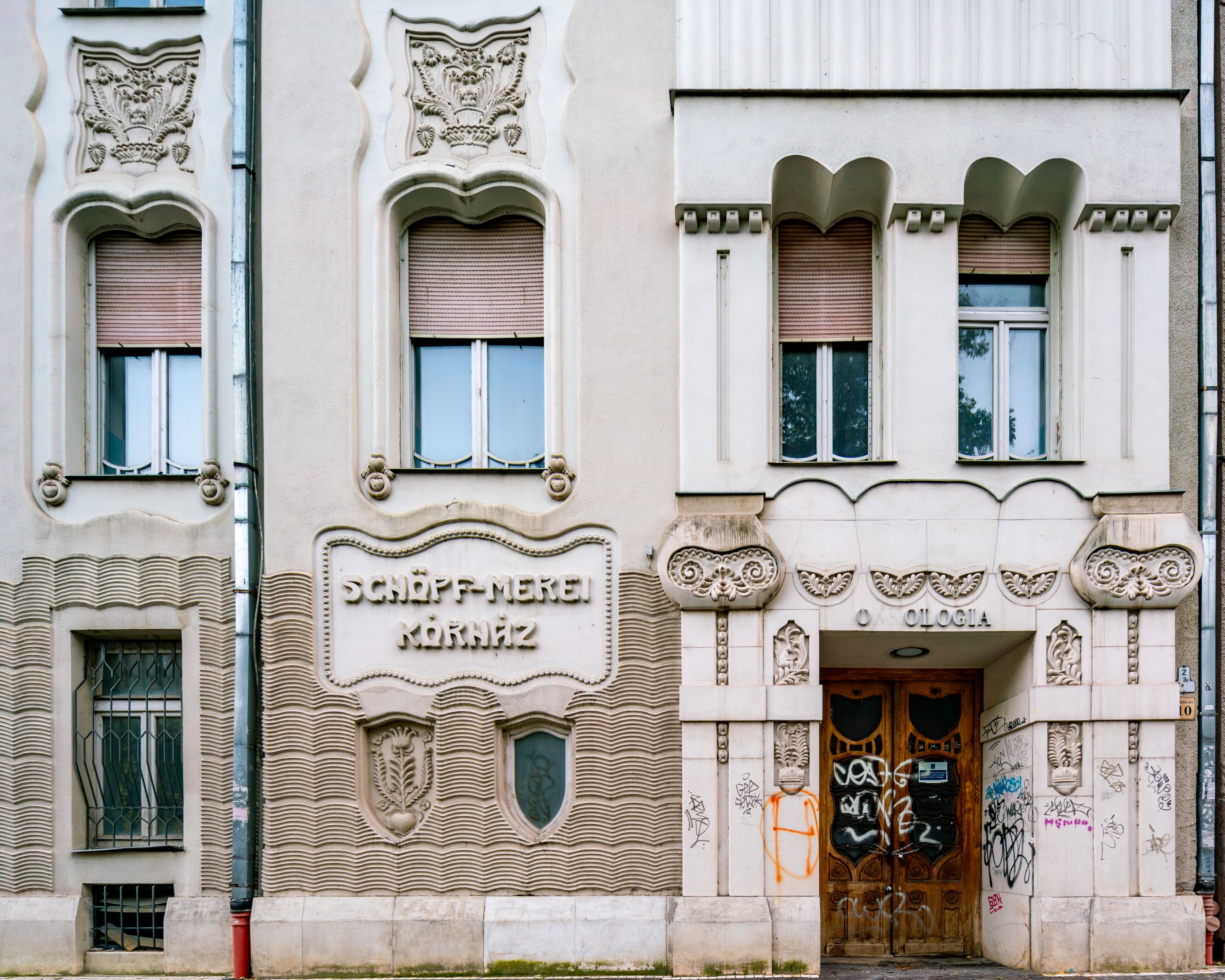
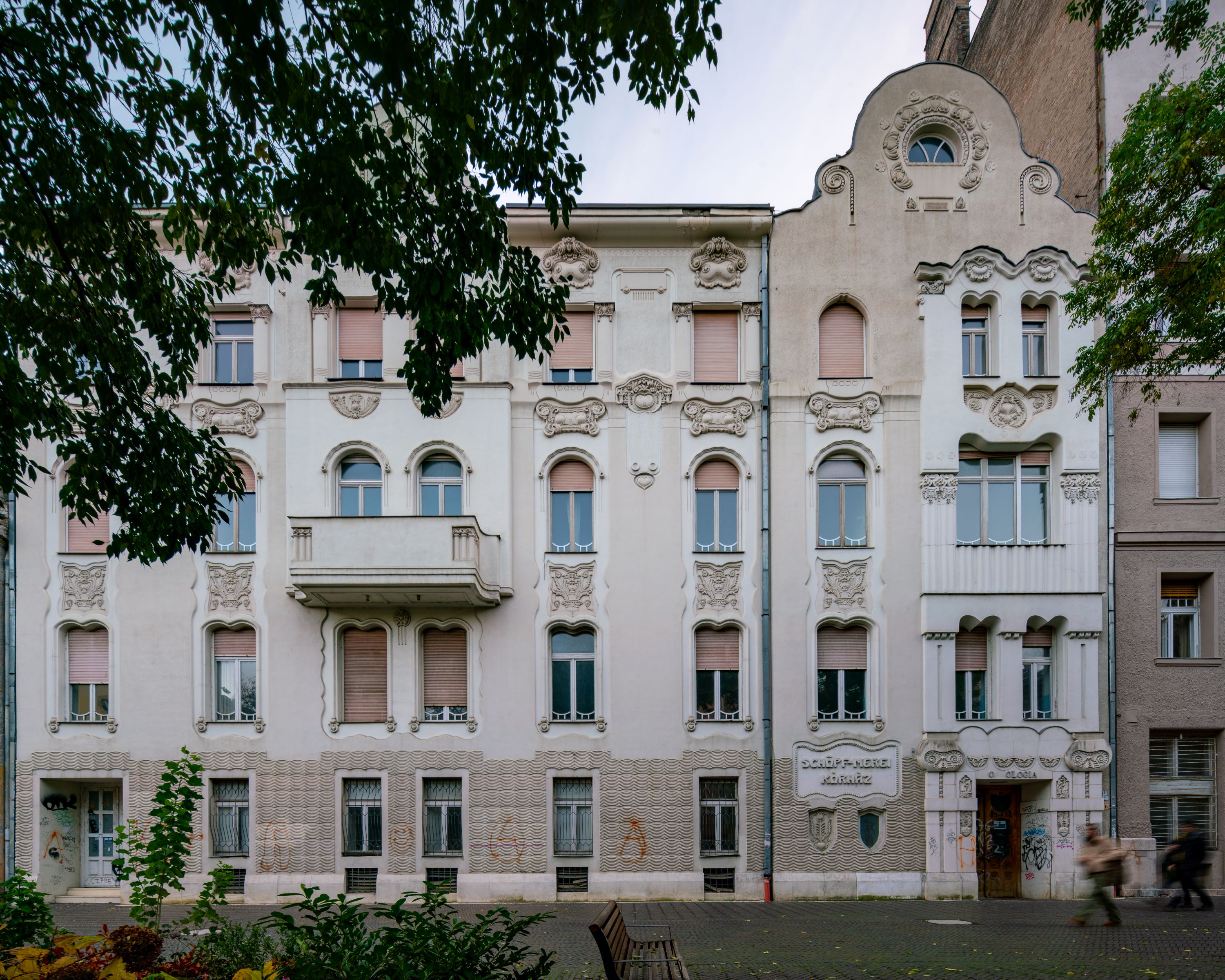
An early morning in December, I was photographing the abandoned Schöpf-Merei hospital on Bakáts tér when an elderly man approached me. He shared that he used to work as an architect and was delighted to see someone appreciating the beauty of old buildings and documenting them. He then asked if he could take a photo of me capturing the facade of the hospital. This encounter mirrored many others I’ve had while photographing Budapest’s architecture. People often observe my work and express joy at seeing others value the city’s architectural heritage.
The Art Nouveau building, designed by Géza Márkus, similar to Benczúr utca 4, was constructed in 1905 to house the Erdey Sanatorium for children with incurable illnesses. In 1954, it transformed into the Schöpf-Merei hospital, named after a renowned Hungarian pediatrician. In 1990, a significant milestone occurred in Hungary when an incubator was installed at the hospital entrance, allowing mothers to anonymously leave unwanted babies, aiming to combat infanticides.
As part of healthcare rationalization, local authorities decided to close the hospital in 2008. In 2017, Semmelweis University expressed interest in establishing their Drug Research Center in the hospital’s buildings. Although the government initially approved the project, in 2022, it was added to the list of canceled investments due to cost-saving reasons. A few months ago, the University announced their intention to relaunch the project.


 Buildings Tell Tales
Leave a comment