
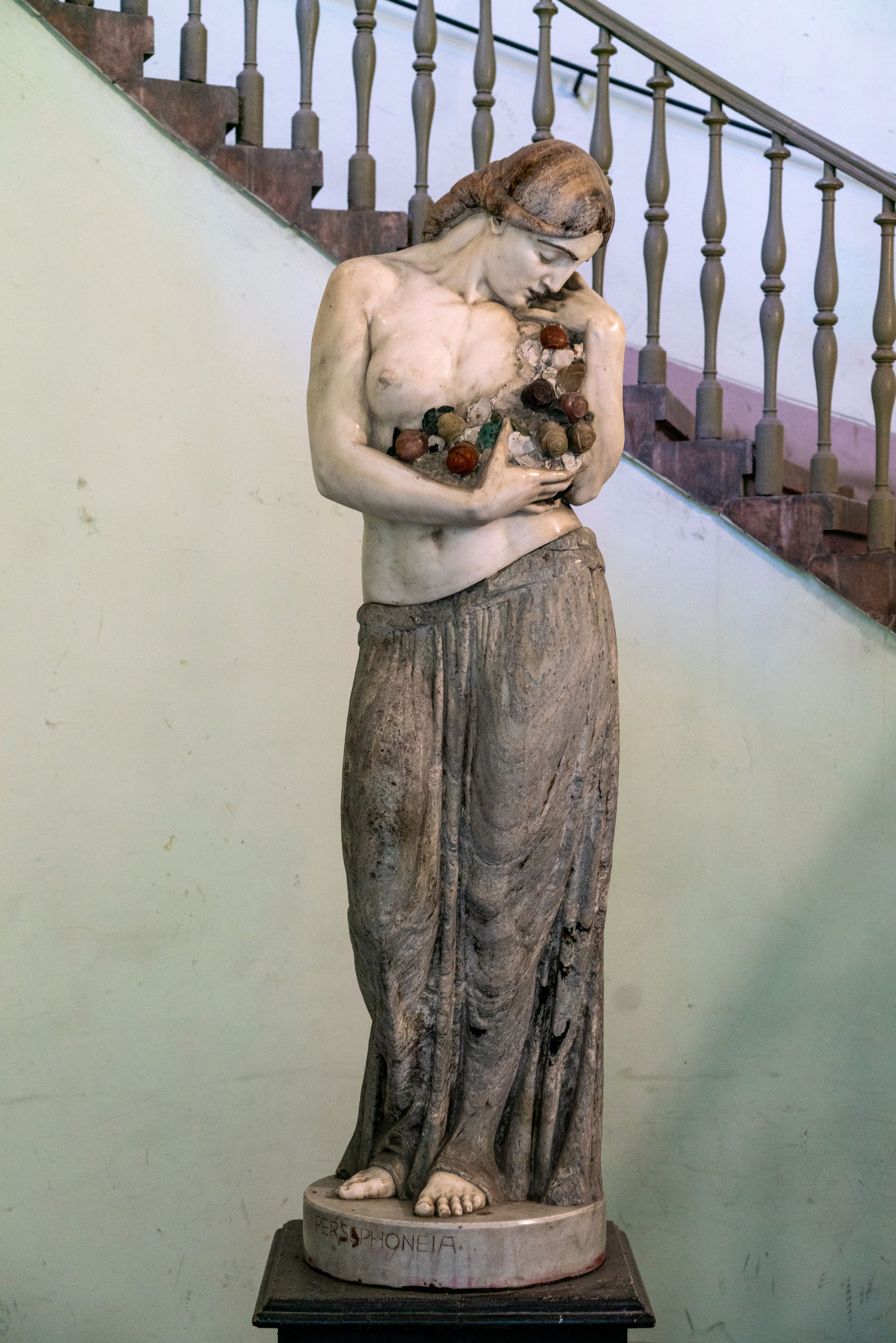
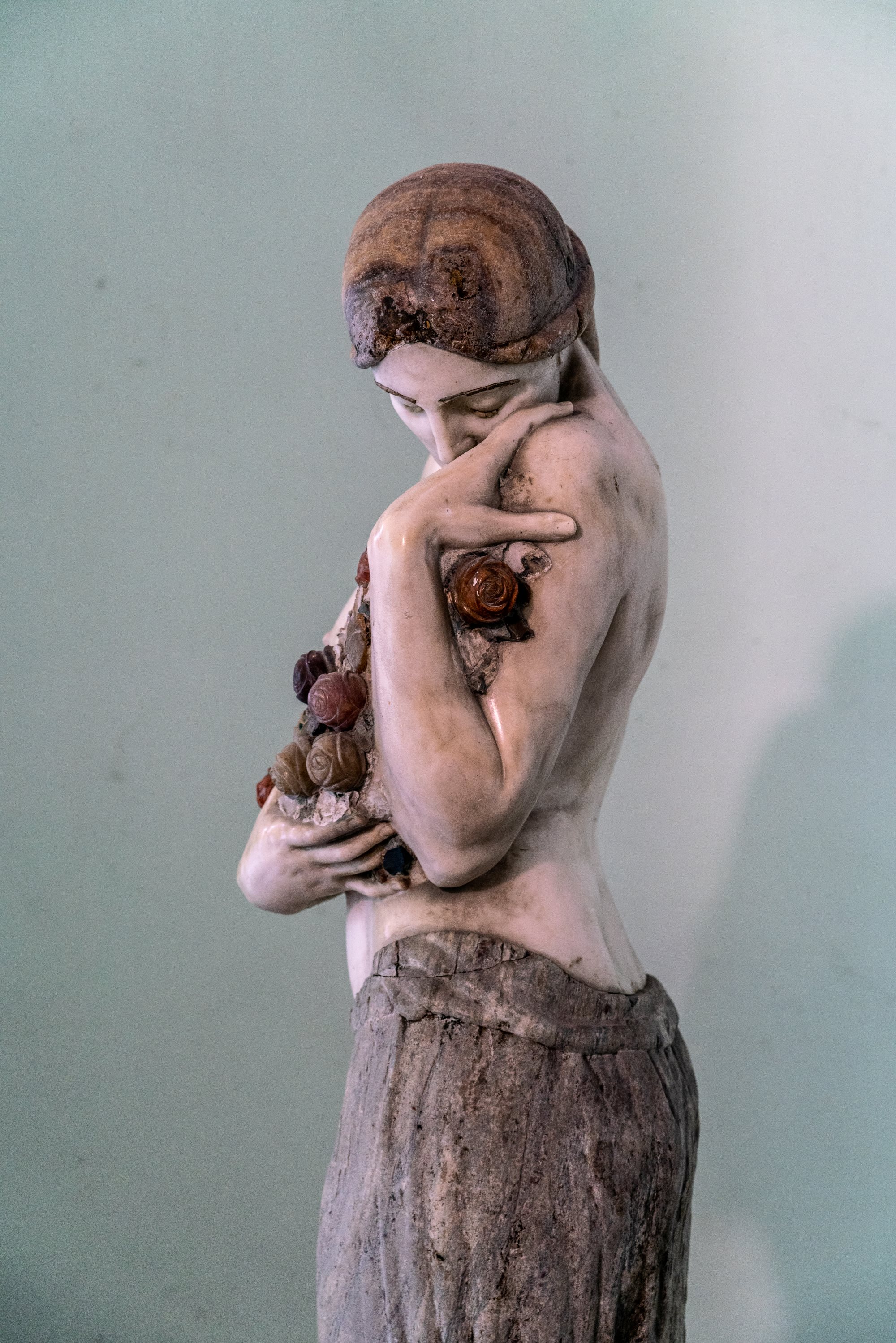
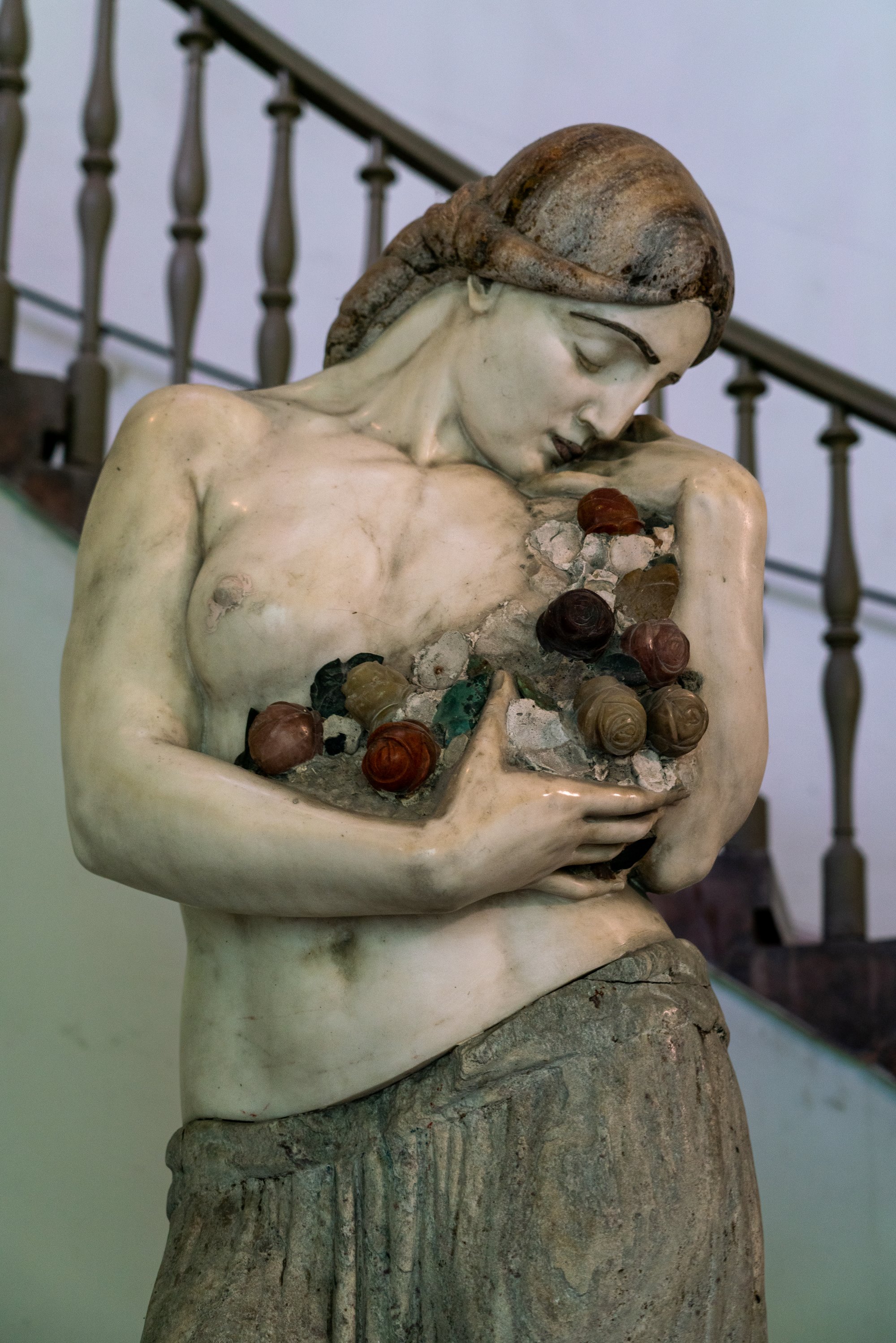
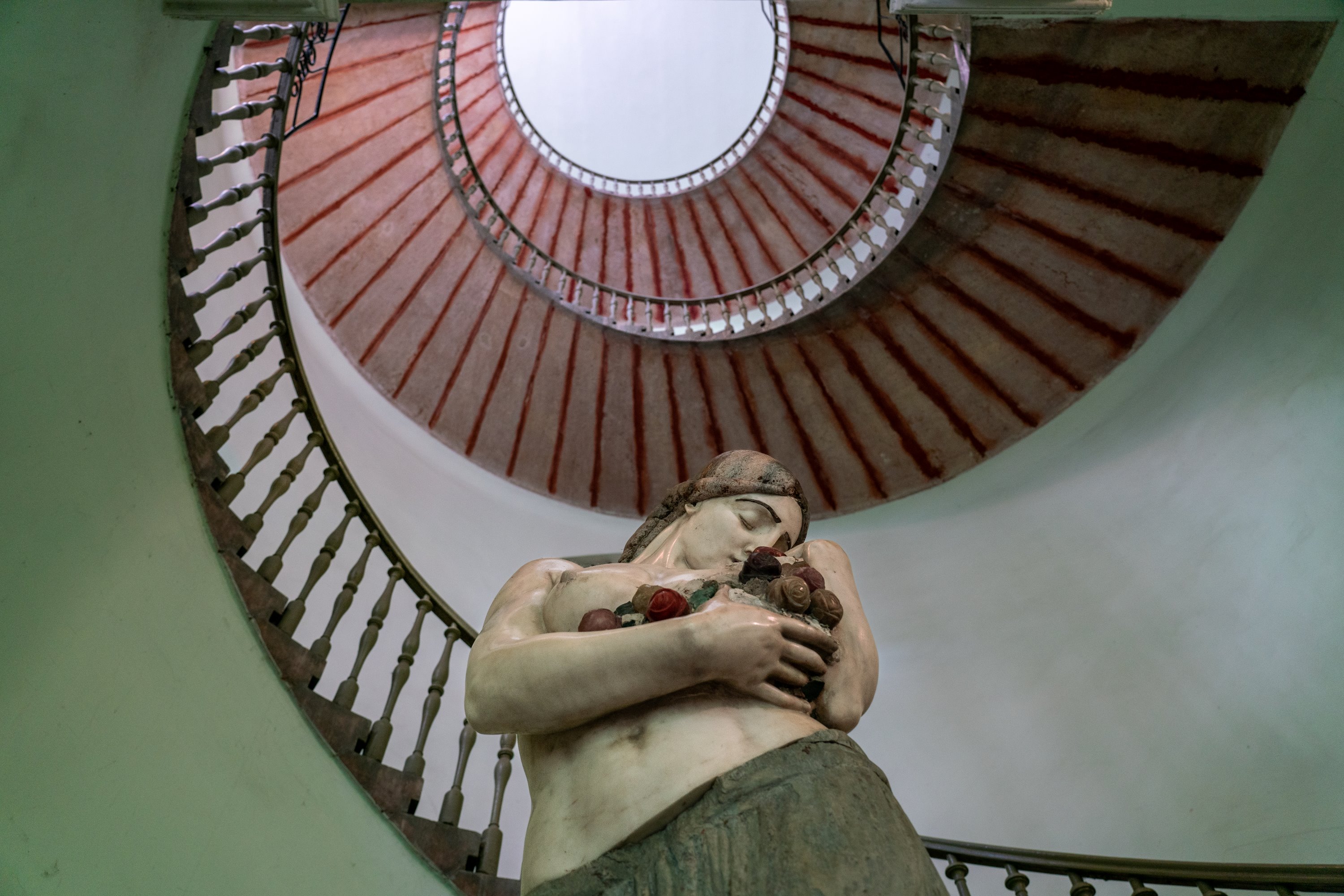
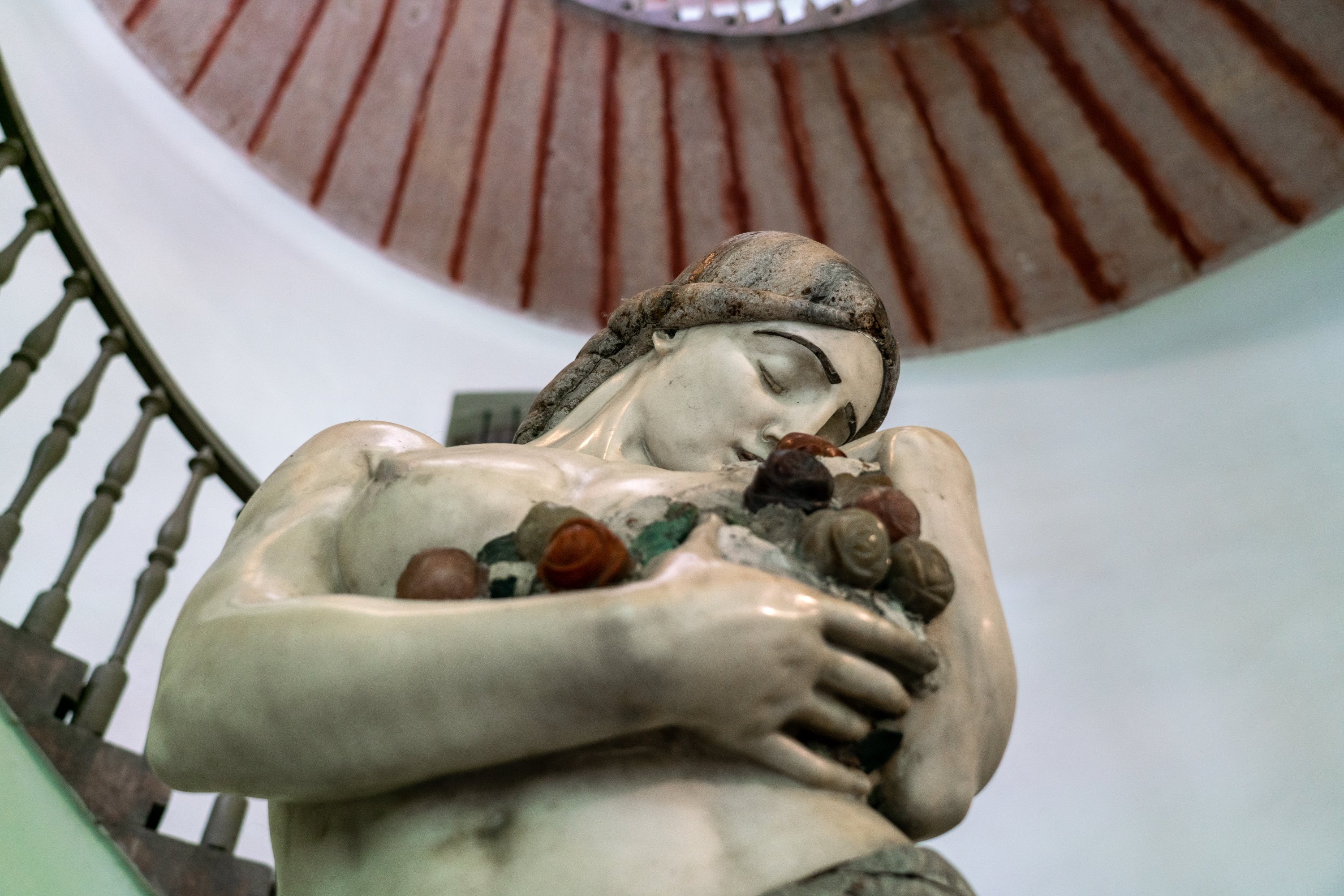
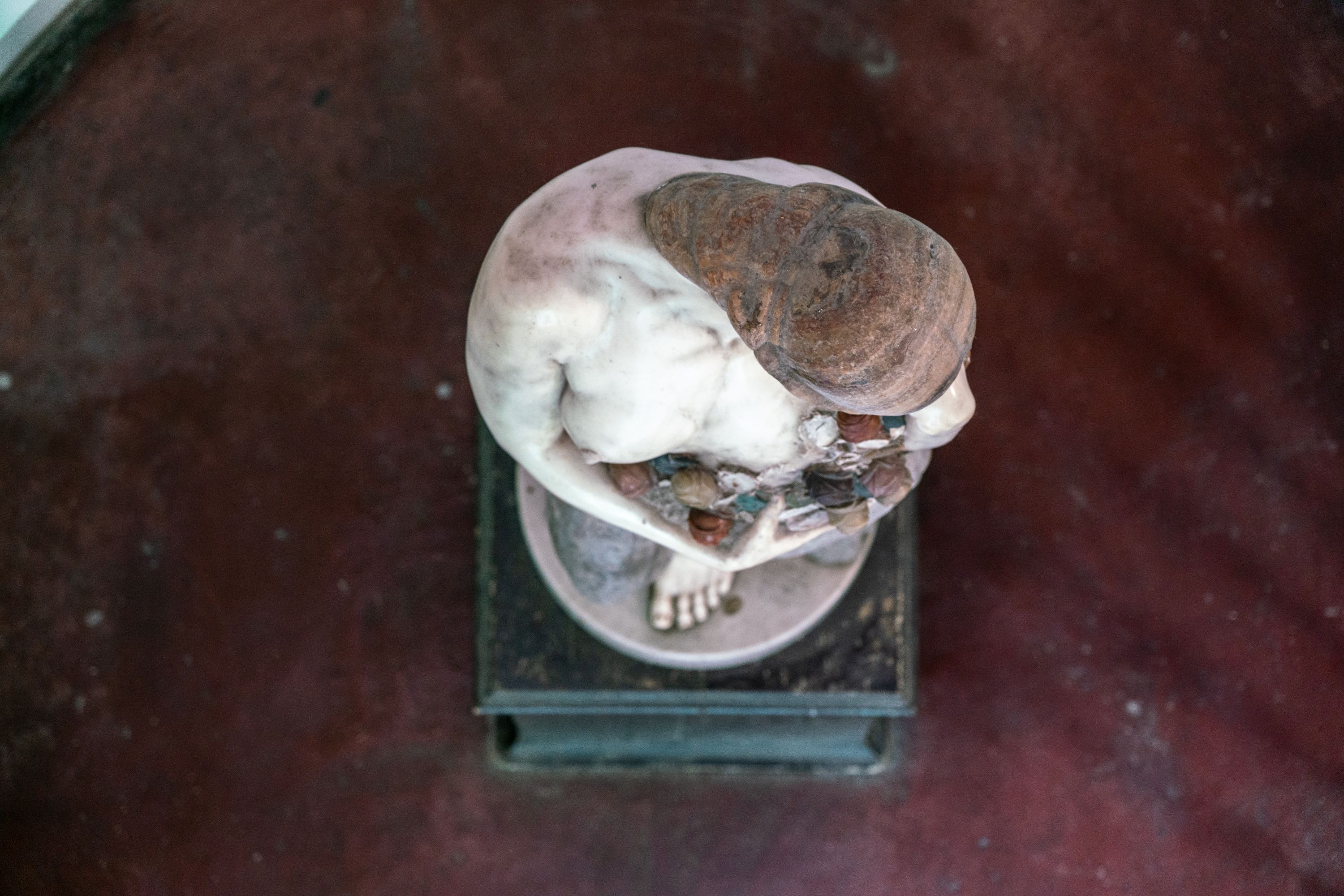
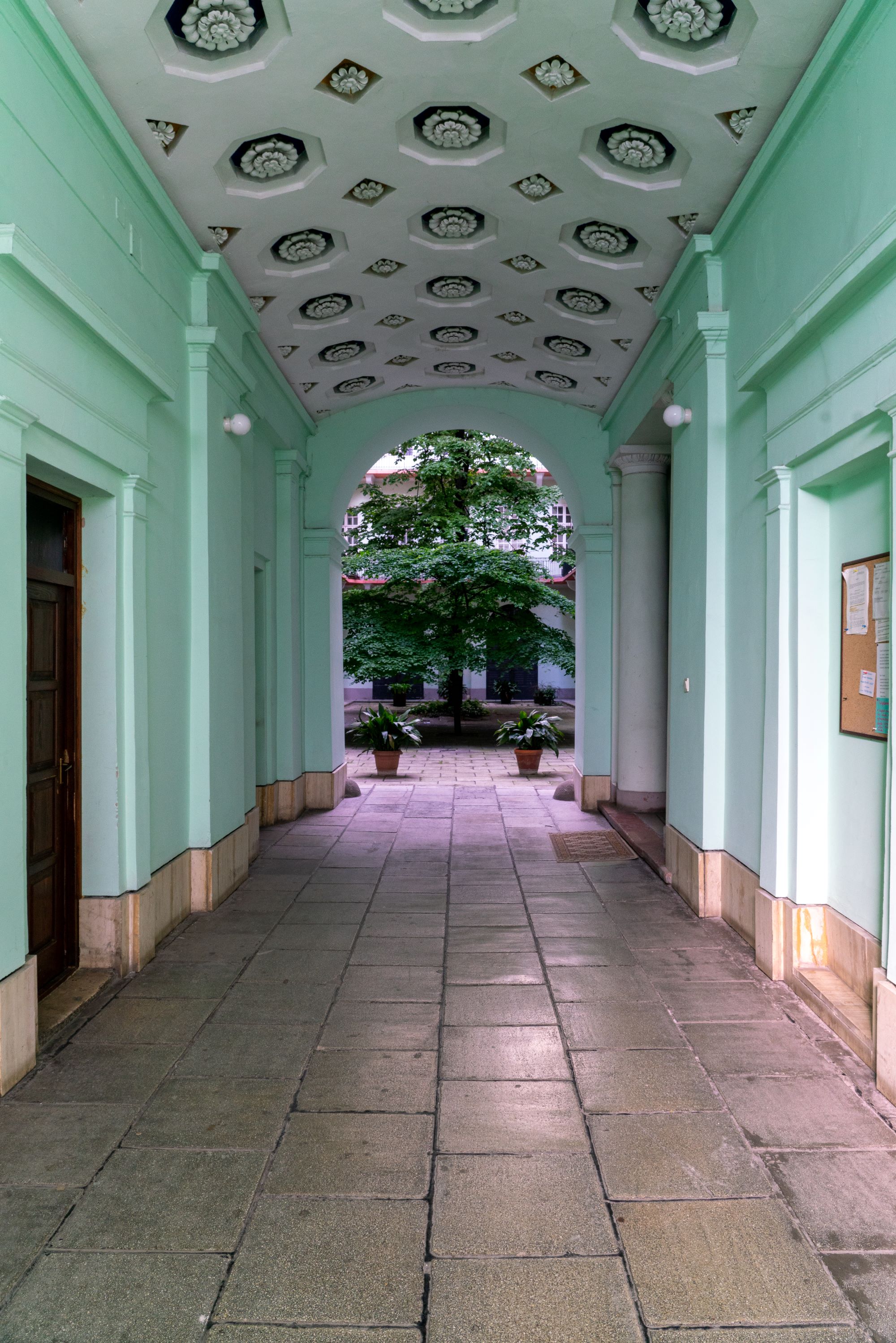
A few years ago, I discovered this delightful statue of Persephone in the “Szemerédy-ház” located at Apáczai Csere utca 3, in the 5th district of Budapest. This house, built in 1811, was commissioned by András Szemerédy, a judge, and constructed by József Hofrichter, who was quite renowned. Among his notable works are the Calvin Square Reformed Church and the Károlyi Palace.
The house’s most interesting feature is the statue of Persephone in the staircase, crafted by Benno Elkan. Elkan was born in 1877 in Dortmund. After studying in Germany and Switzerland, he moved to Paris, where he shared an atelier with other artists and had the opportunity to meet Auguste Rodin. Between 1908 and 1911, he lived in Rome. The Persephone statue in Budapest was most probably made during this period of his life. After these three years in Italy, he went back to Germany, where he lived for more than 20 years. As a Jew, his life became more and more difficult in the early 1930s, and in 1933, he left the country and settled in London. He started to work on the project of making a large Menorah for the newly created state of Israel in 1949.
Benno Elkan finished the Menorah in 1956; the sculpture was 4.30 meters high, 3.5 meters wide, and weighed 4 tons. Elkan’s work was funded by the Parliament of the United Kingdom, which sent it in 1956 to Jerusalem as a gift in honor of the eighth anniversary of Israeli independence. Benno Elkan passed away in January 1960; he is buried at the Liberal Jewish Cemetery in Willesden, England.
There are many sculptures hidden in houses in Budapest, like this Persephone. Among my personal favorites, there is the statue of a woman looking from a balcony on Thököly út, which has inspired many urban legends, and a headless statue of Venus in Szív utca.




 Buildings Tell Tales
Leave a comment