
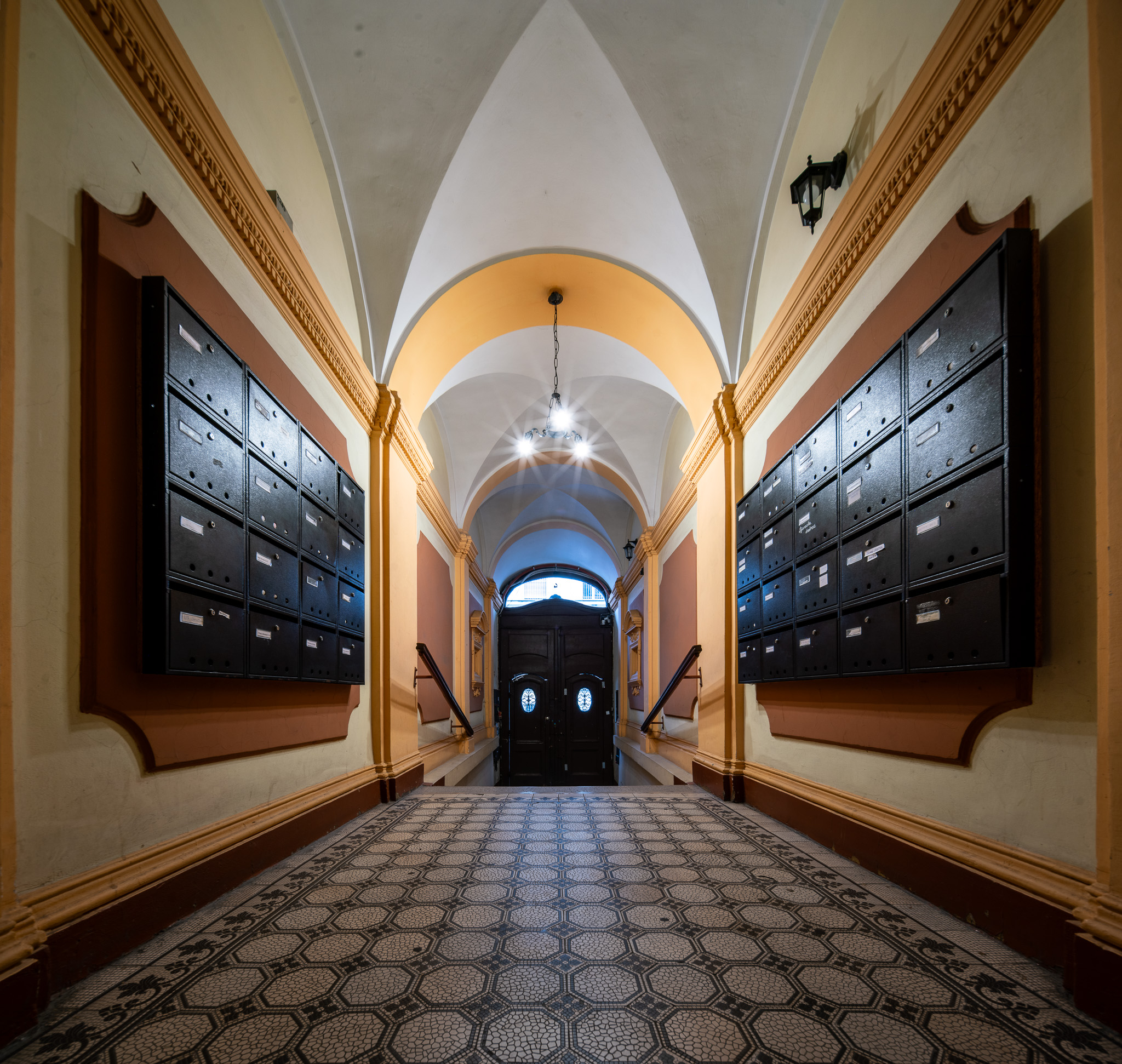
Nestled in the Újlipótváros neighborhood of Budapest’s 13th district, Visegrádi utca 4 may not catch your eye right away. Back in 1958, a newspaper bluntly called it one of the “ugliest and most neglected buildings in Budapest.” They complained about its bad conditions and the damages suffered 13 years earlier, predicting a gloomy future for this house.
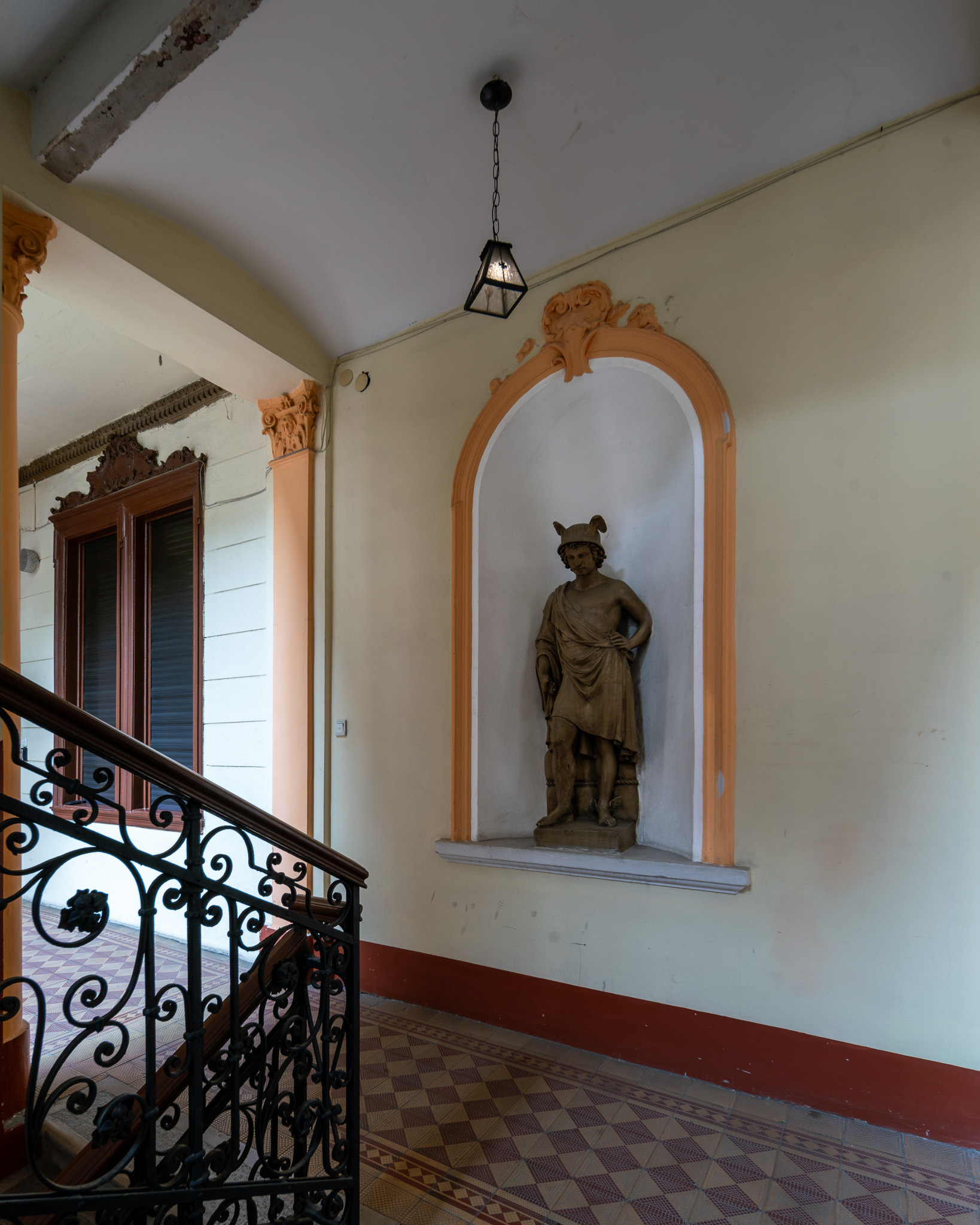
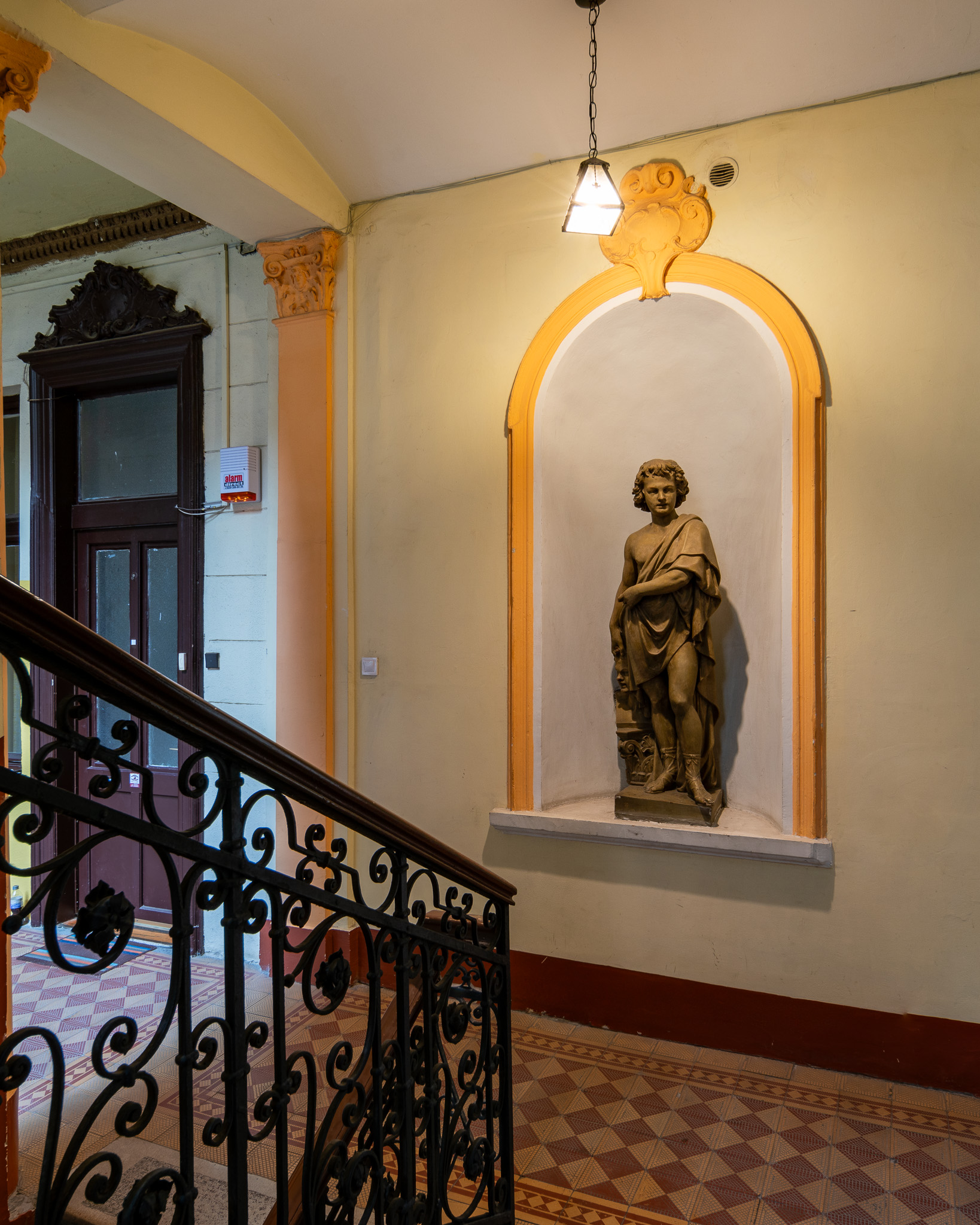
Thankfully, things took a turn for the better. Since that harsh critique, this residential house from the 1890s got a facelift. As is often the case in Budapest, behind an unappealing façade hides a hidden gem! The staircase boasts statues on each floor, and many apartments keep their original wooden doors.
In 1904, architect Miklós Román set up his office here. He started working with Béla Málnai and later collaborated with his brother Ernő. Many of their early works were created between the walls of this house.
Yet, history has its ups and downs. In 1912, tragedy hit Visegrádi Street 4 when János Rumpf committed a crime in the printing shop’s basement where he worked. Twelve-year-old Gizella Schwarcz vanished after going to buy oranges for her parents on Lipót körút (nowadays Szent István körút). Witnesses saw Rumpf leaving the shop on a Sunday, which was strange, carrying a heavy package. After being asked by one of the witnesses, he claimed to be working with others on the public holiday.
Detective Chief Kálmán Krecsányi led a big police operation, finding Gizella’s body in a forest of the 12th district where Rumpf was living. The detective connected Rumpf to another Munich murder. Rumpf’s madness was confirmed, and he spent the rest of his days in a German mental hospital.



 Buildings Tell Tales
Leave a comment