
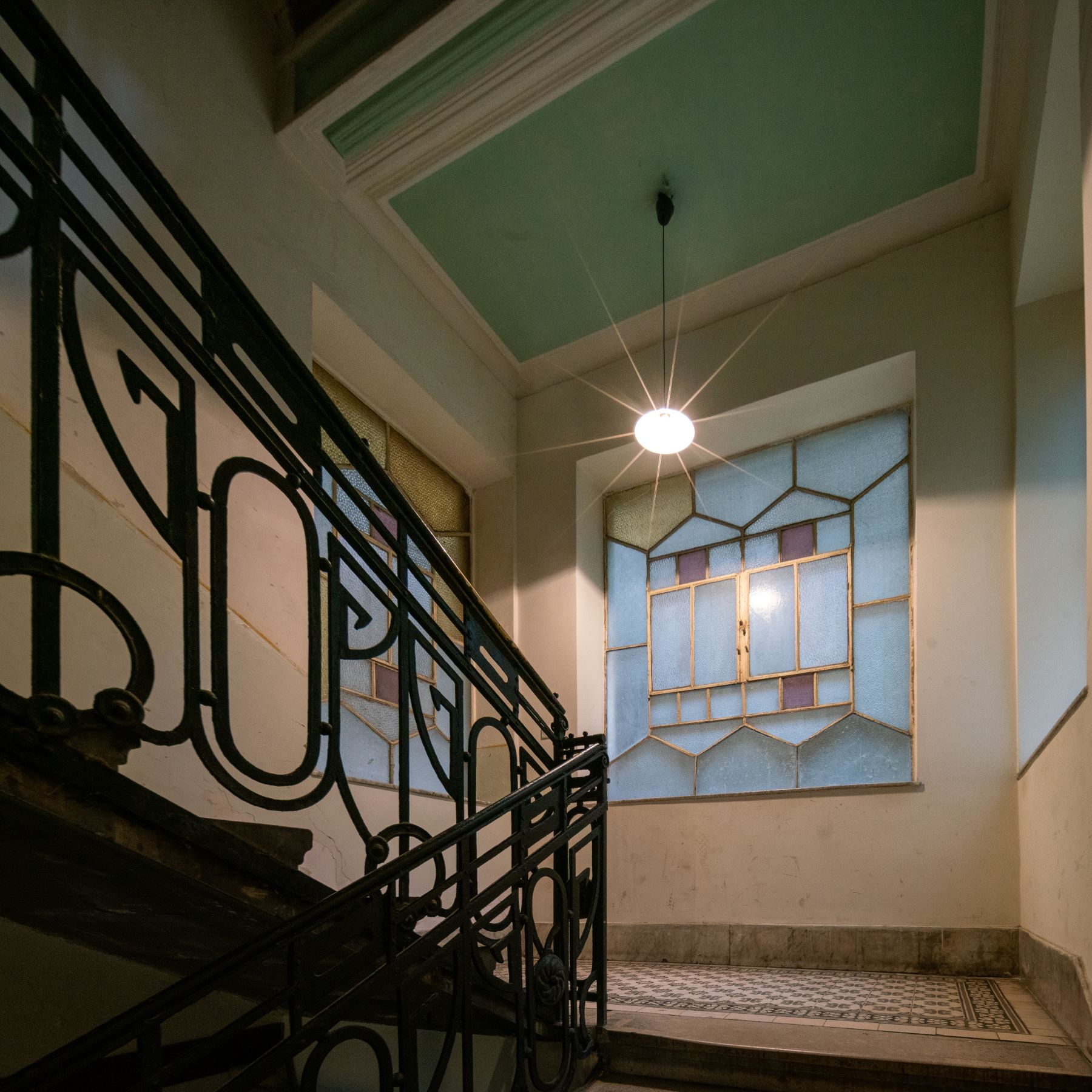
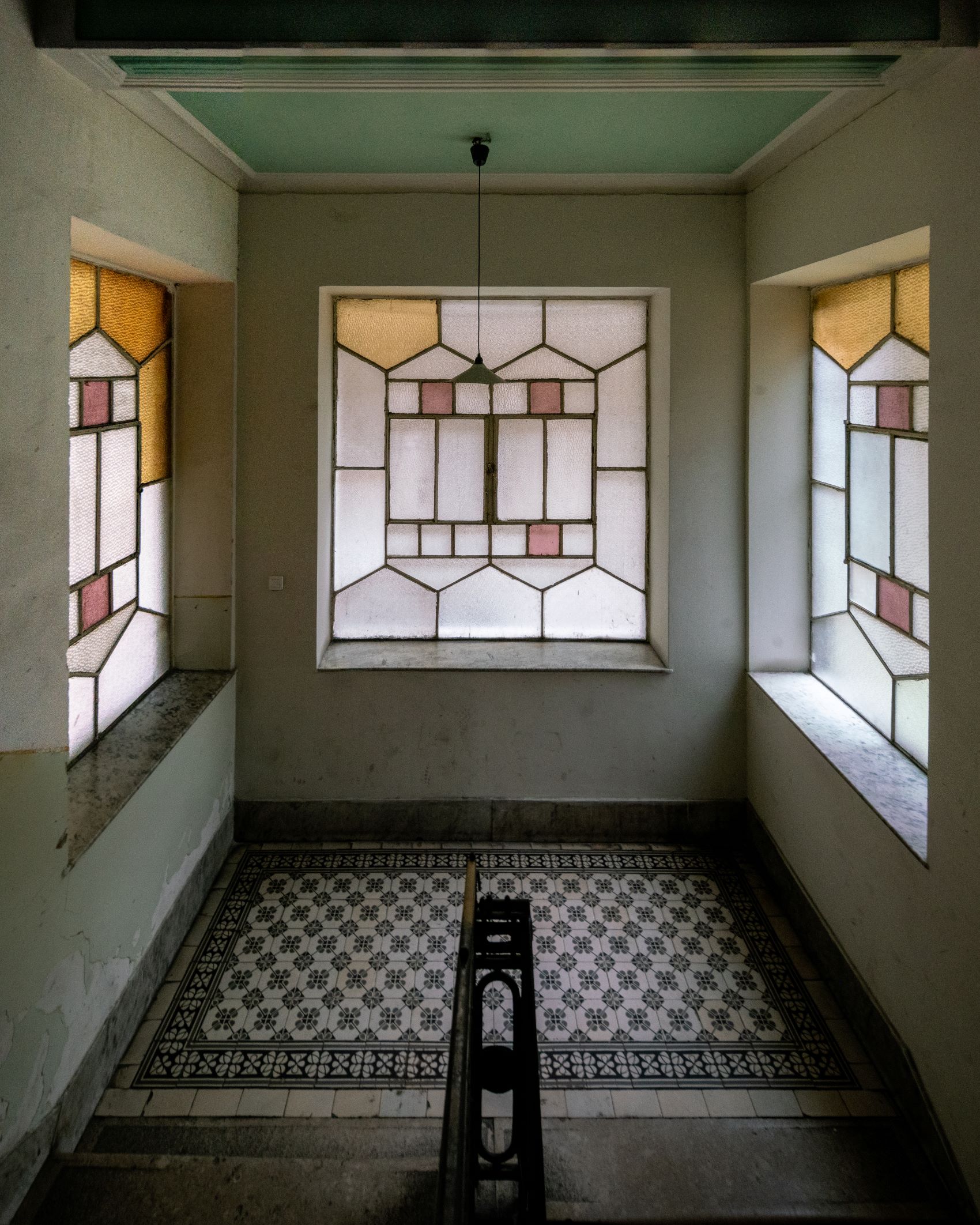
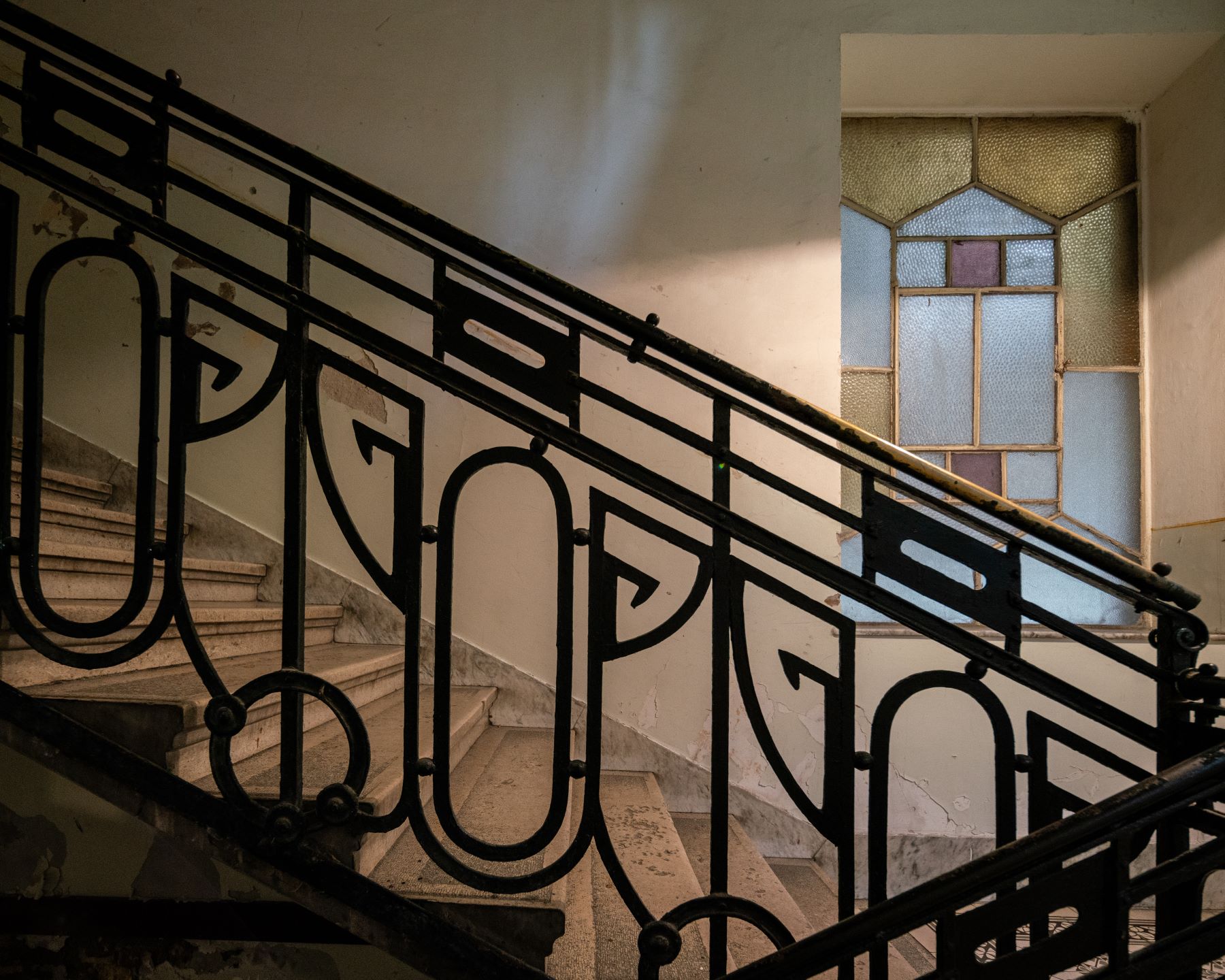
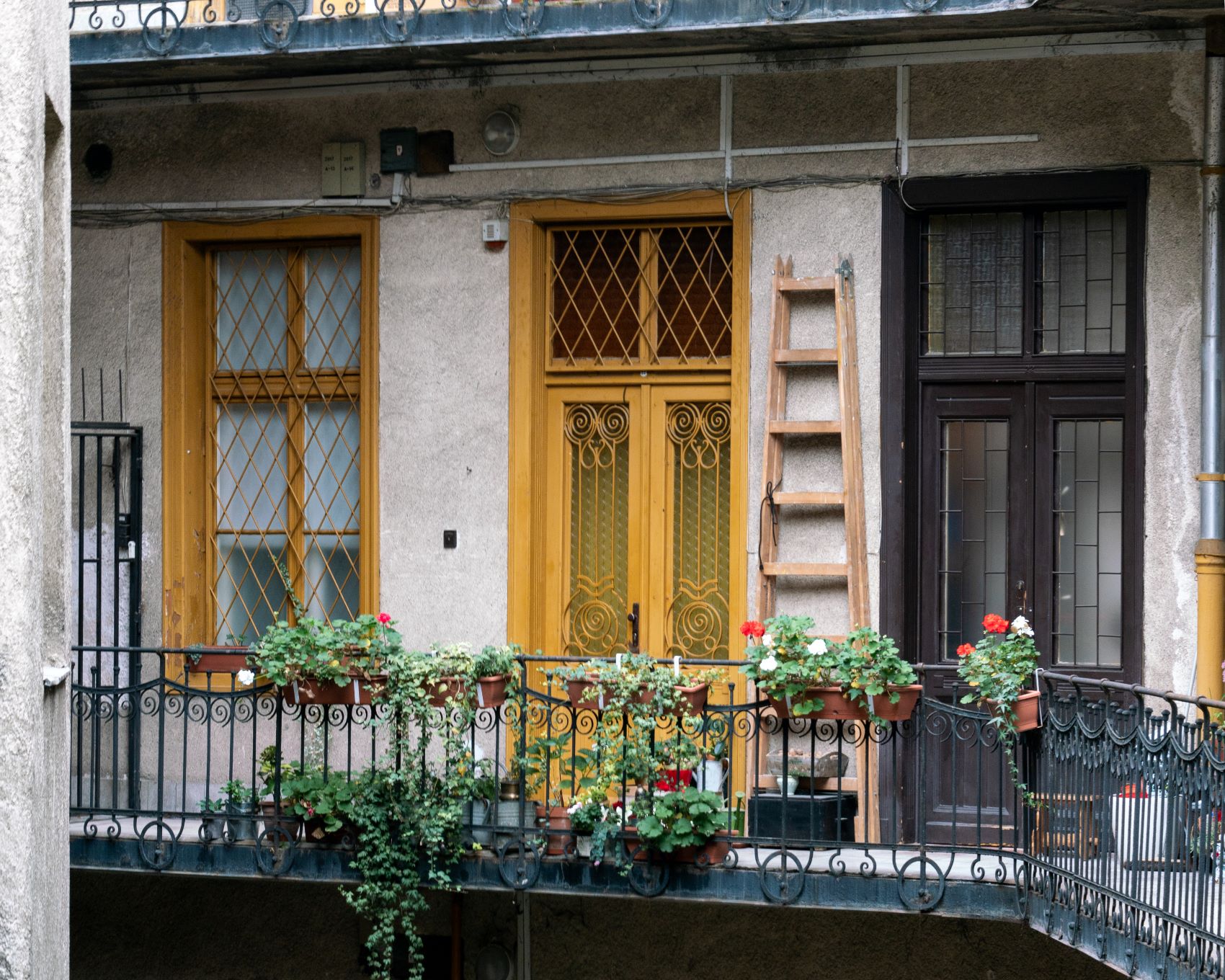
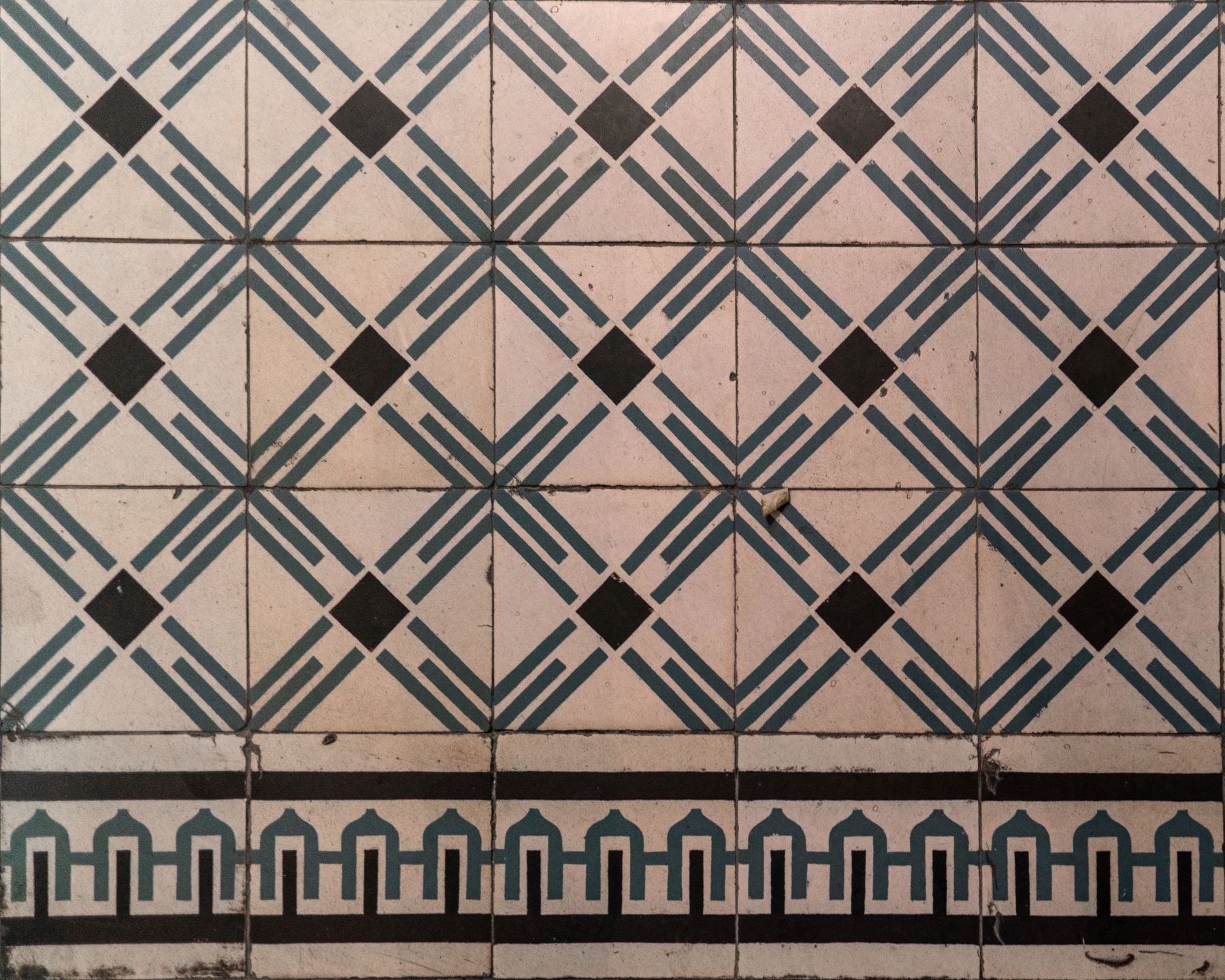
These photos were taken in a building located at Korányi Sándor utca 4 in Budapest, designed by the renowned architect Alfréd Wellisch in 1907. During my research on the history of this building, I uncovered an intriguing story about a man named Emil Ottenreiter.
Ottenreiter, an employee of the Eggenberger bookshop in Budapest, received an invitation to attend a ten-day book trade course in Germany. Excited about the opportunity, he made his way to Germany, with his first stop in Leipzig. From there, he continued to Weimar, where an unexpected turn of events unfolded. Ottenreiter disappeared, causing concern among his family in Budapest, who initiated a desperate search.
After an extensive search, it was discovered that the SS had arrested Ottenreiter and held him in custody for a month on charges of violence against authorities. Upon his release, Ottenreiter returned to Budapest and shared his story with journalists. He explained that he had fallen asleep on the train from Leipzig to Weimar, waking up one station later. In his haste to attend a lecture, he took a taxi back to Weimar, arriving after the lecture had started. Facing a strong guard at the gates, he touched a police officer during an identification check, leading to his arrest.
In the police station cell, Ottenreiter experienced a nervous breakdown, feeling innocent and bewildered by his incarceration. He began breaking and smashing things in frustration. Unfortunately, Ottenreiter never fully recovered from this traumatic experience. In 1937, he had a mental breakdown and was admitted to a psychiatric hospital. He passed away on July 30, 1942, at the age of 41.



 Buildings Tell Tales
Leave a comment